
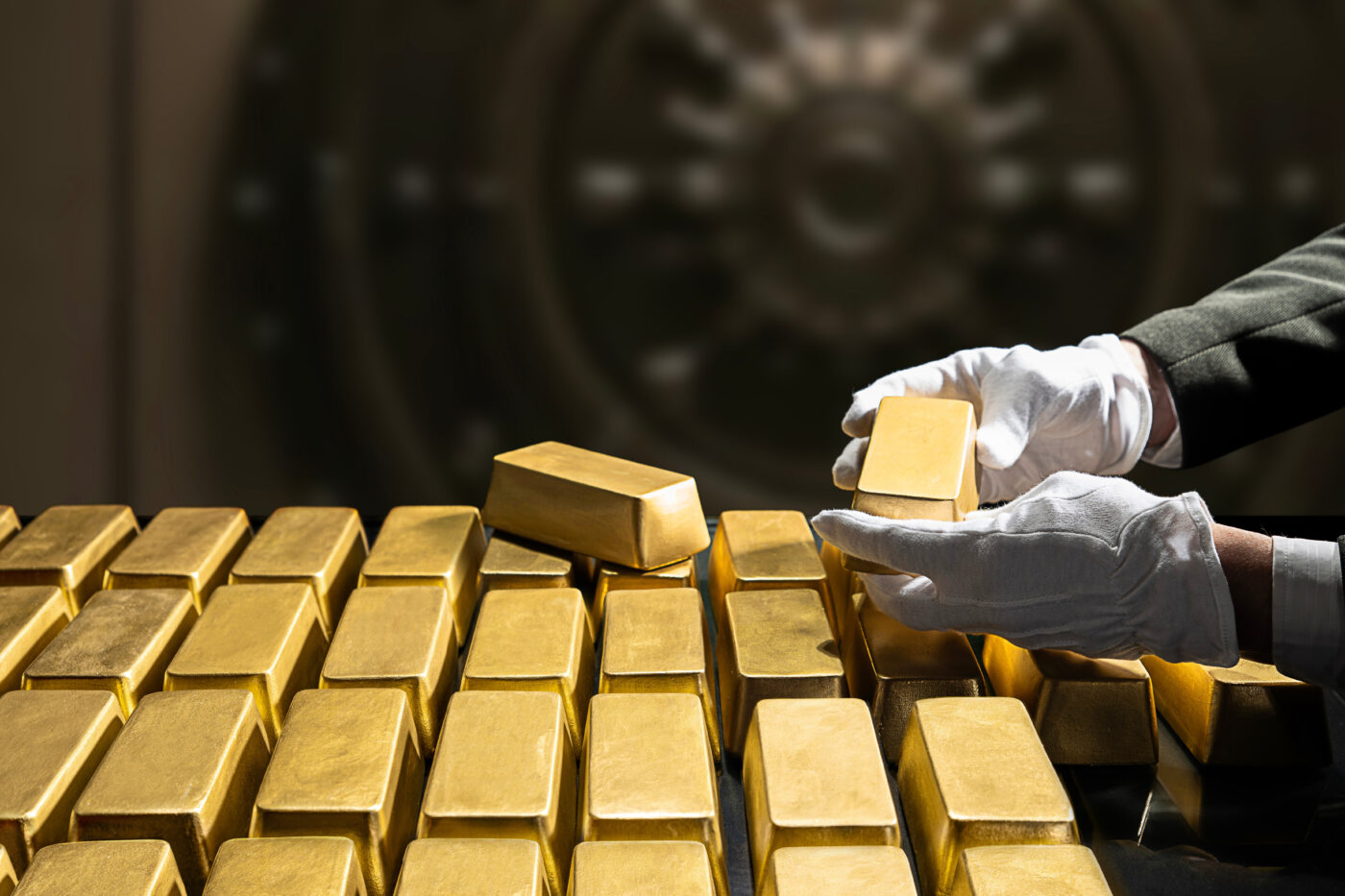
For centuries, gold has been a sought-after commodity. Ever since the first gold coin was minted in the sixth century BC, the precious metal’s enduring appeal has been that it can store wealth and be transported and sold anywhere. These days, it’s more of a safe haven asset for investors looking to shelter from market volatility and economic instability.
Gold doesn’t glitter for everyone, though. Notable billionaire investor Warren Buffet has previously claimed that gold is not useful, simply because it can’t generate income like stocks or bonds do. “If you own one ounce of gold for an eternity, you will still own one ounce at its end,” Buffett wrote in his investment firm’s 2011 annual shareholder letter.
Nevertheless, gold is on track to post its biggest annual return since 1979. The price of bullion surged from approximately $2,623 per ounce on 1 January 2025 to an all-time high of approximately $4,381 per ounce on 17 October. The relentless rally ended just four days later when gold saw its steepest daily drop since 2013 and slipped below the $4,000 per ounce threshold on 28 October. Despite this, the price is up more than 52 per cent year-to-date at the time of writing, putting it among the best performing assets of 2025.
Wealthy investors that were sitting on the sidelines for gold’s rally may be wondering whether now is a good time to buy the precious metal or if the recent dip is a sign that appetite for bullion is waning. We take a deep dive into all things gold below.
Why has gold been rallying in 2025?

Gold’s safe haven appeal has been strengthened in recent months by the geopolitical storm and uncertainty whipped up by US President Trump’s trade war. Meanwhile, concerns about the health of the US economy and a cooling labour market are forcing the US government to cut interest rates, which is weakening the value of the dollar. This is making dollar-denominated assets less attractive.
“The accelerated pace of gains in gold prices reflects heightened investor uncertainty. The US government shutdown is also adding to an already negative economic narrative,” explains Ricardo Evangelista, analyst at UK brokerage firm ActivTrades.
On top of this, central banks have been adding to their bullion reserves to protect themselves from the weaker dollar and any currency fluctuations, with China apparently the driving force. According to recent research by Apollo Global Management, central banks will soon hold more gold than the US dollar, which is the world’s reserve currency. This, adds Evangelista, has all resulted in “a degree of speculative trading” as markets bet that the precious metal’s price will continue to rise.
What’s behind the recent sell-off?
The pullback in October was mainly sparked by easing trade tensions between Washington and Beijing after Trump had threatened to impose an additional 100 per cent tariff on all imports from China. In turn, this strengthened the dollar, suddenly making gold more expensive and less appealing.
Evangelista points out that “from a short-term technical analysis perspective, gold prices are currently in overbought territory”, so investors and traders have used this as an opportunity to sell and take profits.
Yet, while “technical momentum is cooling,” admits Jason Laurie, business development manager at precious metals dealer Dillon Gage Metals, “this is simply a normal market response after a powerful run.”
Can gold rally to new highs?

Gold may have lost some temporary momentum, but its role as a store of value and hedge against volatility remains intact. Central banks are likely to continue accumulating bullion amid global economic and geopolitical instability. Plus, says Evangelista, any future rate cuts by the US government would likely weaken the dollar further.
“Investors should focus on the long-term benefits of investing in gold. Short-term price movements, like the 21 October sell-off, don’t alter the asset’s underlying fundamentals,” advises Peter Reagan, financial market strategist at gold retailer Birch Gold Group.
Analysts at investment banks are confident that gold will rise to new all-time highs in the coming months and years. For example, Goldman Sachs has forecast gold to reach $4,440 per ounce by the end of March and $5,055 per ounce in late 2026, while JPMorgan is also expecting the price to hit $5,055 per ounce towards the end of next year and $6,000 per ounce in 2028.
What’s the best way to invest in gold?
There is no perfect time to buy gold, but Laurie cautions against trading it. Instead, wealthy investors should see it as a buy-and-hold opportunity. “Precious metals have proven their strength over decades, not days. Trying to jump in and out to catch every swing often does more harm than good.”
There are a few ways to invest in gold: physical gold, exchange-traded commodities (ETCs) and exchange-traded funds (ETFs). Wealthy investors in the UK can buy physical gold in the form of coins and bars from The Royal Mint. The downside to this is that they will either need to store it themselves or pay the UK’s official coinmaker an annual fee to store it in its vault.
ETCs are a type of fund offered by brokerage firms that track the daily price performance of a commodity, like gold, without having to buy it directly. Whereas ETFs provide the chance to invest in a selection of companies operating in a specific industry, such as gold mining, without having to buy shares in individual stocks. The share prices of miners can be more volatile, but a rise in bullion prices can boost their earnings. Both ETCs and ETFs typically charge small fees to cover the costs of running the funds.
Regardless of which method wealthy investors pick, Laurie adds: “If they believe in gold’s long-term value, then this short-term dip is an opportunity to reaffirm their conviction.”
Read more: All’s Fair: Inside the real secret world of London’s female divorce lawyers
















Leave a comment