
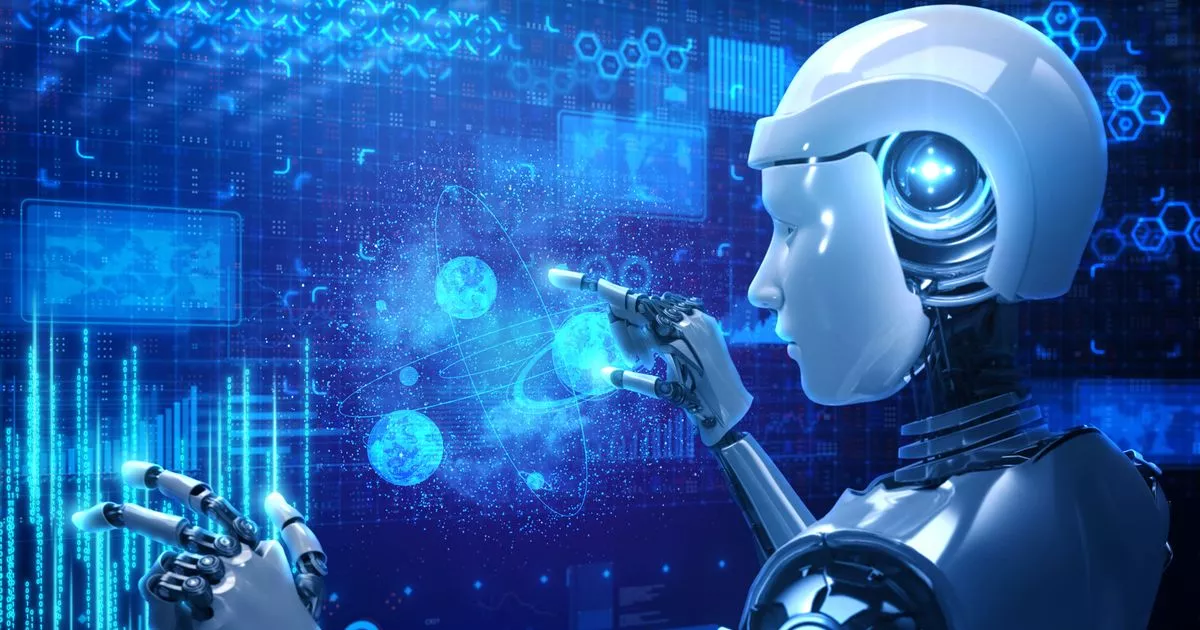
Last year speculation mounted that the end of humanity as we know it could be nigh thanks to the growth of AI, and now experts have revealed how long we all have left

Autonomous AI was predicted for 2027 but new updates have shifted this back. Read on for the new prediction.(Image: Getty Images)
AI could bring an end to humanity and leave the robots in charge, according to experts.
As AI systems continue to learn and grow, it has been predicted that eventually the bots will learn to code their own systems, bringing about an age of superintelligence and creating the fuel for an “intelligence explosion”. This explosion would result in AI versions producing even smarter and updated versions of itself, and then – in one possible route – destroy all humans by the middle of 2030 to create room for more solar panels and datac entres, writes The Guardian.
Also acknowledged as AGI (artificial general intelligence), the autonomous AI is able to complete cognitive jobs. After ChatGPT skyrocketed the rate of improvement for artificial intelligence following its 2022 launch, experts have believed that the dawn of AGI is now upon us.
Previously employed by OpenAI, in April last year, Daniel Kokotajlo warned that unmonitored AI development could see AI play world leaders and eventually end humanity as we know it.
Kokotajlo shared how his team had predicted that 2027 — now a year away — was the ‘most likely estimate’ for when developers would finally achieve ‘fully autonomous coding’.
Dubbed ‘AI 2027’, the notion snowballed online, attracting both fans and the fearful, with US Vice President, JD Vance, reportedly acknowledging the model during a May interview surrounding the AI ‘arms race’ between America and China.
An NYU professor of neuroscience, Gary Marcus, however, named the development plans a “work of fiction” and its conclusions to be “pure science fiction mumbo jumbo”.
However, some experts have now done a 180 and predict that AGI is still years away. AI risk management expert, Malcom Murray, said: “A lot of other people have been pushing their timelines further out in the past year, as they realise how jagged AI performance is.
“For a scenario like AI 2027 to happen, [AI] would need a lot of more practical skills that are useful in real-world complexities. People are starting to realise the enormous inertia in the real world that will delay complete societal change”.
Kokotajlo and his fellow authors have now updated the 2027 prediction to now be achieved within the early 2030’s. Pinpointing 2034 as the new age for superintelligence, the team still have no solid guess as to whether or when AI may destroy humanity.
Taking to X (Twitter), the author posted: “Things seem to be going somewhat slower than the AI 2027 scenario. Our timelines were longer than 2027 when we published and now they are a bit longer still”.
In addition, leading AI companies still plan to manufacture an AI system able to carry out research in artificial intelligence — the OpenAI CEO, Sam Altman, sharing that a mechanised AI researcher was an “internal goal” of their company, set to be achieved by March 2028. Altman also highlighted the possibility of “totally fail at this goal”.
Andrea Castagna, an AI policy researcher in Brussels, mentioned there are currently various complexities that steep AGI timelines have yet to address.
She said: “The fact that you have a super intelligent computer focused on military activity doesn’t mean you can integrate it into the strategic documents we have compiled for the last 20 years. The more we develop AI, the more we see that the world is not science fiction. The world is a lot more complicated than that”.
READ MORE: ‘I asked ChatGPT who BBC The Traitors ‘secret traitor’ is and fans think it’s spot on’READ MORE: Elon Musk’s X slapped down by UK over ‘appalling’ AI content














Leave a comment