
IT’S been a great month for Mercedes-Benz, with the sleek new CLA crowned European Car of the Year 2026 by the European Car of the Year jury – one of the more coveted accolades a new car can win.
Winning the European Car of the Year award is often seen as a strong sign a model will be a commercial success – although the award’s history shows this is far from guaranteed.
Indeed, Across the 62-year lifespan of the prize, there have been several winners that later proved disappointing – either because they sold poorly, gained a bad reputation or aged badly in the eyes of owners and the market.
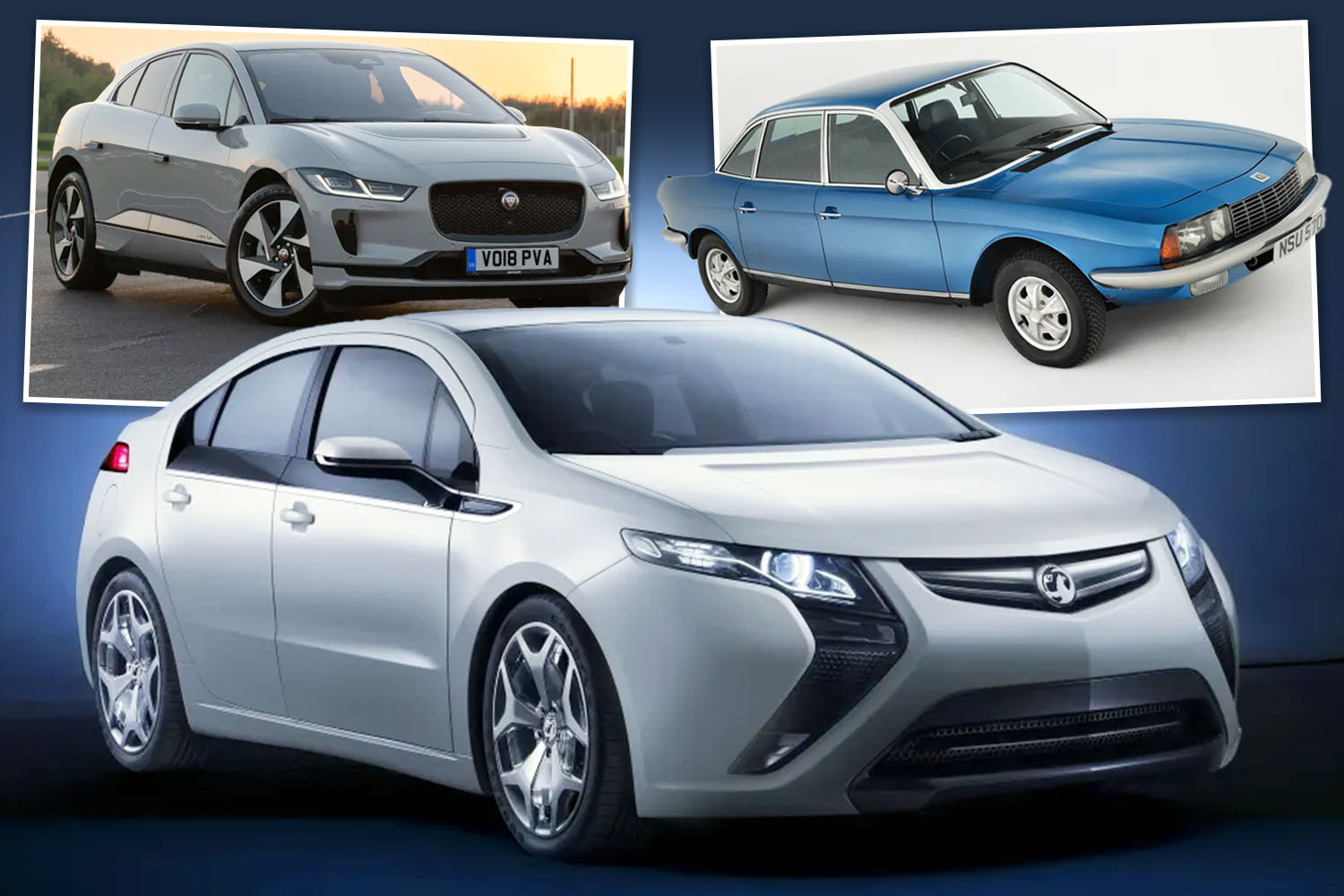
An early example of this is the long-forgotten NSU Ro 80, which won in 1968 largely because judges were impressed by its advanced rotary engine.
However, that technical novelty was largely the car’s undoing, as serious reliability issues led to huge warranty costs for the German manufacturer.
Those costs ultimately pushed NSU into major financial trouble and the company was soon taken over by rivals Audi.


Another example is the 1979 winner, the Chrysler Horizon – sold in the UK as the Talbot Horizon – which intended to be Chrysler’s first ‘world car’ and a rival to the Volkswagen Golf.
But it failed to achieve that status and is now largely forgotten – with around 150,000 built in the UK between 1980 and 1985 but only one remaining on British roads today, according to registration figures.
There’s also been plenty of controversial choices for the gong, none perhaps more so than Fiat’s Bravo and Brava which won in 1996.
Wildly unpopular, unpopular and later a sales flop, the cars were actually praised by Jeremy Clarkson at the time and was later used as a blueprint for the culty favourite Fiat Multipla.
The same could be said for another Italian hatchback, the Alfa Romeo 147, which won in 2001 despite infamous reliability issues – perhaps proving that the award did not align with the real-world ownership experience.
And more recently, in 2012, the award was picked up by joint winners, the Vauxhall Ampera and Chevrolet Volt, which used “range extender” technology.
Every European Car of the Year winner
- 1964 Rover 2000
- 1965 Austin 1800
- 1966 Renault 16
- 1967 Fiat 124
- 1968 NSU Ro 80
- 1969 Peugeot 504
- 1970 Fiat 128
- 1971 Citroen GS
- 1972 Fiat 127
- 1973 Audi 80
- 1974 Mercedes 450SE
- 1975 Citroen CX
- 1976 Simca 1307-1308
- 1977 Rover 3500
- 1978 Porsche 928
- 1979 Simca-Chrysler Horizon
- 1980 Lancia Delta
- 1981 Ford Escort MkIII
- 1982 Renault 9
- 1983 Audi 100
- 1984 Fiat Uno
- 1985 Opel Kadete/Vauxhall Astra
- 1986 Ford Scorpio/Granada
- 1987 Opel Omega/Vauxhall Carlton
- 1988 Peugeot 405
- 1989 Fiat Tipo
- 1990 Citroën XM
- 1991 Renault Clio
- 1992 Volkswagen Golf
- 1993 Nissan Micra
- 1994 Ford Mondeo
- 1995 Fiat Punto
- 1996 Fiat Bravo/Brava
- 1997 Renault Mégane Scénic
- 1998 Alfa Romeo 156
- 1999 Ford Focus
- 2000 Toyota Yaris/Yaris Verso
- 2001 Alfa Romeo 147
- 2002 Peugeot 307
- 2003 Renault Mégane
- 2004 Fiat Panda
- 2005 Toyota Prius
- 2006 Renault Clio
- 2007 Ford S-Max
- 2008 Fiat 500
- 2009 Vauxhall Insignia
- 2010 Volkswagen Polo
- 2011 Nissan Leaf
- 2012 Chevrolet Volt/Vauxhall Ampera
- 2013 Volkswagen Golf
- 2014 Peugeot 308
- 2015 Volkswagen Passat
- 2016 Vauxhall Astra
- 2017 Peugeot 3008
- 2018 Volvo XC40
- 2019 Jaguar I-Pace
- 2020 Peugeot 208
- 2021 Toyota Yaris
- 2022 Kia EV6
- 2023 Jeep Avenger
- 2024 Renault Scenic E-Tech
- 2025 Renault 5 E-Tech
- 2026 Mercedes CLA
While the concept was portrayed as a bridge towards full electric cars, the approach sold only in small numbers in Europe and was quickly overtaken by more mainstream hybrids and plug-in hybrids, showing that the award didn’t look at the bigger picture.
And the 2019 winner, Jaguar’s I-Pace, is possibly another cautionary tale.
Despite making history as the first electric vehicle to win the award and being a genuinely gorgeous EV, the I-Pace has somewhat failed to meet expectations and has become one of the fastest-depreciating models on the market.
In fact, owners have often complained they lost a large amount of the car’s value within a year of buying new, with used prices for early 2018-2019 models starting as low as £12,000.
And according to Carmoola’s 2025 data, the Jaguar I-Pace is one of the fastest-depreciating family cars, losing approximately 66.8% to 67% of its value over three years.
Last year’s winner, the excellent Renault 5 E-Tech EV, so far appears to be a worthy winner – having already topped sales charts for electric motors in the UK this year and widely praised for being a brilliant, practical and sharp-looking small EV.
The R5’s win, though, was called into question due to its Euro NCAP award of four out of five stars for crash safety – rather than a full five.














Leave a comment