
UK business activity rose more than expected in January and at the fastest pace in just under two years, while retail sales recovered in December, suggesting the clearing of pre-Budget uncertainty helped boost sentiment.
The S&P Global Flash UK PMI composite output index, a measure of activity in the private manufacturing and services sector, rose to 53.9 in January from 51.4 in December and was the highest since April 2024, according to new data published on Friday.
It was well above the 50 mark, indicating a majority of businesses reporting an expansion and higher than the 51.5 forecast by economists polled by Reuters.
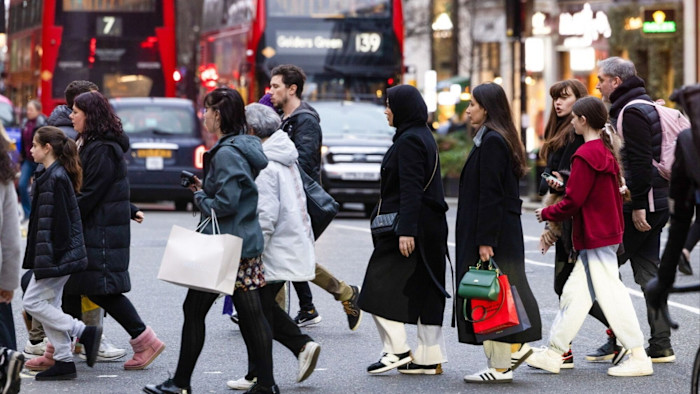
Separate figures also published on Friday by the Office for National Statistics showed UK retail sales unexpectedly increased 0.4 per cent in December, following two months of declines, as consumers bought more jewellery online.
Chris Williamson, chief business economist at S&P Global Market Intelligence, said: “UK businesses kicked up a gear in January, showing encouraging resilience in the face of recent geopolitical tensions.”
Companies were reporting higher demand, both from home and export markets, he said, as well as reporting “the greatest optimism about the business outlook since before the 2024 Autumn Budget”.
Service providers recorded a particularly strong upturn in business activity, with the relative index rising to a 21-month high of 54.3 in January from 51.4 in December. Some companies participating in the survey suggested that post-Budget clarity had led to the release of new projects and helped to boost investment spending among clients.
Chancellor Rachel Reeves introduced £26bn of tax rises in the November 2025 Budget, but the bulk of the measures will not kick in until 2028. The Budget was preceded by months of speculation about larger and more comprehensive tax changes.
Jake Finney, economist at PwC, said the January PMI data suggested “the UK economy has started the year on much firmer footing”.
However, the survey also reported that the average cost burdens continued to rise sharply, with the overall pace of inflation unchanged from December’s seven-month high. Survey respondents overwhelmingly linked rising input costs to elevated wage pressures, alongside rising transport bills and raw material prices from suppliers.
Ruth Gregory, economist at Capital Economics, said the figures could mean the Bank of England waits until April before cutting rates again.
“But we still think a fall in inflation to 2 per cent in April will prompt the Bank to cut rates to 3 per cent this year,” she added.
The pound was up 0.8 per cent against a broadly weaker dollar to $1.361 by afternoon trading in London. Two-year yields, which are sensitive to changes in interest rate expectations, rose 0.06 percentage points to 3.74 per cent. Yields move inversely to prices.
Traders slightly trimmed their interest rate-cut expectations after the data release but continued to price in a quarter-point reduction to 3.5 per cent by the BoE’s June meeting, according to levels implied by swaps contracts.
The rise in retail sales was above the 0.1 per cent contraction forecast by economists polled by Reuters. It followed a 0.1 per cent drop in November and a revised 0.8 per cent fall in October.
Hannah Finselbach, ONS senior statistician, said online sales were strong in December, adding that “within this, online jewellers had a strong month and told us there was higher demand for gold and silver”.
Gold and silver prices surged in 2025 as global political tensions grew. Sandra Horsfield, economist at Investec, said higher retail demand reflected “some speculative buying, even by households”.
ONS data showed that sales of household goods, clothing and spending in department stores all fell in December, with only a marginal uptick in food sales after four months of contraction or no growth.
Sales volumes for the final three months of the year, the busiest period for retailers, were down 0.3 per cent from the previous three months.

“The last three months of the year saw a slight drop in retail sales following a strong third quarter, with supermarkets and online stores both down,” Finselbach said.
Obi Edeh, UK trading floor manager at Financial Markets Online, said: “The ‘golden quarter’ ended up being nothing of the sort.”
For 2025 as a whole, retail sales rose, marking the second consecutive annual increase after steep declines in 2022 and 2023. Sales volumes still remained below their pre-pandemic levels, according to the ONS.
The figures provided “reinforcing signs that the UK economy struggled to gain momentum at the end of 2025”, said Martin Beck, economist at WPI Strategy.
Separate data published by the research company GfK showed that consumer confidence rose 1 point to minus 16 in January.
Additional reporting by Ian Smith














Leave a comment