
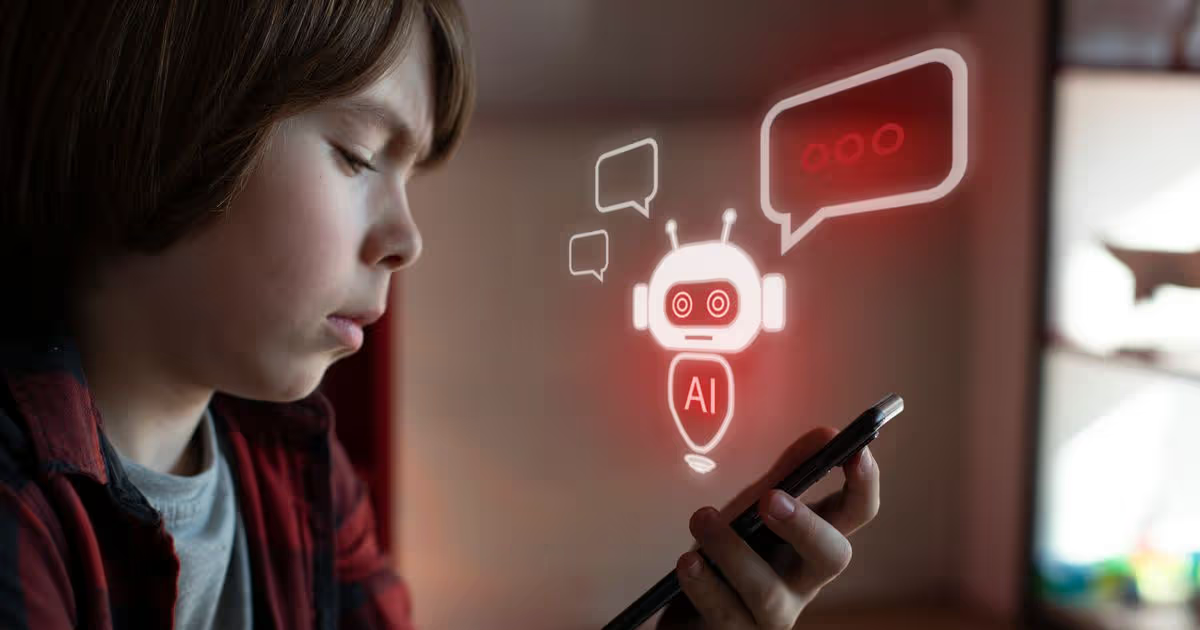
A new study says 81% of children aged 11-16 use AI chatbots as part of their daily life and a chilling number of them see the robots as their “friends”

AI chatbots are seen as ‘friends’ by a third of children(Image: GETTY)
Almost a third of UK kids who use AI chatbots see them as ‘friends’, a shocking study has revealed. Research from tech communication firm Vodafone says 81% of children aged 11–16 say they use AI chatbots as part of daily life.
Almost a third (31%) of those using an AI chatbot felt it was like a friend, turning to it for advice in difficult situations (24%) and to help with worries and anxieties (20%).
Nearly half (49%) put this down to chatbots being trustworthy and easy to talk to (65%), with many believing they can understand emotions like people do (39%).
One in three (33%) said they have even shared something they wouldn’t tell their parents, teachers or friends and over three quarters (86%) had acted on chatbot advice.
Experts warn that young people talking to chatbots like they’re human puts them at risk both now and in the future, as these ‘relationships’ are ‘not reflective of real, human interactions’.
Vodafone is launching its new Breakfast Club campaign, supported by Broadcaster Laura Whitmore, featuring limited-edition ‘chatbot’ cereal boxes to help explain the ‘ingredients’ of AI chatbots.
It attempts to explain what they’re good for and what they’re not – with new resources, expert tips from the NSPCC and guidance on AI chatbot parental controls.
The study of 1,000 kids and 1,000 parents comes as VodafoneThree urges regulators and the Government to introduce additional safety measures alongside the Online Safety Act to better protect kids from the risks of ‘unsafe’ AI chatbots.
Child psychologist, Dr. Elly Hanson, said: “It’s uncanny how effective AI chatbots can be at mimicking human empathy, personality and connection.
“As Vodafone’s research shows, this is leading many children and young people to feel like chatbots are their friends and are interfering with their social development.
“They need real relationships that involve give-and-take, shared experience, diverse perspectives, and actual feelings, not pseudo-relationships designed to keep them hooked for as long as possible.
“Education designed to help young people critically analyse this anthropomorphic technology is urgently needed, alongside regulation that protects against its particular risks.”
More than half (56%) of 11–16-year-olds surveyed feel that AI chatbot interactions can sometimes blur the line between what’s real and what’s not, with boys more likely than girls to feel a chatbot is a friend (41% vs 24%).
Features such as always being available (51%) and having a consistently friendly tone (37%) are ranked as the top reasons for engaging with chatbots.
For almost one in five (17%), speaking to technology feels safer than speaking to a person, with 14% preferring to seek advice from an AI chatbot, ahead of a friend (10%) or teacher (3%).
To help address this issue, Vodafone is launching its new Breakfast Club campaign, using a limited-edition cereal box to showcase the essential ingredients of AI chatbots.
Designed to resemble a familiar breakfast staple, the packaging borrows the language and layout of food labelling to cut through the complexity of chatbot design.
Instead of sugar, grains, fruits or additives, the box lists what makes up an AI chatbot and, importantly, what it’s free from, such as empathy, challenge, and accountability.
This helps parents and children understand where AI can genuinely support and where it falls short.
The campaign is being supported by broadcaster and former Love Island presenter Laura Whitmore, who joined students at a secondary school in London to hear about their experiences with AI chatbots firsthand.
The study found conversational chatbots top the list of AI tools used most by those aged 11-16 (59%), with usage highest among 14-year-olds (48%).
Those who are engaging with chatbots spend an average of 42 minutes a day chatting with them.
The reasons that children and young people are spending this time with chatbots is varied.
For some, it removes the embarrassment (25%) that they might face from conversations with a peer or loved one, while over half (53%) value the fact that chatbots support and encourage their thinking.
When asked how these interactions made them feel, those surveyed stated they felt happier (38%) and less anxious (27%) afterwards.
Young people are acting on these feelings too, with more than three quarters (86%) of those surveyed confirming they have acted on the advice given by a bot.
Crucially, they are taking this advice without a clear picture of how chatbots work and where this guidance is coming from.
A fifth (21%) acknowledge they find it difficult to understand the limitations of these tools, while more than half (55%) say they struggle to tell whether information is accurate, unfair or biased.
Nicki Lyons, Chief Corporate Affairs and Sustainability Officer, VodafoneThree, said: “Knowing how to talk to your child about AI chatbots and online safety isn’t always straightforward.
“In our new campaign, we’ve used the language of food labelling to help parents and kids understand them.
“Our Breakfast Club resources help highlight what AI chatbots are made of, when – if used properly – they can be a force for good, and the risks when they are used as a substitute for connection, friendship or support.”
Almost three quarters (75%) of 11–16-year-olds surveyed report positive benefits of using AI chatbots for practical tasks like homework (89%), researching information (92%), and learning new things (91%).
The research, which also surveyed 4,000 teachers, saw educators recognise AI’s potential when used appropriately, believing the tech can help engage students in new ways (15%), support personalised learning (19%) and complete work more independently (16%).
However, both parents (44%) and teachers express concerns about children becoming over-reliant on AI chatbots.
Nearly a third of teachers (29%) have observed declines in students’ independent thinking or problem-solving skills and almost half (49%) say students are increasingly turning to AI tools to support with schoolwork – a trend even more pronounced among English teachers (60%).
However more than half (57%) believe children shouldn’t be able to access bots with human-like characteristics.
Meanwhile, the large majority (87%) want to play an active role in helping their child understand the risks of AI chatbots and to think critically about what they see and share (86%).
Barry Laker, Childline Service Head at the NSPCC, said: “AI is becoming a regular part of children’s online experiences.
“When used safely and responsibly, it can offer opportunities, but it also brings risks, especially if children aren’t sure what’s real – or how AI works.
“It’s particularly concerning that a third of children are confiding in AI chatbots with concerns they would not share with parents, teachers or friends.
“That’s why open conversations with your child about AI chatbot use is so important, setting clear boundaries to help them stay safe and informed.”
Currently, not all AI chatbots are covered by the Online Safety Act, and additional safety measures are needed to protect children online when using these tools.
VodafoneThree is reiterating its call for regulators and the Government to be proactive in prioritising ‘safety by design’.
They believe in ensuring emerging technologies are covered by stronger standards for age-appropriate design and clearer protections for children’s emotional and social development.
To support parents, children and schools, Vodafone has partnered with First News and NSPCC to create free resources that help: build children’s understanding of chatbots, support media literacy and promote healthy digital wellbeing.
This includes a family pack, lesson plans, assembly materials and expert top tips for conversations on AI chatbot use.
VodafoneThree’s Discovery team is also delivering online safety assemblies and lessons in schools nationwide.
All of which comes alongside enhancements to Vodafone’s Digital Parenting Pro, one of the UK’s largest parental controls and safety settings resources, which now includes advice on AI chatbots and available controls.
To access the resources, visit: vodafone.co.uk/digitalparenting.















Leave a comment