
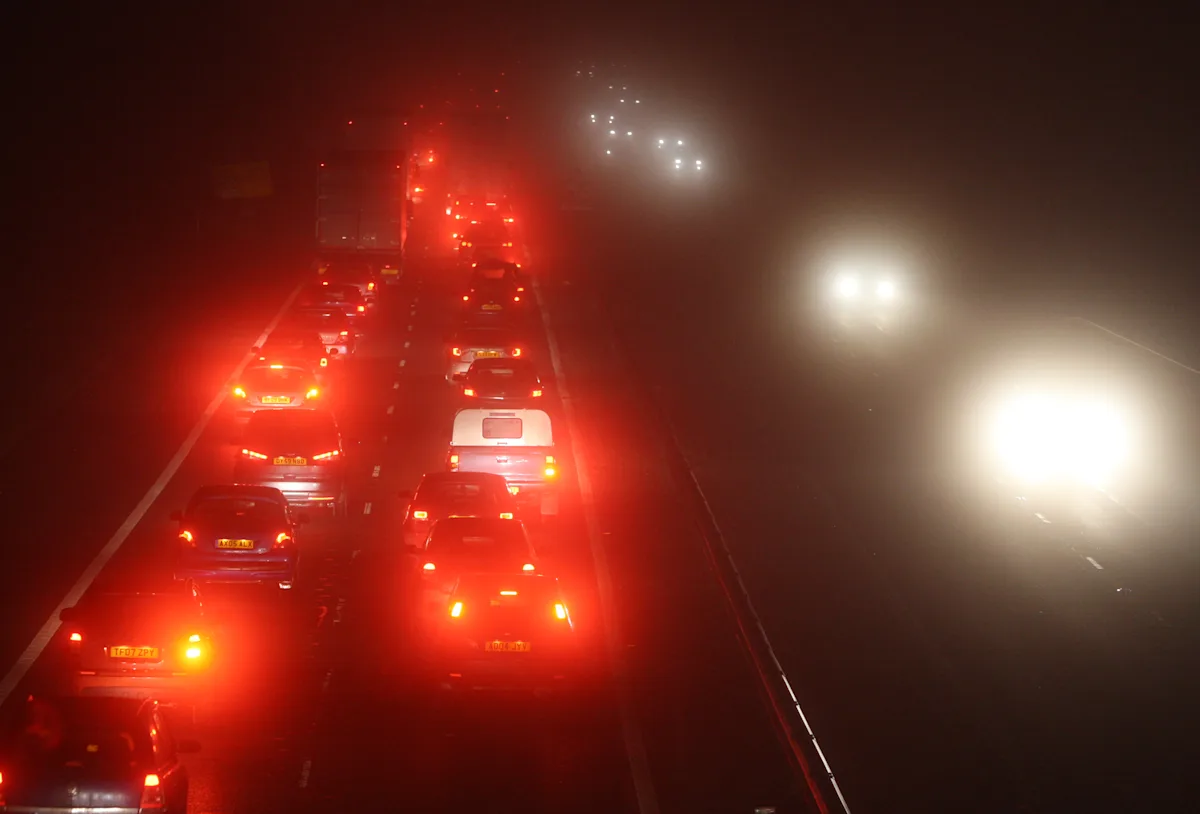
Dazzling headlights of oncoming vehicles are making many motorists feel “less safe or confident behind the wheel”, with more than half saying the problem has worsened over the last year, a survey suggests.
Nearly one-third (32%) of 1,745 UK drivers surveyed last month on behalf of the RAC said they were regularly dazzled by headlights, while 62% said it happened to them occasionally.
Out of the respondents, 57% believed the problem had become more serious in the previous 12 months, while some 33% said the issue made them feel less safe driving at night.
Half (51%) of those who got dazzled said they struggled to see hazards or road markings when the issue was happening, while 42% reported being unable to confidently judge the speed or distance of oncoming vehicles. One in four (25%) said they had been temporarily blinded.
The government has said its plans to conduct more research into headlight glare, which the RAC and other motoring groups have suggested is stronger from many modern cars.
RAC senior policy officer Rod Dennis said dazzle from headlights was a “perennial problem for drivers” and it was “clearer than ever” that they wanted to see something done about it.
He said: “For some it’s just a mild annoyance but for others it’s tangibly affecting their lives as drivers – from feeling less safe or confident behind the wheel to avoiding nighttime journeys altogether.”
What are the rules and regulations around car headlights?
UK drivers “must use headlights when visibility is seriously reduced”, according to the Highway Code, which says this applies when you are able to see less than 100 metres in front of you.
This means they should be turned on when driving at night or in bad weather.
You should use your fog lights when driving through fog, rather than full beam, as light bounces off the fog and back into people’s eyes, although there is no specific law relating to this.
The Highway Code says drivers “must not use any lights in a way which would dazzle or cause discomfort to other road users, including pedestrians, cyclists and horse riders”.
It also says drivers should use dipped headlights, or dim-dip if fitted, at night in built-up areas and in dull daytime weather, to ensure they can be seen.
While many drivers flash their headlights to let another motorist know they are giving them way, the Highway Code says the only legitimate reason to use this feature is to alert other road users to your presence.

Newer headlights often have a harsher, much whiter tone to them than older, warmer-yellow coloured lights.
(IMAGO/Björn Trotzki, Imago)
By law, the maximum height of a dipped beam headlamp must be no more than 1200mm from the ground.
Many newer cars fit brighter LED lights into their headlights, which are road legal, but it is illegal to retrofit your own LED lights into your car’s headlamps.
Xenon headlights, also known as HID headlights, which heat gases and rare metals to generate a bright white or blue glow, are also legal if fitted by a car’s manufacturer, but are illegal to add to a car yourself.
If you’re found to be using an illegal headlight in your car while driving, you could face a fine of up to £1,000.
A car with an illegal headlight will also fail an MOT.
Could the rules change?
The government’s new Road Safety Strategy sets out a range of policies to improve road safety and support the aim of reducing the number of deaths on Britain’s roads.
Published in January this year, the strategy is still in its early days, and the policies included are not set in stone, but it does give some idea of what reforms the government is interested in.
“The government will undertake further research aimed at identifying what vehicle design factors may be responsible for increased headlamp glare,” the strategy says.
“This will be done for a range of different vehicle makes and models, and could then be used to generate proposals for amendments to international vehicle lighting regulations at the UN.
“In parallel, the DVSA [Driver and Vehicle Standards Agency] will step up its market surveillance activities to catch those attempting to sell illegal retrofit headlamp bulbs in the UK.”
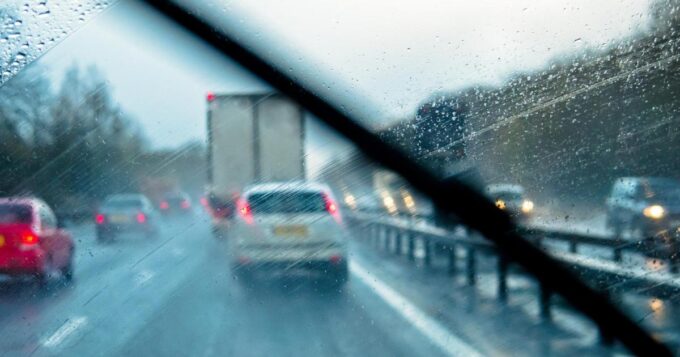
Drivers should use full-beam in poor weather conditions, but consider using fog lights instead when driving through fog.
(SteveAllenPhoto via Getty Images)
New research would build on a government-commissioned study, conducted by consultancy TRL, which found that brighter lights are more likely to cause glare for drivers of oncoming cars.
The firm assessed factors such as surrounding vehicles, weather conditions, and ambient lighting to develop a thorough understanding of the circumstances that lead to high brightness levels and glare.
Meanwhile the DVSA has stepped up surveillance to intercept the sale of illegal retrofit headlamp bulbs for on-road use, with those caught facing fines of up to £1,000.
Department for Transport (DfT) figures show that since 2013 there have been an average of 280 crashes on Britain’s roads every year where dazzling headlights were a contributory factor. Of these, six a year involved someone losing their life.















Leave a comment