
London based startup Mozart AI has raised a $6 million seed round led by Balderton Capital, bringing total funding to just over $7 million since launching publicly last year. Mozart has also released a mobile version of its generative audio workstation, extending a product that already has more than 100,000 registered users following a viral beta launch in late 2025.

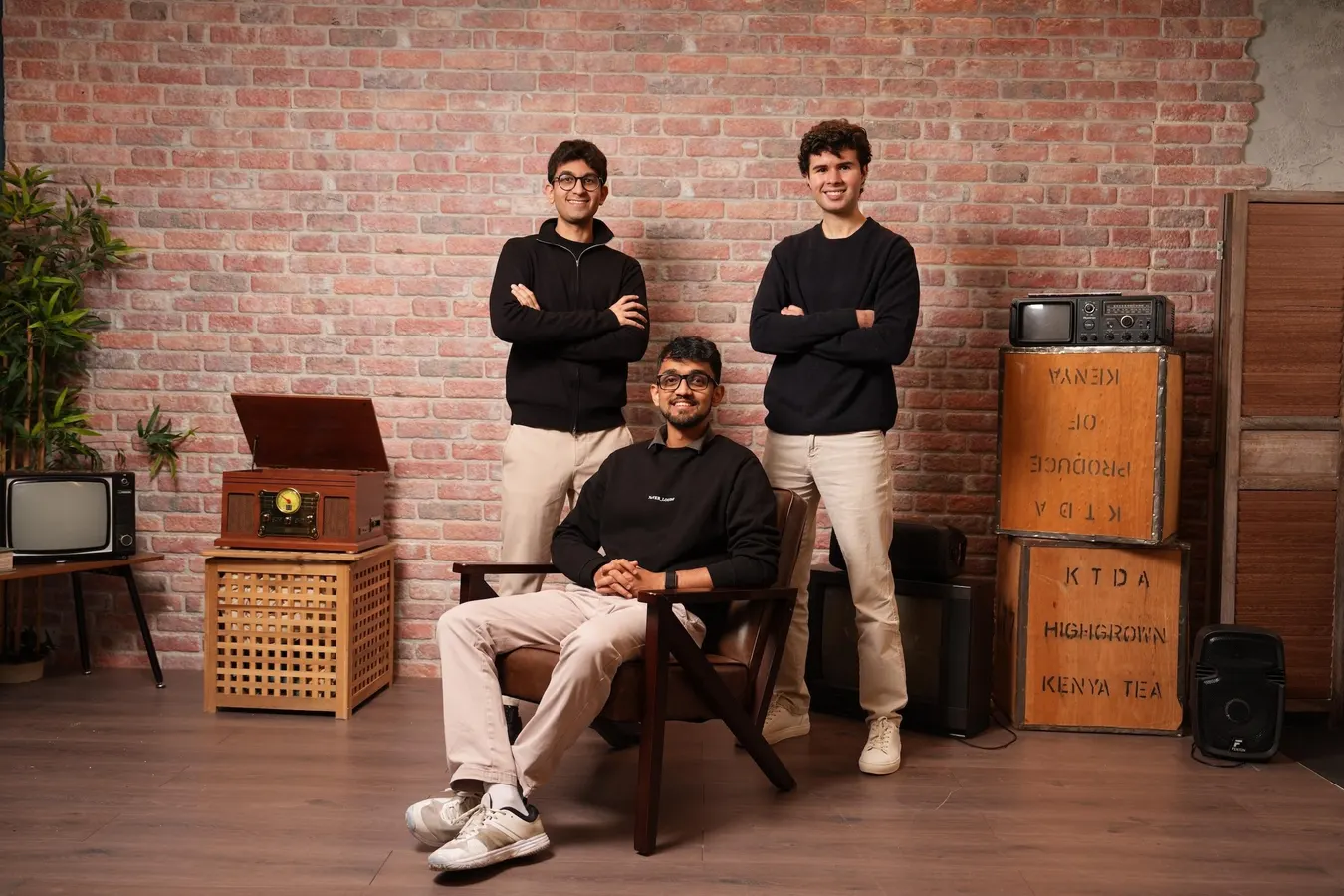
Mozart founders CEO Sundar Arvind (seated), CCO Arjun Khanna, and Pascual Merita Torres CTO
Mozart
Mozart AI positions itself differently from text to song generators like Suno and Udio. Rather than producing finished tracks from prompts, the platform functions as a full digital audio workstation built around AI assisted composition, arrangement, and editing. The system allows users to work at the level of stems, instruments, or individual notes, while handling time consuming production tasks such as quantization, time stretching, and sound design in the background.
“The creative process has always been integral to music making and to music’s role in shaping global culture,” said Sundar Arvind, Mozart AI’s co-founder and CEO. “Far from replacing creativity, AI is levelling up that adrenaline filled process through which musicians compose and discover the right sounds.”
Arvind, a former professional tennis player who was signed to Spinnin’ Records at age fourteen, says the company’s early assumption that AI could simply act as a copilot proved incomplete. “When we started, it was like make chord progressions, assist the user with their existing journey,” he said in a February interview. “What we realized was the journey itself was causing friction. It was just too complex.”
Mozart Studio web interface.
Mozart
That insight led Mozart to rebuild the workflow itself. Users can now start with a rough vocal idea, a guitar riff, or a single MIDI progression, then build outward. The platform supports two parallel modes: Vibe Sessions for fast, exploratory creation; and Studio Sessions for more granular control. Many users, Arvind said, begin in Vibe and later move into Studio as they gain confidence and fluency.
Mozart AI does not train its models on copyrighted music. Instead, it licenses commercially cleared datasets and integrates third party models alongside its own proprietary systems. ElevenLabs is one of its primary model providers. “When ElevenLabs raises big money, it benefits us,” Arvind said. “We’re growing with them.”
The company has begun monetizing through a credit based system after operating free during beta. Audio inference costs, Arvind noted, are significantly lower than video generation, making the business more sustainable. “Inference on audio is a lot cheaper than video,” he said. “You can build a very sustainable business in audio.”
Professional musicians appear to be adopting the tool alongside amateurs. Artists using Mozart AI include producers affiliated with A$AP Rocky, Avicii, Kodak Black, and Lil Baby, according to the company.
Brazilian producer and DJ Arthur Penna, who has worked with Sony signed artists and runs studios in Rio de Janeiro, said Mozart fits into an existing professional workflow rather than replacing it. “I use AI as a tool to empower my voice and to be able to have a more finished product, either for a demo to send to a label or to a famous singer,” Penna said. “This is my own composition, my own lyrics, my own production” .
Penna also argued that Mozart lowers barriers for beginners without flattening professional practice. “Someone who is just learning to use a DAW is going to benefit a lot,” he said. “They have tools built in for you to draw a MIDI for the first chord and then suggest variations of it.”
Balderton Capital general partner Daniel Waterhouse framed the investment as a reaction against legacy software. “The companies that win will be those that work with and for musicians, not against them,” he said, adding that Mozart allows creators to “spend more time on the actual creative process.”
Arvind founded Mozart AI with Arjun Khanna (COO), who has represented India in global math competitions and Harvard debates, and Pascual Merita Torres (CTO), who is a producer, DJ, classically trained pianist and AI researcher.
Mozart AI currently has a team of ten, with plans to expand to twenty five this year. The company is headquartered in the US but operates primarily from London. Its next focus, Arvind said, is collaboration and distribution. “Creation is just phase one,” he said. “There has to be a place for all this music to live.”















Leave a comment