
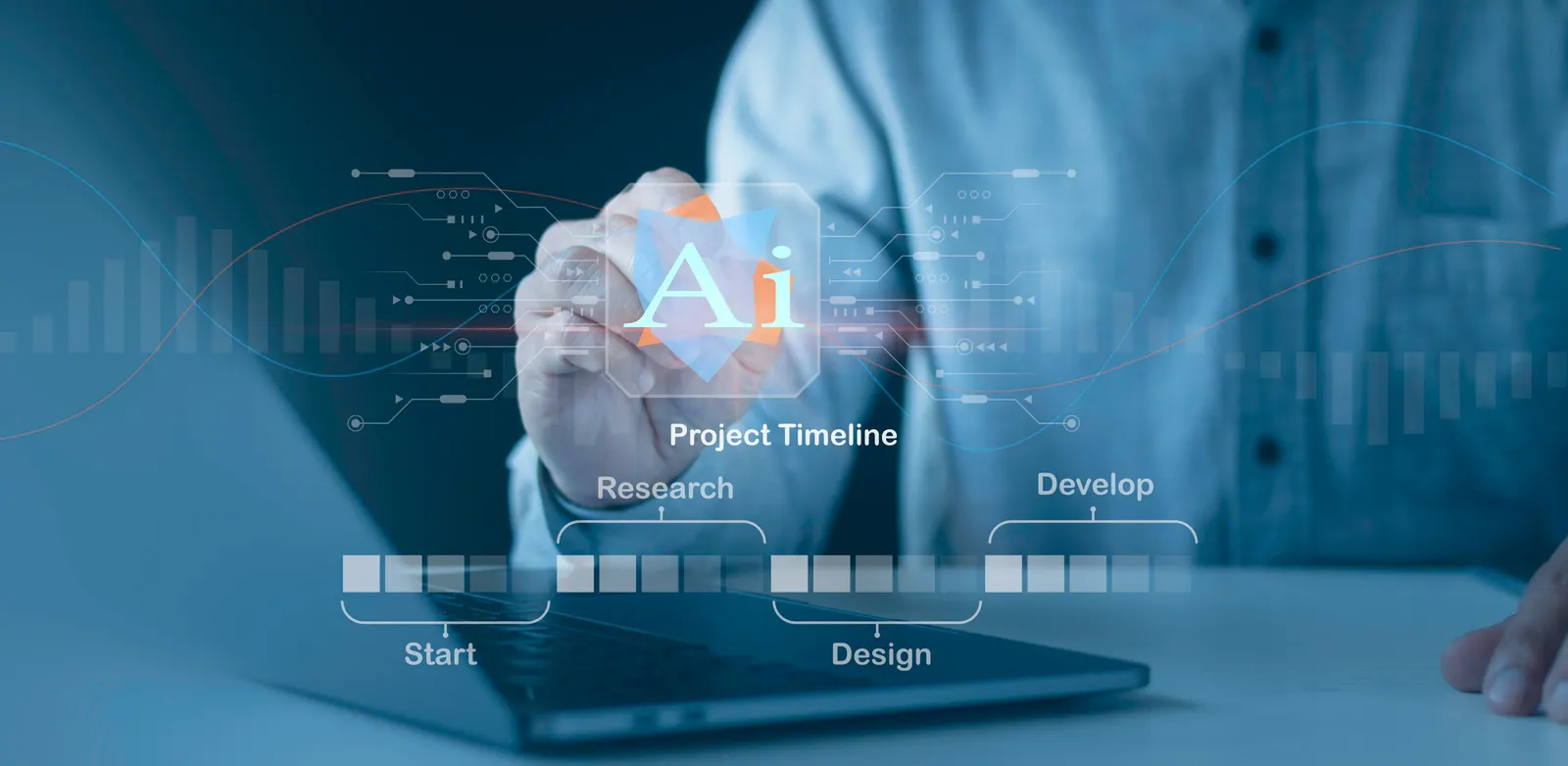

AI not only accelerates but rewrites what we do to build technologies.
getty
Every wave of technological change stirs both excitement and unease—but the rise of AI feels different. It isn’t unfolding step by step; it’s happening all at once. To grasp what this means, it helps to look back—because the story of AI is not only about machines getting smarter, but about the accelerating evolution of how we create.
In the early 1980s, as the personal computer moved from the research lab into homes and businesses, it was easy for me to see that I was witnessing something that would happen only once in a lifetime. Then, with the advent of the internet in the 1990s, it seemed as though we were rewriting virtually all of the rules of how businesses were conducted and how communications were carried out. And yet, as artificial intelligence comes online as the technology of our era, there is a sense that everything is happening at once, and that it is all happening quicker than we can fully process. Many of the same individuals who brought us into the internet era are also driving us into this new era, though they seem to be struggling with something my tech friends call a “compressed timeline.”
For instance, disruption used to be a process. There were milestones that we could see. There were product announcements, infrastructure rollouts, and debates about economics. But with AI, the product and infrastructure rollouts, the economic debates —all seem to be happening simultaneously. It is no longer a journey that seems to be taking a decade; it is a sprint towards an unknown finish line.
Looking Back to Look Forward
There were three major technological shifts in the past, and they can serve as a guide as we navigate the shift towards artificial intelligence.
The first shift came with the advent of the personal computer. This change democratized computing power, moving it from specialists who knew how to use a command-line interface to individuals who could use icons, mice, and menus. The personal computer did not simply make computers work better; it made new types of work possible.
The second was online retail. Suddenly, physical presence was not required for a sales transaction. In retrospect, this was not just another form of retail; this was a rethinking of logistics, trust, and discovery. It required a global network of servers, payment systems, and logistics to build Amazon or Alibaba.
The third was streaming. Here, we separated content consumption from physical media. Music, movies, and TV shows were made infinitely accessible, personalized, and eventually on-demand. This changed the way creative industries operate and monetize their work.
Each of these trends had an obvious technology trigger point and an obvious user reaction. What sets the AI trend apart is that this is not a change in what we do with technology; this is a change in how technology itself is made.
The Builders and the Built
AI does not just accelerate what we do with technology; it rewrites what we do to build technology itself. Just a few years ago, building an application required teams of specialized software programmers and well-established tool sets. Today, generative models can generate code, design user interfaces, and even simulate user tests. We are starting to see the line between user and developer blur.
This does not mean we need fewer software applications; we need more. We need to express our industries’ expertise in software form. We need to turn the factory floor manager, the hospital administrator, and the educator into software architects.
In the past, we built tools to serve our needs. Today, the tools we create are helping to reshape us. AI systems don’t just extend our abilities—they learn from us and, in turn, change how we learn, build, and think. This feedback loop is self-reinforcing and accelerating, giving it a recursive, almost exponential quality. It also makes time feel compressed: the gap between invention and everyday use has narrowed to the point where breakthroughs feel almost instantly absorbed into our lives.
The Journey, Not the Moment
There’s something to the idea of a “moment” with AI, something to the idea of a singular event when we crossed into a new world of intelligent machines. But the truth is much more incremental. What we’re experiencing is the beginning of an accelerated process of intelligent systems woven into every level of our computing infrastructure. Like the PC, internet, and streaming revolutions before it, the era of AI will follow a cycle of hype, disillusionment, acceptance, and normalization.
The truth is, if we follow the path of previous revolutions, the best applications of AI haven’t even been conceived yet. They’ll be built by people who see this technology not as a destination, but as a medium. The idea of a race to a finish line is misguided. There is no finish line. There’s adaptation, change, and evolution. What we’re experiencing now is what we’ll eventually get used to, one line of code, one model, one human insight at a time.













Leave a comment