
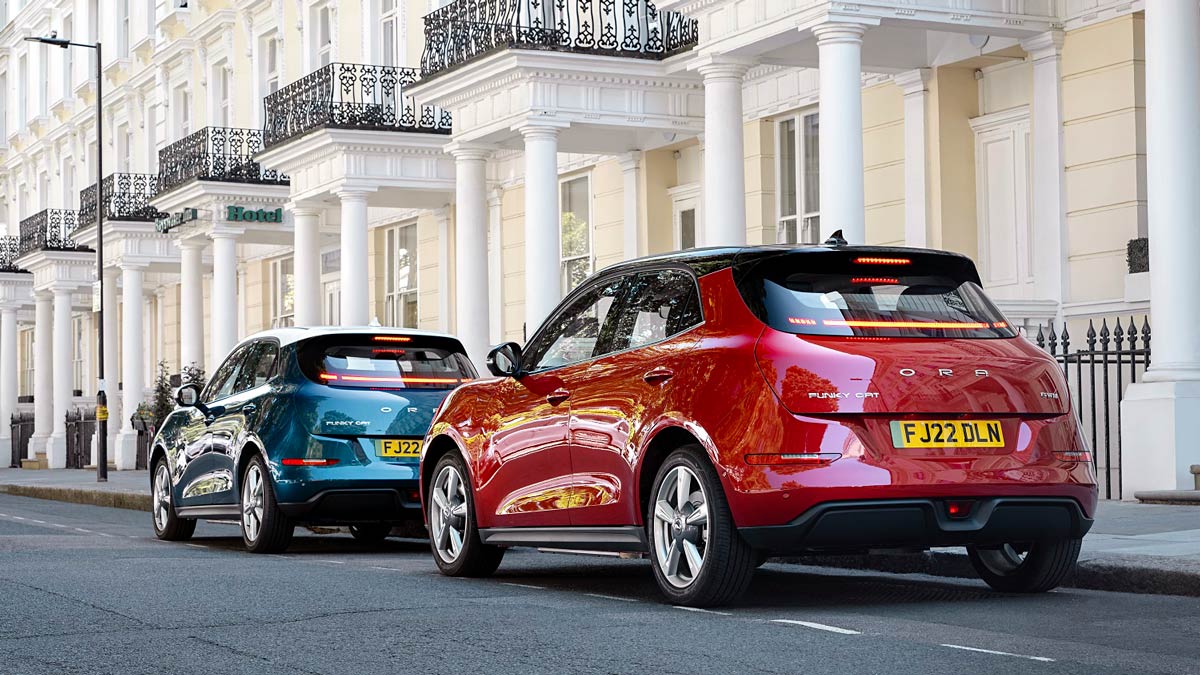
Being a right-hand drive, English speaking country that is well ahead of Australia in terms of new EV sales, the UK EV auto market is a useful one to look to when considering where ours will be in three to five years time.
The UK’s Society of Motor Manufacturers and Traders (SMMT) recently released both the full-year UK new and second-hand car market data, and it is looking good for the establishment of a healthy used EV market. There, 2025 saw new BEV sales hit 23.4% and EV sales (BEV+PHEV) hit 34.6% of all new cars sold. (As comparison, in 2025 Australia saw BEVs hit 8.6% and EV (BEV + PHEV) reach 13.1%).


As a consequence, the UK second-hand market is also well ahead of ours with the BEV component of the UK car parc now at 5.33%. (Much greater than ours, which is barely 2%).
So what light can the UK market shine on the future of Australia’s?
To start with: there are a lot more second-hand models, in numbers, than we have here. Also, with the UK being an early adopter of EVs, there are a lot more of each of the older models than we have here. This means the UK is becoming a truer reflection of the general second-hand EV market than ours has yet to achieve.
In Australia, small variations in supply can significantly skew availability and price by either flooding a small market with a sudden fleet turn-over, or push prices up with the drying up of a second-hand model reflecting a supply shortage during the early years of its introduction.
So what’s happening in the UK? Used BEV sales in 2025 were up by almost a third on 2024, reflecting the earlier growth of new EV sales to provide those future second-hand sales. It also shows a growing confidence in the used BEV market with used buyers not avoiding second-hand BEVs.
Predictions for the UK used car market in 2026 are that the growth of used EV sales in the 4- to 6-year-old category will be constrained due to the Covid era supply constraints on new car production and sales at that time.
Prices are expected to rise slightly due to these supply constraints and as a result, people will shift their focus to slightly earlier 2018/19 models – which were sold in lower numbers, so again a supply constraint is also likely to push prices up.
However, predictions are that in the UK, 2026 will provide more a year of stability and moderate price movements as BEVs are starting to reach a critical mass in the second-hand market.
Mike Hawes, SMMT Chief Executive, said, “A third year of used car sales growth underscores the market’s resilience, with recovering new car demand revitalising choice and affordability – especially for EVs – in the used market. The record number of buyers making the switch signals growing confidence in zero and ultra-low emission motoring. Maintaining this momentum, however, and driving the fleet renewal needed to decarbonise our roads at pace, must start with ensuring a strong and sustainable new car market.”
Coming back to Australia – given the smaller number of models (and sold volumes of these) here before and during Covid – that price stability is unlikely to be seen here for Covid-era and before models, as our used BEV market is still well behind the UK car parc in terms of percentage.
Given our smaller BEV car parc, 2026 may well see continuing volatility in Australian BEV sales prices. However, patient buyers willing to put off their purchase for maybe another 12 to 18 months (when our BEV car parc starts to reach critical mass) should be rewarded with less price volatility, as well as more options on the 2 to 4 year-old second-hand market.
Summing up:
It seems that some things don’t change: Australian BEV buyers have become rather too used to watching overseas BEV markets flourish … and patiently having to wait another 12 to 36 months for the same to finally happen here.
On the other hand, examples from overseas markets like the UK (and in particular Norway) are a good way of pricking the balloon of EV naysayers who say that nobody wants to buy new and/or second hand BEVs, or that prices will remain high for new/fall precipitously for second-hand models. Those markets show that BEVs, once established in a market, continue to grow and buy/sell in much the same ways as the ICE cars they are replacing.


Bryce Gaton is an expert on electric vehicles and contributor for The Driven and Renew Economy. He has been working in the EV sector since 2008 and is currently working as EV electrical safety trainer/supervisor for the University of Melbourne. He also provides support for the EV Transition to business, government and the public through his EV Transition consultancy EVchoice.















Leave a comment