
Unlock the Editor’s Digest for free
Roula Khalaf, Editor of the FT, selects her favourite stories in this weekly newsletter.
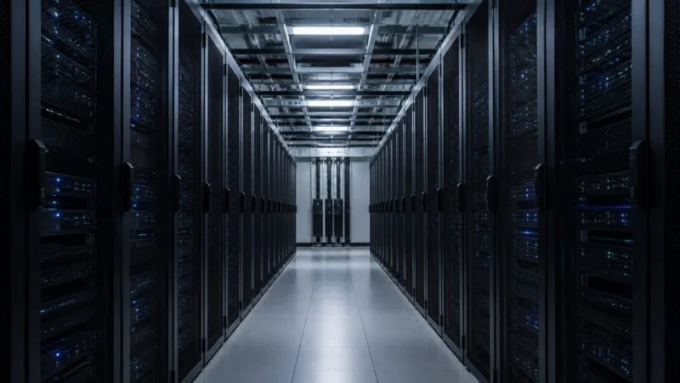
Everyone and their dog are building an AI data centre, and some participants in this trend have become trillion-dollar juggernauts. But the way data centres are being built is changing. That gives suppliers of next-generation electrical components and power chips a chance to share in the bounty.
New data centres need 100 times more electricity, relative to their size, than they did 10 years ago. That calls for higher voltages and power units that consume less space, copper and energy. Switching to 800 volts, enough to charge a luxe sports car in 20 minutes or so, means reconfiguring the way data centres are set up.
Suppliers of kit are already preparing for the switch to 800 volts, but implementation is unlikely to start for a couple of years. In addition to developing and building components, standards will need to be set and safety ensured. Analysts estimate between 15 per cent and 25 per cent of global data centre capacity will be powered this way by 2030.
Ambitions for the way that power is delivered vary. At the far end of the spectrum, there is AI chipmaking supremo Nvidia. Its grand plan entails a complete rewiring of data centres, taking power units out of the server racks — where they would otherwise take up valuable compute space — and instead distributing electricity from around the perimeter of the room. More modest efforts call for separate power and cooling units or “sidecars” that sit adjacent to the server.
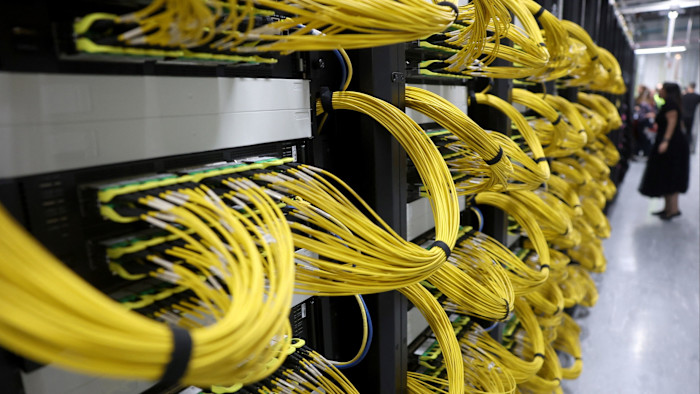
Rethinking the boiler rooms of AI lacks glamour but is big on impact — comparable to ditching the modem and accompanying cluster of wires and switches for WiFi, only on a much larger scale. That is good news for the unsung enablers of these souped-up AI factories: sturdy industrials and power chipmakers.
Switzerland’s ABB supplies technology to one in four data centres, a market it sees growing at a low double-digit percentage rate. France’s Legrand is banking on demand for electrification components used in data centres to lift overall sales by 10 to 15 per cent this year.

On top of cables and components, reconfigured AI factories will require power chips capable of handling higher voltage. Nvidia has signed partnerships with nearly a dozen silicon providers, ranging from Germany’s Infineon to Innoscience of China. Infineon and Aixtron, also based in Germany, and Navitas of the US stand to benefit from increased use of materials such as gallium nitride and silicon carbide, which handle higher voltages more efficiently than silicon. Infineon forecasts that sales of its power supplies for data centres will reach about €2.5bn in the next fiscal year, up from €1.5bn this year.
These companies are among the earlier beneficiaries in the lengthy refitting of data centres. Skilled labour will be in demand too. Students fretting that AI will render their law degrees less useful than hoped might consider becoming electricians instead.













Leave a comment