

The humanitarian consequences of the war in Iran have already been massive. Thousands of people have been killed, millions more have been wounded or displaced, and countless lives have forever been altered. And even though these most devastating effects of the war have been concentrated in the Middle East region, the economic impacts are reverberating around the world.
Many of those economic impacts have occurred in past conflicts. But the Iran war has created a historic first of sorts: It appears to be the first war in which an artificial intelligence (AI) data center was the target of a military strike.
This may sound like a minor piece of trivia, but I predict it will not only reshape where AI gets built for the rest of 2026, but could alter the trajectory of the AI build-out for years or even decades to come. Here’s why.
What happened
On March 1, Iranian drone strikes hit three Amazon (AMZN 0.87%) Web Services (AWS) facilities in the Middle East: two in the United Arab Emirates (UAE) and one in Bahrain. The Iranian Islamic Revolutionary Guard Corps (IRGC) cited the data centers’ role in supporting U.S. military and intelligence networks as the rationale for the strikes. These were the first publicly confirmed military attacks on a hyperscale cloud provider.

Today’s Change
(-0.87%) $-1.83
Current Price
$207.70
Key Data Points
Market Cap
$2.2T
Day’s Range
$206.23 – $210.56
52wk Range
$161.38 – $258.60
Volume
1.6M
Avg Vol
49M
Gross Margin
50.29%
The strikes had a devastating impact on cloud availability in the UAE and Bahrain, affecting banks, online payment platforms, ride-hailing platforms, and many other regional businesses, and some effects were felt by AWS data center users around the world. Amazon then took the rare step of advising its clients to secure their data outside the region.
And that’s central to understanding what’s coming next.
Why data centers
Data centers obviously aren’t military installations, but they make very compelling targets for military strikes.
For one thing, they’re easy targets. They’re large and they generate massive amounts of heat, which is easy for an infrared missile or drone guidance system to target. They don’t even need to be completely destroyed to be taken offline. One of the March 1 strikes did less damage than the subsequent fire, and subsequent water damage from efforts to put out the fire. Amazon said customers should “expect recovery to be prolonged given the nature of the physical damage involved.”
Even more compelling, data centers are very high-value targets given the amount of expensive tech inside. Even a small data center costs about $10 million to build, and hyperscale facilities can cost up to $1 billion. That makes them some of the costliest buildings in history.
Plus, data centers could be considered targets of military significance. Defense contractors like Palantir (PLTR 1.65%) have shown the potential of AI-powered data analysis to enhance U.S. military and intelligence operations. The recent public spat between AI company Anthropic and the Department of Defense shows how integral the U.S. government thinks AI will be to the future of warfare.
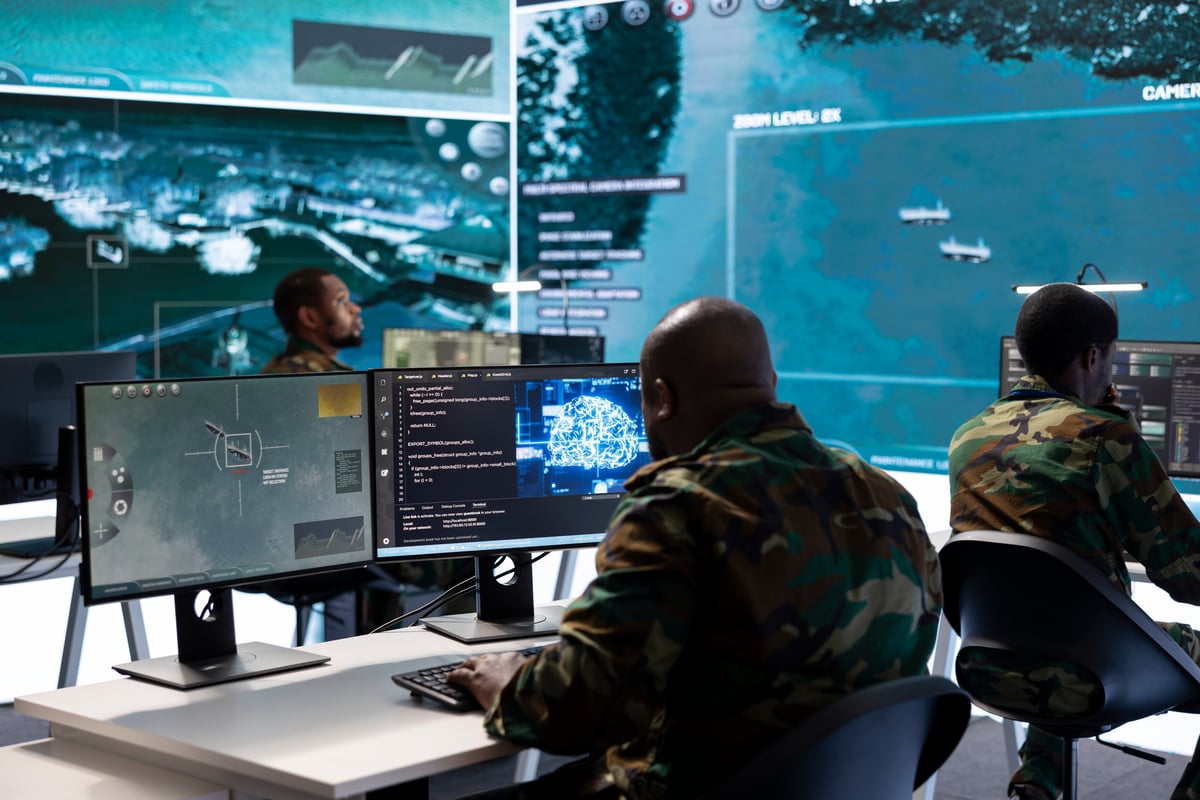
Image source: Getty Images.
As AI plays an ever more outsize role in warfare, data centers will become even more attractive as military targets. And companies like Amazon know it.
What happens now
The Middle East is one of the world’s most underserved regions in terms of data center build-out, with less than 100 operational data centers in the entire region as of November 2025. That’s compared to 5,767 in North America and 3,362 in Europe.
Nations like Saudi Arabia and the UAE had been trying to attract hyperscalers to the region by offering cheap land and abundant energy, making the Middle East AI build-out one of the fastest in the world. That’s in spite of a landmark 2017 court ruling in Dubai stating that effects of a war were a “foreseeable” operational risk in the region, and that service providers were financially responsible for cancelled contract services near an active war zone.

Image source: Getty Images.
With an ongoing war in Iran and unresolved conflicts in nearby Palestine, Lebanon, and Yemen, and local court precedents that stick the service provider with the bill for any service disruptions caused by military strikes, hyperscalers will likely decide the region is simply too risky for further development.
That’s why I’m predicting that current regional data center facilities being operated by AWS, Alphabet‘s Google, Microsoft, and Oracle will remain, but for the rest of 2026, the hyperscalers will shift their focus to nearby regions like southeastern Europe or India. And if the war in Iran doesn’t end conclusively, that situation is likely to continue for years.















Leave a comment