
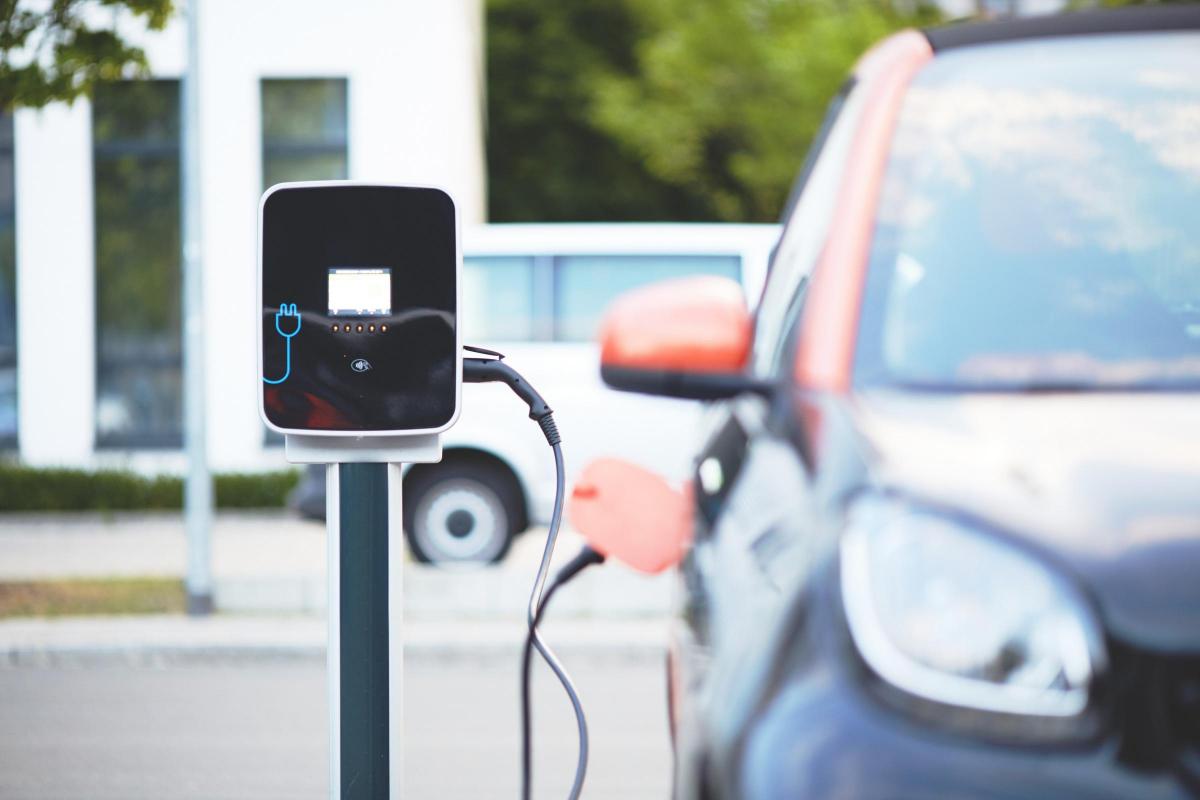
The war in Iran that is being waged by the United States and Israel once again has hit British motorists in the pocket, as geopolitical tensions push oil prices upward and expose the world’s vulnerability to Middle East supplies of fossil fuels.
For decades fuel spikes have followed a familiar pattern – the last time after the Russian invasion of Ukraine, when petrol prices nearly hit £2 per litre.
It is an alarm bell that is ringing in the ears of motorists and could be the “jump-start” for how drivers approach their next car purchase, whether that be a new or used vehicle.
The difference now is that, for the first time, most new car buyers, and a much larger number of used car buyers, have a viable alternative.
And that is a battery-powered electric vehicle.
About two million new car buyers – both private and fleet customers – will be changing their cars this year, along with millions of near-new car purchasers.
In the weeks following the Iran conflict’s escalation (starting late February 2026), there was a noticeable increase in EV interest in the UK.
This indicates a growing consumer trend towards moving away from reliance on petrol and diesel fuels.
Latest monthly figures from the Society of Motor Manufacturers and Traders (SMMT) highlight that battery electric vehicle (BEV) uptake rose 2.8% to 21,840 units, representing 24.2% of the market.
In the last four years, the UK electric car market has expanded rapidly, with around two million EVs expected on the road by the end of 2026.
Greater model choice, improved finance offers and a growing used market have made switching more accessible than ever.
Charging infrastructure also has improved significantly, with around 120,000 public charge points now available nationwide.
The “perceived wisdom” that electric cars are expensive to buy, don’t travel far on a fully charged battery and that recharging stations are hard to find, has been well debunked by the facts.
For drivers of electric cars with access to home charging, the cost benefits are substantial.
Charging typically costs around £250–£300 per year for 8000 miles, compared to more than £1800 for a petrol or diesel car at current prices.
The average new electric car now offers around 280 miles of range, with many exceeding 300 miles – more than enough for typical UK driving habits, where average weekly driving is about 120 miles and the vast majority of all journeys are less than 100 miles.
And the range of new electric cars is increasing with each new model unveiled.
Later this year we will see a new BMW iX3 and a Volvo XC60, both with 500-mile capability.
However, for drivers without off-street parking, the financial case for an electric car is not so clear cut.
They face significantly higher public charging costs, and lack the convenience of plugging into a home charger overnight and driving away next morning with a fully charged battery.
But accessibility is improving, with many more local authorities providing kerbside recharging points.
Norfolk County Council is about to begin installing another 59 public charging points in streets around the city centre.
The council says it wants to help people without private driveways charge their vehicles closer to home.
As a child, I remember my father receiving Government-issued petrol coupons following Egypt’s nationalisation of the Suez Canal in 1956, probably the first “fuel crisis” in British history.
Ever since, whether it has been a fuel tanker driver dispute or a Middle East war, motorists have been held hostage at the petrol pump.
While we can hope President Trump’s utterances are true and that the Iran war will be over within a few more weeks (believe that at your peril) and he will reopen the Strait of Hormuz; it has exposed our vulnerability when it comes to oil and gas supplies.
My experience of running an electric car (I am now on my second EV) has been extremely positive.
A “tank of fuel” that will deliver a range of 250 miles costs under £3 to charge on the Octopus night rate of 7p per kwh.
The performance is “electric”, and it offers quiet and relaxing travel.
While the Iran conflict makes a strong case for switching, the decision still depends on individual factors like charging access, driving habits and the upfront cost of the vehicle.
But with EV used prices around 10% cheaper than an equivalent petrol or diesel vehicle, and an armada of new Chinese offerings at bargain prices, switching to electric is worth some serious thought.
Peter Franzen OBE is a motoring journalist and retired EDP editor
















Leave a comment