
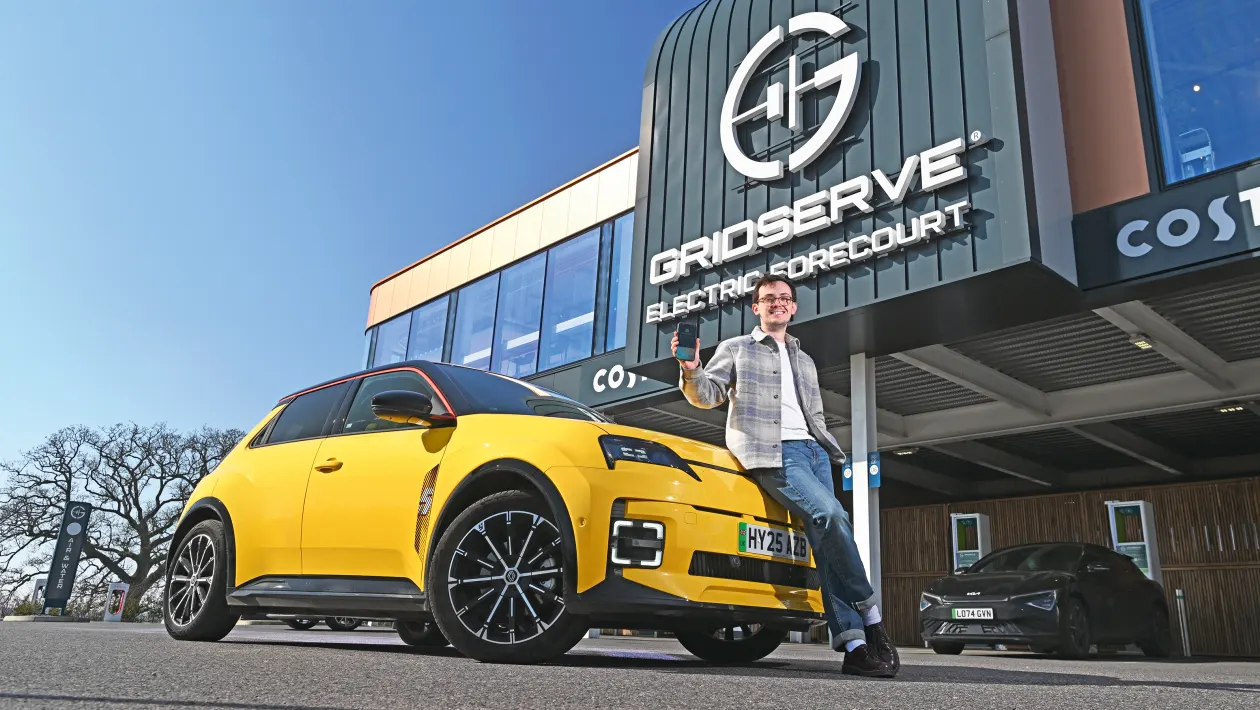
Like next-day delivery or priority boarding on an airline, in the world of electric car charging you can pay more for the convenience of a faster service. Electric car chargepoints don’t all provide the same maximum output, but it is usually written on the side or displayed on a screen – and these are usually broken down into three categories: slow (less than 50kW), rapid (50-150kW) and ultra-rapid (over 150kW).
As of February 2026, ZapMap says the weighted average prices for slow and rapid/ultra-rapid charging (taking into account subscription discounts and each chargepoint operator’s popularity) are 54 and 76 pence per kilowatt-hour respectively.
To put this in perspective, a full charge of the R5 and its 52kWh battery at the average slow public charging rate would set you back £28.08 – but £39.52 using rapid infrastructure. This is the equivalent of 11 or 16 pence per mile, which over an entire ownership period can add up to a lot – especially, again, if you don’t have access to a domestic chargepoint. In comparison, solely charging at home on an off-peak electricity rate can cost just two pence per mile, meaning those with a driveway have a massive cost advantage.
Bear in mind, however, that different EVs have different maximum charging rates and that you might be wasting money by plugging into a more powerful charger. Some of the most powerful devices capable of speeds in excess of 350kW can be more expensive to use than those outputting, say, 100kW. The Renault, for example, has a maximum charging speed of 100kW anyway, so shelling out extra to top up at a charger more powerful than this is pointless because you won’t benefit from the additional power.
Which charging network is best?
This largely depends on whether you’re placing greater emphasis on reliability, user experience or simply how much charging costs. As of the beginning of March 2026, the UK’s biggest rapid-charging network is operated by Motor Fuel Group (MFG), with almost 2,800 chargers over 550 locations. The largest network overall, however, is Shell Recharge Ubitricity, which operates roughly 14,500 chargepoints of varying speeds.
















Leave a comment