
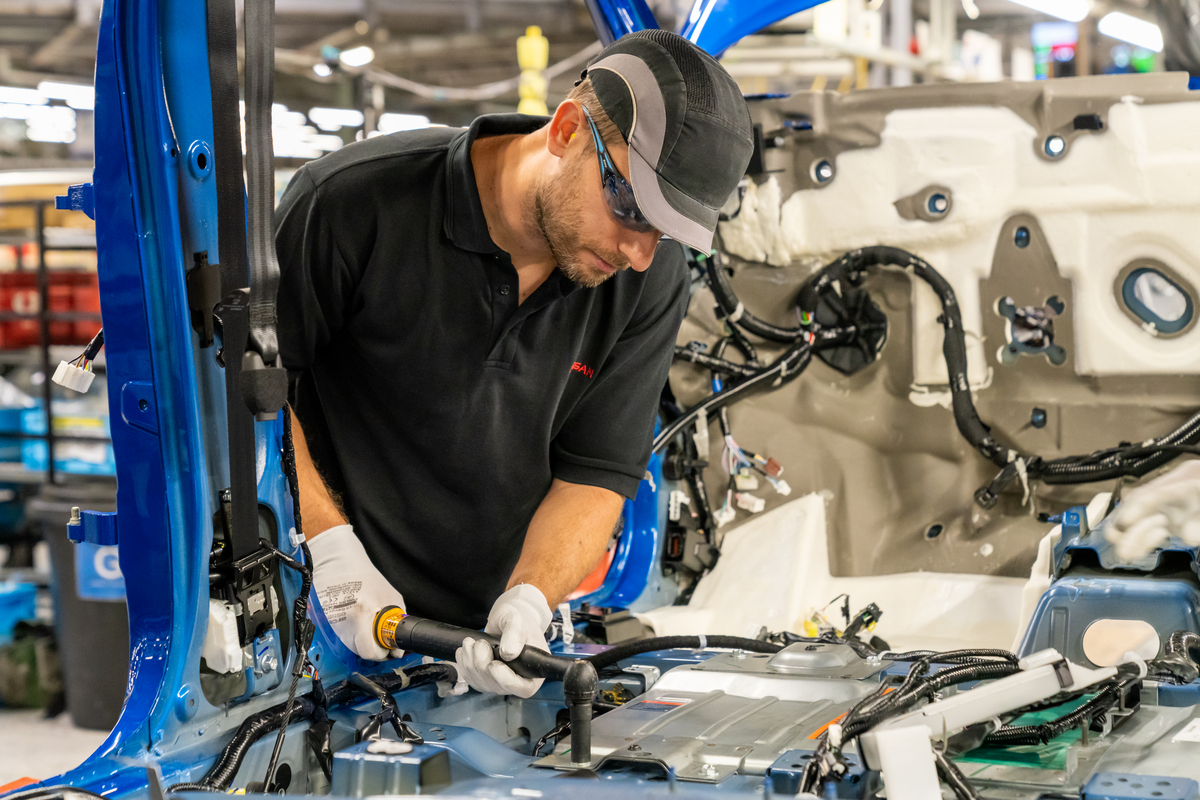
Vehicle manufacturing in the UK fell again in March, with cars and commercial vehicle production both down in the month.
Figures from the Society of Motor Manufacturers and Traders (SMMT) show overall production was down 8.2%, with 72,511 vehicles leaving UK factories.
Ensure you always get Fleet News insight. Make us a preferred source of news on Google
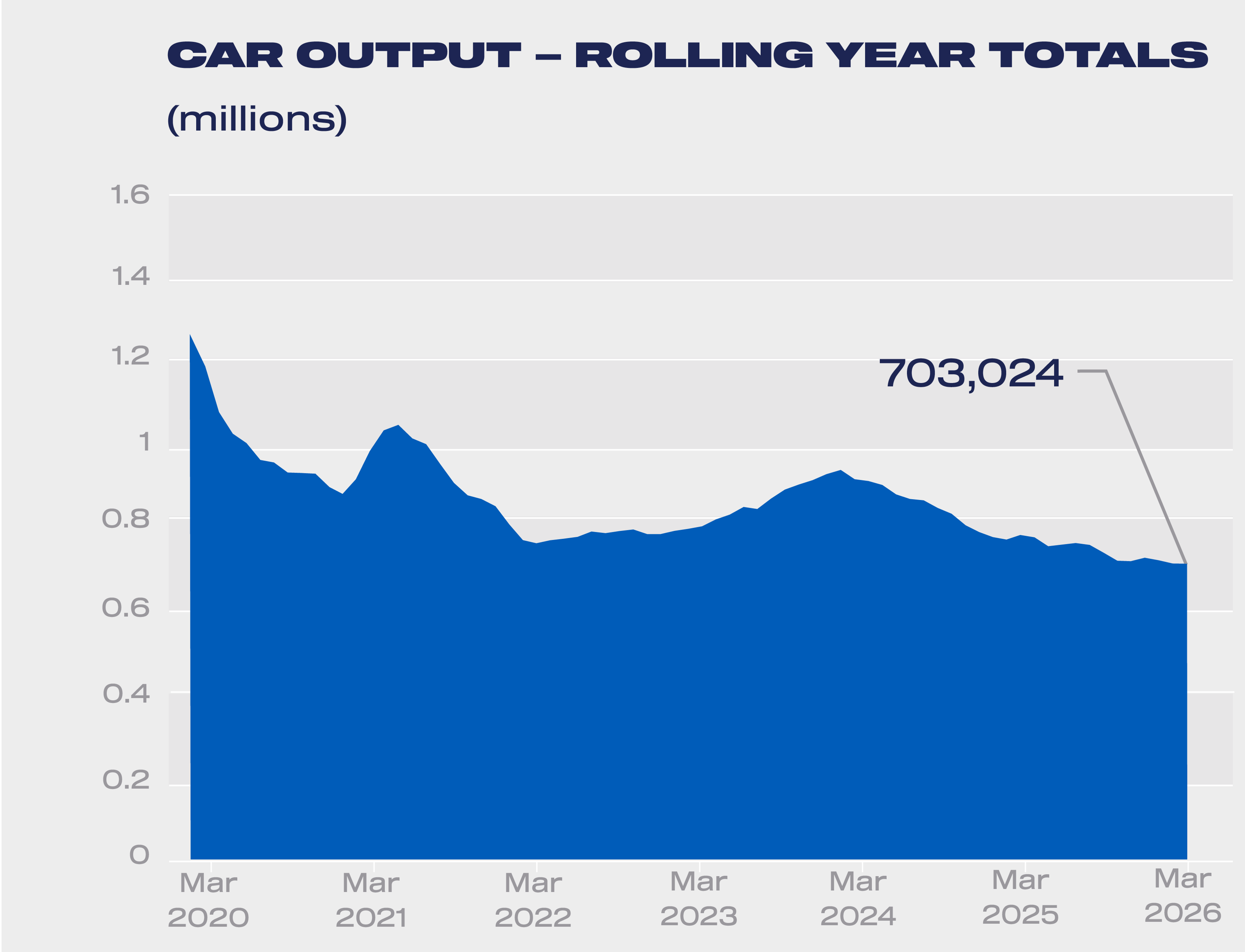
There were 69,755 cars (down 0.8%) and 2,756 commercial vehicles (down 68.3%) produced, with car output affected by a part supply challenge temporarily pausing production at a large plant, weak exports to Asian and US markets and model changeovers.
Commercial vehicle (CV) volumes continued to reflect a major manufacturer restructuring in 2025, with the closure of Vauxhall’s plant in Luton.
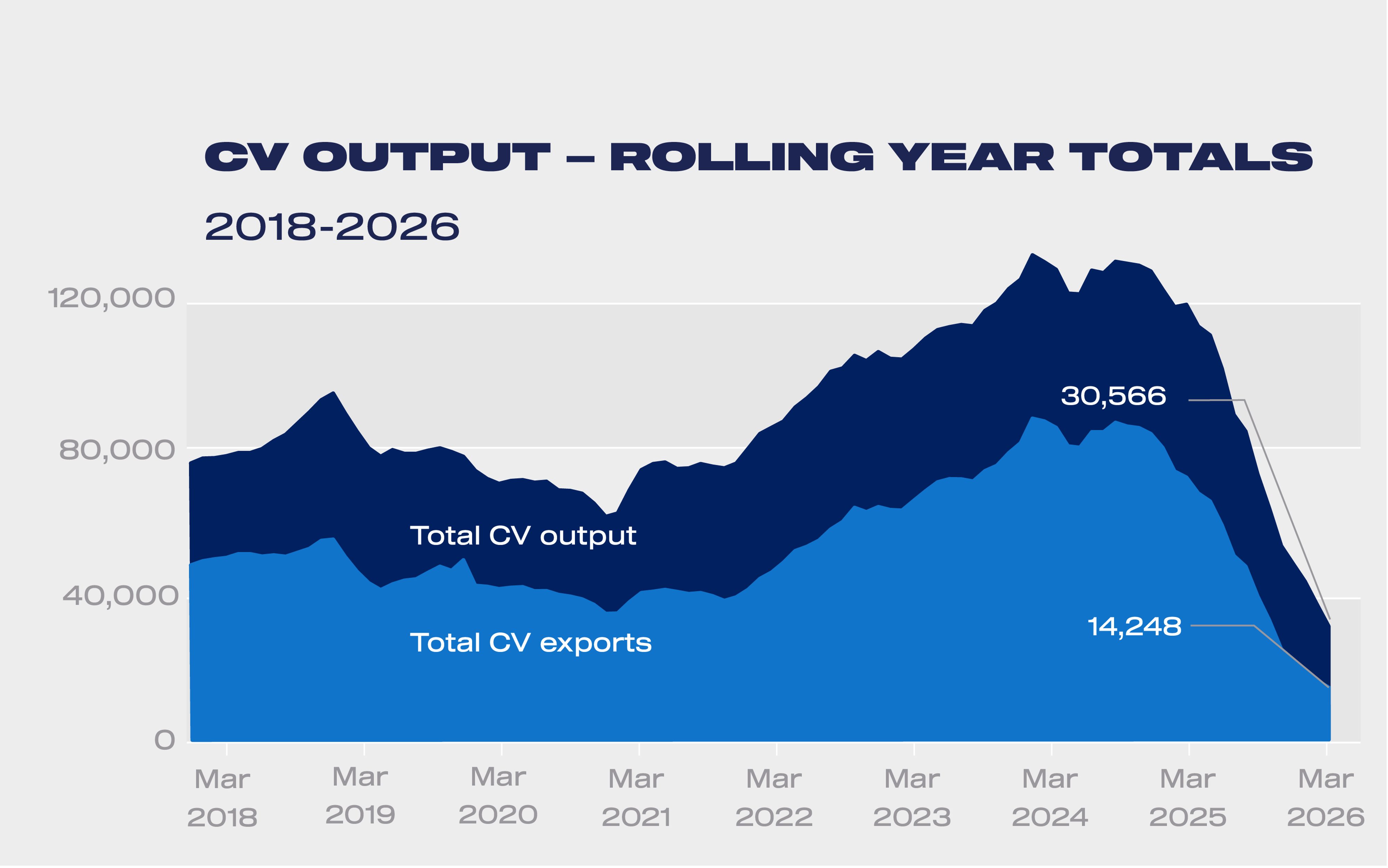
Exports of cars and CVs both fell, down 4.3% and 54%, to 49,339 and 1,602 units respectively.
Despite this, production for overseas buyers still accounted for the majority (70.3%) of vehicle output. The EU remained the UK’s largest global market, taking 91.6% (1,467 units) of CV exports and 62.6% (30,899 units) of car exports.
EU demand for UK-built cars, rose for a fourth consecutive month, with exports up 4.8% year-on-year. That growth, however, was offset by a decline in production for the US (24.1%), China (47.9%) and Japan (25.3%), which together accounted for 18.6% of all shipments.
Car output for British buyers, meanwhile, rose 8.7%, while CV production for the UK fell by 77.9%.

In the first quarter, UK factories produced 208,088 vehicles, down 13% on the same period in 2025. Car output fell 6.7% to 200,889 units, while CV volumes declined 70% to 7,199 units.
Output for overseas markets represented 75.8% of all vehicles made, although exports fell by 12.4%, with production for the UK down 14.8%.
With the UK’s manufacturing competitiveness under intense pressure, the announcement earlier this month of the final design of the British Industry Competitiveness Scheme (BICS) represents a major win for Britain’s automotive manufacturers, according to the SMMT.
It promises to drive down the sector’s electricity costs – among the highest in the world – to support more favourable competition with plants abroad.
The SMMT explains that this is vital as the global environment is particularly challenging for the sector.
Energy price volatility from the ongoing conflict in the Middle East is likely to raise costs in the short to medium term, and the impact of oil price rises could also dampen demand in key markets.
Furthermore, the sector faces the prospect of being severely disadvantaged by the EU’s proposed Industrial Accelerator Act and ‘Made in Europe’ policy which, as currently drafted could exclude UK automotive products from substantial segments of the European market undermining the competitive position of UK plants.
Given the vital interdependence of EU-UK automotive trade, worth an annual €80 billion and with the balance firmly in favour of the EU, SMMT is calling for urgent amendments to the policy to ensure the UK automotive sector continues to be treated as a trusted partner.
Granting UK-built vehicles, parts and batteries equivalent treatment across all relevant provisions would protect a long-established, mutually beneficial trading relationship that supports jobs, supply chain resilience, industrial transformation and decarbonisation, and ensures consumer choice and affordability, it says.
Manufacturers on both sides also face the prospect of tariffs on electrified vehicles and batteries with the introduction of tougher rules of origin in 2027 as part of the Trade Cooperation Agreement (the “Brexit deal”).
As a result, industry is urging governments to look at pragmatic solutions and use the forthcoming EU-UK summit to include discussion of automotive issues so that the trading relationship can be improved to mutual benefit.
Mike Hawes, SMMT chief executive, said: “Car production stabilising in March is welcome news for both assembly and the wider supply chain.
“Government’s recent intervention to bring down electricity costs will provide a major and long-called for boost, but the scheme’s benefits must be delivered urgently as the geopolitical situation offers little optimism.
“We must ensure any ‘Made in Europe’ proposals from the European Commission do not exclude the UK as the two industries are integrated such that both would suffer if the free trade provisions enshrined in the Brexit deal were undermined.
“The EU and UK must work together to avoid that scenario – and the looming threat of tariffs arising from stricter rules of origin on electrified vehicles – to ensure a positive outcome for industry, economies and consumers on both sides of the Channel.”
Emily Sawicz, director and industrials senior analyst at RSM UK, says that, rather than signalling a sustained improvement in underlying demand, the divergence between sales momentum and production highlights the fragility of current market conditions.
“Persistent cost pressures, supply chain risk linked to the Middle East conflict and subdued confidence continue to weigh on manufacturing activity, limiting the scope for a near‑term recovery,” she said.
“The announcement of a substantial £380m funding boost for the Advanced Propulsion Centre UK (APC) in Somerset could be a gamechanger for the industry.
“Innovating new battery technologies for Jaguar Land Rover’s EV models will bolster our domestic zero-emission vehicle supply chain and create over 4,000 jobs.”
She added: “As UK and European manufacturers struggle to compete with Chinese companies on price and volume, advanced technologies offer new opportunities for maintaining a competitive edge in the market.
“Major companies such as Renault, BMW and Volkswagen have considered investing into new range extender technologies, which offer a middle-ground between plug in hybrid and electric vehicles and aim to reduce range anxiety among consumers.
“With UK manufacturers facing sustained fears over the price and availability of fuel and core materials, investment in new and innovative technologies could offer much-needed opportunities for future, long-term growth.”
















Leave a comment