
A NUMBER of popular motor brands have taken their electric vehicles off the market.
The decision comes as EV sales are not hitting their projected targets.
So far in 2026, the sale of electric vehicles is on the up, with around 137,614 new electric cars added to the road so far this year.
However, in line with industry expectations, the zero-emission motors are not selling as quickly as first believed.
Currently sitting at 22.4% of the new market, EV sales are not reaching the government’s targets.
Manufacturers are expected to increase their number of EV sales under the Zero Emission Vehicle Mandate, which aims for 80% of new cars to be electric by 2030.


Currently, petrol cars still make up 45% of the new car market, with the majority of buyers opting for petrol engines rather than electric vehicles.
With less demand for electric vehicles, some manufacturers are stepping back from the production of EVs or delaying their launches.
Below are some of the brands hitting the brakes on the sale of electric cars, as reported by MailOnline.
Afeela
A joint venture between Sony and Honda, Afeela was going to be a new face on the EV market – but after announcing their second zero-emission vehicle earlier this year, the entire EV project was scrapped.
Their first vehicle, the Afeela 1 didn’t even go on sale despite orders taken for the car in the US and in March, Honda revealed that they were reassessing their own strategy, citing changes within the EV market as the cause for the “discontinued development” of the project.
Apple
Despite plans in development for nearly a decade, the tech company’s venture into the EV market was another project that never sparked up after it was revealed that the team working on the EVs had instead been relocated to another area – artificial intelligence (AI).
Plans for a self-driving EV were scrapped owing to “insurmountable development hurdles” and “low profitability projections”, with the wider shortcomings of the EV industry referenced.
Aston Martin
The iconic British car firm, favoured by James Bond, has delayed the launch of its electric vehicle twice, and has now confirmed that any introductory EVs will not be debuting on the market until the “latter part of the decade”.
Demand for zero-emission vehicles amongst loyalists to the brand is apparently low, with Canadian F1 tycoon Lawrence Stroll, who also serves as Aston Martin executive chairman, revealing that customers prefer to hear the deep roar of its combustible engines.
Audi
While the German brand does sell smaller EV vehicles, last year the manufacturers stopped production of their beloved Q8 e-tron – the brand’s largest EV and first mainstream zero-emission vehicle.
The news came after Audi confirmed it would be making the “painful” decision to close down its Brussels plant – placing 3,000 jobs at risk – as reduced numbers of EV sales led to the manufacturer’s parent company, Volkswagen, implementing cost-cutting measures.
Bentley
Bentley has seen continuous delays when it comes to their commitments to electric vehicles – with its first EV now slated for release in late 2026 – citing falling demand from customers for the cars as the culprit.
Despite initially aiming to be an all-electric company by 2030, Bentley has delayed plans to debut a new EV each year and imposed a new deadline of 2035.
Ford
Ford shocked customers when it scrapped one of its best-selling EVs, following declining sales and financial losses.
Priced at $40,000, the popular F-150 Lightning was removed from the US market after being on sale for just three and a half years with the company moving instead to focus on the sale of smaller EVs and plug-in hybrids.
Ora (Great Wall Motors)
Despite being one of China’s largest car manufacturers, the brand was fairly unknown in the UK – a feat which did not help when it came to sales of the brands first, and only, electric vehicle.
The Funky Cat EV – swiftly rebranded to the ’03’ – made little to no dent on the UK market, selling just 524 vehicles, before being scrapped.
Honda
Honda axed its e:NY1 EV after just three years, confirming to The Sun that the vehicle is “entering the final stage of its model lifecycle” – meaning the Japanese manufacturers currently have no EVs on sale in Britain.
The brand won’t be without an EV for long, however, with the launch of the Super-N electric city car in July – available for less than £20,000 but limited to just a 128-mile range.
Lamborghini
Despite initially focusing on the production of a new EV, the luxury car brand has switched up its plans finding a low demand from customers for the zero-emission vehicles.
Plans for a fully-electric version of its popular Urus SUV have been cast aside, meaning the brand currently only supplies plug-in vehicles – like the soon-to-be released plug-in hybrid form of its Lanzador Gran Turismo.
Lexus
It’s the end of the road for the Lexus UX 300e despite only going on sale back in 2021, as charging issues and a lackluster 186 miles of range – combined with a lack of interest from customers – led to the early retirement of the vehicle.
Its hybrid version is still on sale, but the only fully electric option for shoppers now is the RZ SUV.
Tesla
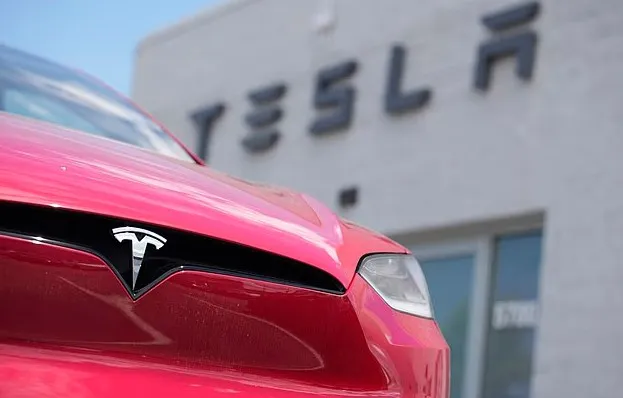
Despite being the best-known manufacturer of EVs, Tesla CEO Elon Musk revealed it would be scaling down the production of its EVs as the tech giant focuses on robot production and self-driving vehicles.
Retiring the Model S and Model X EVs, focus will instead shift to the Model 3 and Model Y, with the Roadster and Cybercab also due updates.
Volkswagen
The German brand will soon ditch the ID.5, a vehicle aimed at the Chinese market that failed to make its mark and has also discontinued the ID.4 in the US.
However, the company did just announce the release of their latest EV – the ID.Polo EV – this week, priced at £25,000.
Volvo
It was revealed that over 10,000 Volvo EX30s had been recalled in the UK following reports warning that the car’s battery had the potential to overheat when fully charged.
But across the pond, EV’s are faring far worse, with the US scrapping both the EX30 and EX30 Cross Country from the market completely, citing “shifting market conditions and financial factors”.















Leave a comment