
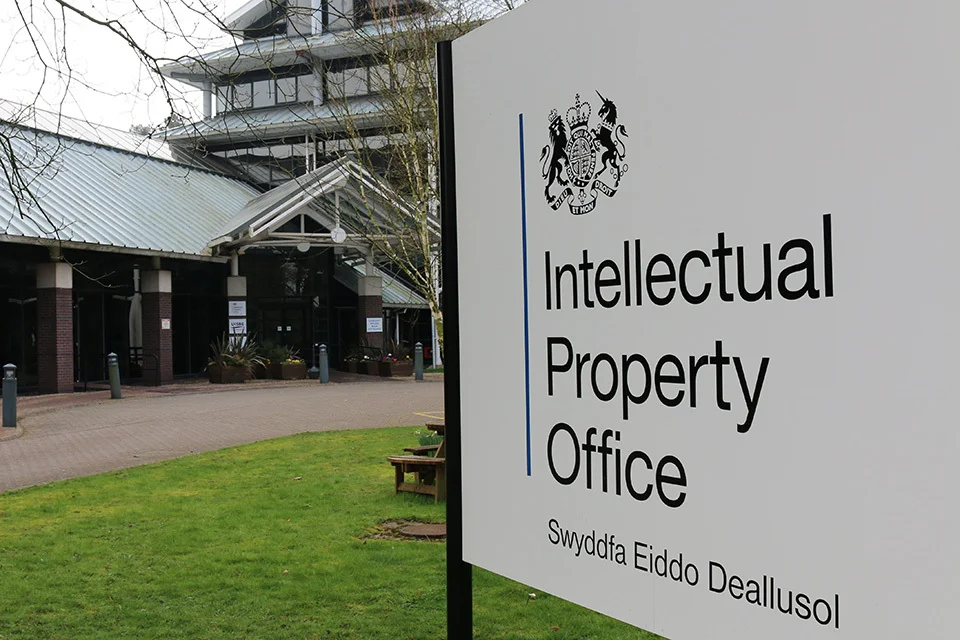
The UK’s AI copyright framework is becoming one of the most closely watched areas of intellectual property policy. While the Intellectual Property Office’s (IPO) Corporate Plan for 2026–27 does not introduce new legislation, it confirms that work on AI and copyright reform remains a central government priority.
For organisations developing or deploying artificial intelligence systems, the practical reality is simple: the law has not changed yet, but the direction of travel is becoming clearer. That uncertainty now sits inside day-to-day business decisions.
The immediate challenge is not responding to new rules. It is making sure governance, procurement and intellectual property controls are ready for a regulatory framework that is still taking shape.
The IPO’s Corporate Plan confirms that AI and copyright reform continues to move forward across government. Although no new legal obligations have been announced, organisations using AI systems should begin reviewing governance structures, supplier contracts and internal oversight.
Future reforms may affect how AI systems are trained, licensed and deployed. The organisations most exposed are not only technology companies, but any business that relies on generative AI tools or third-party platforms.
Regulatory Development in Brief
The IPO will continue working with the Department for Science, Innovation and Technology (DSIT) and the Department for Culture, Media and Sport (DCMS) throughout 2026–27 to implement the government’s response to the AI and Copyright Consultation.
While the Corporate Plan does not introduce new proposals, it confirms that AI and copyright reform remains embedded within active policy development across government. This signals that the UK is moving beyond consultation and into a longer implementation phase, even though the final direction of travel has not yet been defined.
At the centre of this work is a policy tension that remains unresolved: how to support the growth of the UK’s AI sector while maintaining protections for creators and rights holders. The fact that this balance is still being actively managed, rather than settled, is itself a key indicator for businesses relying on AI systems.
For organisations, the practical implication is not certainty, but continuity of regulatory focus. AI copyright is no longer a standalone consultation issue — it is becoming a structural part of the UK’s evolving intellectual property framework.
What Is Known So Far
AI systems are trained on vast datasets that may include copyrighted text, images and other protected material. This issue sits at the centre of ongoing debates around how existing copyright law applies to machine learning development.
Questions around permission, compensation and transparency remain unresolved in UK policy. While the IPO has not introduced new rules, it has confirmed that work on these issues continues within the broader AI and copyright reform programme.
For businesses, the practical challenge is that AI adoption is already embedded across commercial operations, often without clear alignment between legal certainty and operational use. This creates a governance gap where exposure is not necessarily immediate, but becomes more pronounced as regulatory expectations evolve.
Applicable Legal and Regulatory Framework
The Intellectual Property Office (IPO) is responsible for administering the UK’s intellectual property regime, including copyright, patents, trade marks and design rights. It also plays a central role in advising government on IP policy and implementing reforms across these areas.
At the centre of the current debate is a structural policy tension between two objectives: maintaining strong protections for creators and ensuring the UK remains competitive in the development and deployment of new technologies, including artificial intelligence.
The Corporate Plan does not resolve this tension. Instead, it reinforces that copyright law in the UK is still in a period of active development, as policymakers continue to assess how existing intellectual property frameworks should apply in the context of AI systems.
Compliance and Governance Implications
Although no new legal obligations exist at present, the IPO’s position should be viewed as an early indicator of how regulatory expectations in AI and copyright may develop over time.
The impact is unlikely to be confined to a single function. Instead, different parts of an organisation may already be exposed to distinct areas of risk:
| Internal Function | Primary Exposure |
|---|---|
| Legal Teams | Licensing, copyright ownership and infringement risk arising from AI use |
| Compliance | Monitoring and interpreting emerging AI regulatory developments |
| Procurement | Contractual risk, supplier assurances and liability allocation gaps |
| IT | System deployment controls, data governance and model oversight |
| Risk Management | Evolving legal uncertainty and operational exposure |
| Board / Leadership | Strategic accountability for AI adoption and governance |
In practice, responsibility for AI governance is often distributed across multiple teams without a single point of ownership. That fragmentation is increasingly significant in a regulatory environment where accountability expectations are likely to tighten over time.
A Practical Risk Scenario
A typical exposure arises when an organisation adopts a third-party generative AI tool for marketing, customer engagement or internal productivity.
The decision is usually driven by commercial pressures — cost efficiency, speed of deployment and immediate functionality. Procurement focuses on pricing and contract terms. IT reviews security and integration. The tool is then rolled out across business teams.
What is often not examined in sufficient detail is how the model was trained, what data sources were used, or whether the contractual terms properly allocate responsibility for intellectual property risk.
If future regulatory changes introduce licensing requirements, transparency obligations or restrictions on training data usage, organisations may find that those requirements apply to systems already fully embedded in operational workflows.
In that situation, governance gaps are not theoretical — they are already built into live systems.
Financial and Operational Implications
The IPO has not introduced any enforcement framework or penalty regime in relation to AI and copyright at this stage.
However, the absence of immediate regulatory action should not be interpreted as a lack of commercial exposure. Any future reform in this area could still translate into material operational and financial impacts for organisations using AI systems at scale:
- Increased licensing costs for data and model usage
- Renegotiation of contracts with AI service providers
- New compliance and transparency reporting obligations
- Intellectual property disputes relating to training data or outputs
- Reputational risk linked to perceived misuse of copyrighted material
- Operational disruption during system updates or compliance transitions
For organisations that are already integrating AI into core workflows, even incremental regulatory change has the potential to create disproportionate cost pressure, particularly where systems are deeply embedded in production environments.
Policy Direction
Three clear themes emerge from the Corporate Plan.
First, AI is being positioned as a sustained driver of economic growth, with policy development reflecting its long-term role in productivity and innovation.
Second, policymakers continue to operate within a dual-track objective: supporting technological development while maintaining strong protections for the UK’s creative and rights-holder industries.
Third, AI and copyright policy is no longer being treated as a standalone consultation process. Instead, it is increasingly embedded within ongoing strategic and institutional planning across government.
Taken together, these themes indicate that regulatory attention in this area is not cyclical or short-term. It is becoming a structural feature of the UK’s intellectual property policy landscape.
Practical Steps for Organisations
Although no new legal obligations have been introduced at this stage, organisations adopting or deploying AI systems can reduce future exposure by strengthening governance and contractual controls now.
Governance
- Assign clear executive-level ownership of AI oversight and accountability
- Integrate intellectual property considerations into existing AI governance and decision-making frameworks
Procurement
- Review supplier contracts for clarity on training data usage, intellectual property rights and model outputs
- Strengthen indemnity provisions and liability allocation in agreements with AI vendors
Compliance
- Maintain a central register of AI systems in use across the organisation
- Monitor developments in UK AI and copyright policy, including IPO and government consultations
Risk Management
- Incorporate AI-related copyright exposure into enterprise risk frameworks
- Identify business-critical systems that rely heavily on generative AI or third-party models
Why This Matters Beyond Technology Firms
AI adoption is now embedded across a broad range of industries, extending well beyond traditional technology companies.
Legal services, financial institutions, healthcare providers, universities and media organisations are increasingly integrating AI-driven systems into core operational processes, from content generation and analysis to decision support and customer engagement.
As a result, any future reform of UK copyright law in relation to AI is unlikely to be confined to developers or model providers. Its impact will instead be felt across a wide spectrum of sectors that rely on AI tools as part of day-to-day business operations.
Key Takeaways
The IPO’s Corporate Plan does not introduce any new legal obligations for organisations at this stage.
However, it confirms that AI and copyright reform remains an active area of government policy, with further development expected as part of the UK’s broader intellectual property strategy.
For boards and legal teams, the issue is no longer theoretical. It is now operational. Organisations that begin strengthening governance, procurement and oversight frameworks early are likely to be better positioned to respond as regulatory requirements evolve.
What Comes Next for Organisations
The IPO will continue working with the Department for Science, Innovation and Technology (DSIT) and the Department for Culture, Media and Sport (DCMS) throughout 2026–27 to deliver the government’s response to the AI and Copyright Consultation.
While the Corporate Plan does not set out specific legislative proposals, it confirms that the direction of travel remains under active development across multiple departments. The eventual shape of reform could include licensing frameworks, transparency requirements or broader amendments to UK copyright law.
Until further detail emerges, organisations are likely to face a period in which regulatory expectations evolve faster than formal legal rules. In this environment, the practical focus remains on strengthening governance structures, contractual protections and internal oversight mechanisms.














Leave a comment