
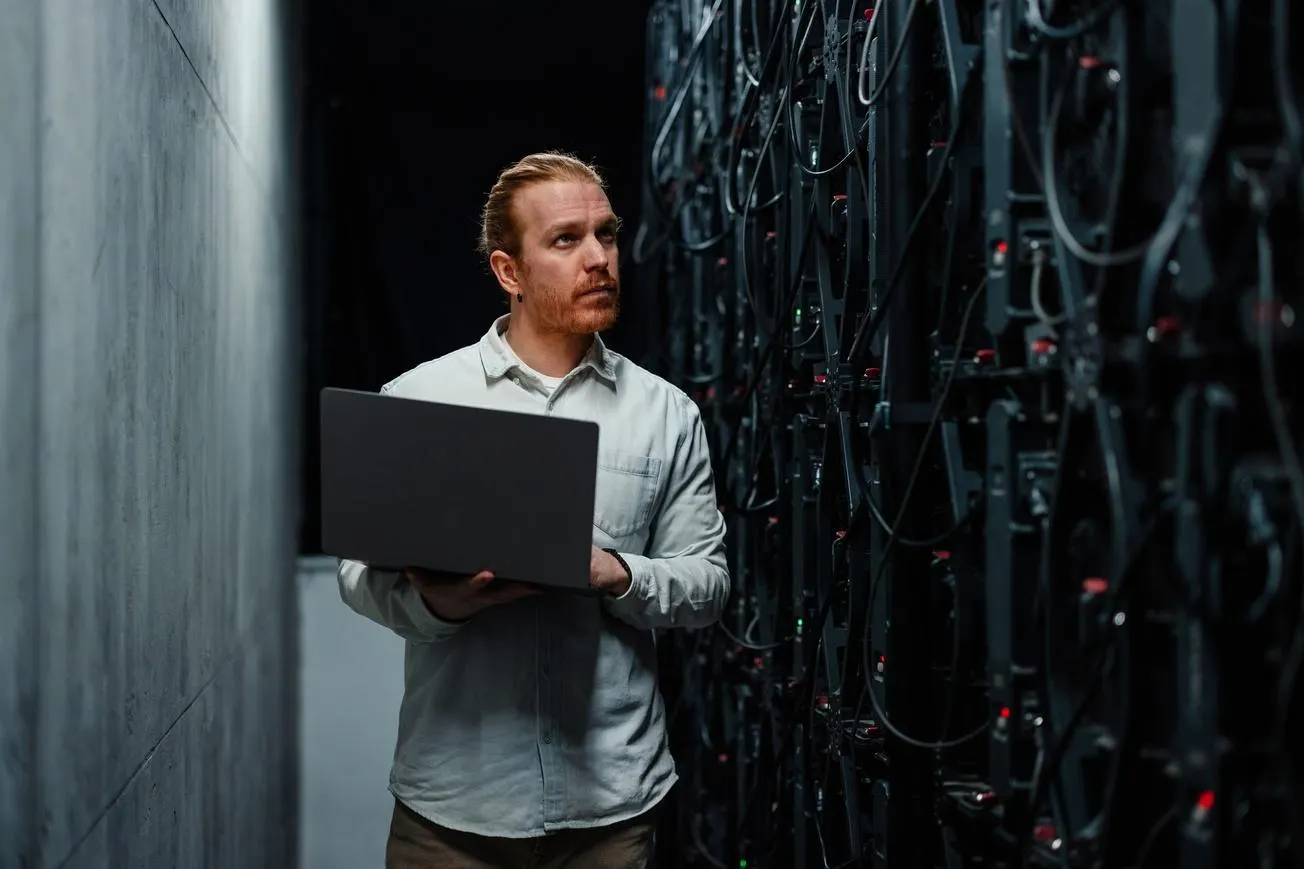
Linda Li, CSO at Re-Teck, turns IT asset disposition into circular value, focusing on AI and data center lifecycle challenges.

AI infrastructure is scaling at an unprecedented pace. Across the globe, data centers are filled with racks of GPU-dense systems designed to train and run increasingly complex models. But beneath this rapid expansion lies a less visible reality: The race to keep up with AI is creating a cycle of constant replacement.
New graphics processing unit (GPU) architectures are arriving faster than ever, each delivering higher performance and efficiency. For data center operators, staying competitive often means upgrading sooner than planned. Systems that are only a year or two old can quickly become economically outdated, not because they fail, but because newer systems perform significantly better per watt.
The result is a shift in how companies are managing AI infrastructure. In many cases, infrastructure planning has become a continuous process rather than a fixed point.
As the chief strategy officer for a global IT asset disposition (ITAD) and electronics lifecycle provider, I see this acceleration firsthand. We work directly with organizations navigating these transitions, managing the secure decommissioning, recovery, redeployment and recycling of high-value AI infrastructure at scale. This visibility highlights how rapidly the infrastructure landscape is evolving, and why sustainable lifecycle management has become an increasingly critical part of the AI economy.
A Constant State Of Turnover
This dynamic is creating a new kind of operational challenge: managing the growing volume of hardware moving in and out of service. AI systems are built from highly specialized, high-value components. GPUs sit at the center, supported by high-bandwidth memory, advanced cooling systems and complex power architectures. Together, they represent a significant concentration of both capital investment and material value.
When these systems are replaced, they enter a secondary phase of their lifecycle that is becoming increasingly important to manage. Some components are redeployed internally to less demanding workloads, extending their usefulness. Others are refurbished and resold into secondary markets.
At the same time, not all hardware can be reused. Some systems are dismantled for material recovery, while others must be securely destroyed to meet compliance and data protection requirements. For organizations handling sensitive data, decommissioning carries both financial and regulatory implications.
The Economics Beneath The Upgrade Cycle
What’s emerging is a more complex economic picture of AI infrastructure. Upgrading to newer systems is driven by performance gains and energy efficiency. But beneath the surface, organizations increasingly recognize that value remains after primary use. GPUs, memory modules and other components can retain significant worth, while the materials inside these systems (copper, aluminum and precious metals) offer additional recovery potential.
In some cases, these materials are more concentrated in retired electronics than in traditional mined sources. That has led to increasing interest in recovering valuable materials from existing products (often referred to as “urban mining“) rather than extracting them from the ground. This introduces a new layer to the total cost of ownership. Organizations are beginning to account not just for upfront hardware costs, but also for what they can recover at the end of life.
From Linear To Circular Thinking
The pace of AI development is forcing a broader rethink of how companies design and manage infrastructure. Traditionally, hardware followed a linear path: manufacture, deploy, retire, dispose. But the volume and value of AI equipment moving through the system are making it harder to sustain that model. Circular approaches, in which companies reuse, refurbish or recycle components, are becoming increasingly economically and environmentally relevant.
Industrywide, we see growing interest in designing systems with this in mind. Modularity, repairability and easier disassembly are gaining attention as ways to extend useful life and simplify recovery. At the same time, regulatory and sustainability pressures are pushing organizations to better track and manage hardware throughout its lifecycle.
Planning For What Comes Next
For many organizations, the biggest shift is conceptual. Decommissioning is evolving into a strategic consideration rather than a purely operational task. The data center operators best positioned in the AI race are those that can effectively manage the full lifecycle of their infrastructure, from timing upgrades to redeploying assets and recovering value from retired systems.
Our approach to global IT asset disposition (ITAD) is built around a full reverse supply chain model, meaning we don’t treat infrastructure as disposable at end-of-life but as an asset that companies can track, recover, reuse or responsibly recycle throughout its lifecycle.
For companies managing AI infrastructure, that means implementing asset tagging and chain-of-custody tracking from day one, defining refresh cycles for GPU-heavy systems and aligning procurement contracts with partners capable of secure logistics, testing, refurbishment and remarketing rather than just disposal.
From there, companies should classify infrastructure into three streams:
1. Redeployable systems that can be validated and reused internally or in secondary environments
2. Remarketable assets such as GPUs that retain strong resale value
3. End-of-life equipment that must be securely recycled
GPU-dense systems often retain significant embedded value and require specialized testing and grading, paired with strict security controls such as certified data sanitization, to recover it while ensuring sensitive data is fully protected at all times.
As AI continues to scale, the challenge shifts to managing the constant cycle of innovation. In this environment, long-term competitiveness is shaped by how organizations handle infrastructure beyond deployment, turning lifecycle management into a core capability rather than an afterthought.
Forbes Business Development Council is an invitation-only community for sales and biz dev executives. Do I qualify?














Leave a comment