
Running a small business often means making decisions with limited time, people and budget. Technology can make some of those pressures easier to manage, but only when the tools being adopted actually solve a problem.
For a small company, building a useful technology setup is not necessarily about having the newest software. It is about creating a reliable way to manage customers, protect information, communicate with colleagues and reduce repetitive work.
The right combination can allow a small team to operate more efficiently without adding unnecessary complexity.
Start With a Reliable Digital Foundation
Before looking at advanced tools, businesses need to get the basics right. Cloud-based services can make documents and other important resources available to authorised employees without tying them to a particular office computer.
Shared calendars, online collaboration tools and cloud storage can also make day-to-day coordination easier, particularly for businesses with employees working from different locations.
The important consideration is not simply moving everything online. Businesses should understand who has access to their information, how files are backed up and what happens if an employee leaves the company.
AI Has Practical Uses Beyond Content Creation
Artificial intelligence is receiving considerable attention, but its usefulness for small businesses goes well beyond generating marketing copy.
AI-powered tools such as ChatGPT can also help with tasks such as drafting communications, research and customer support, although businesses still need to review outputs where accuracy matters.
Some customer-service platforms can also help teams deal with routine questions before an employee takes over when a situation requires more judgement.
The best use cases tend to be fairly specific. Rather than introducing AI because competitors are doing so, a business can start by identifying a repetitive task that consumes time and then assess whether an AI-powered tool can handle part of it.
Smaller companies can benefit from looking at their wider technology setup rather than choosing individual tools in isolation. This includes considering the business technology for UK small businesses that can support everyday operations as the company grows.
Cybersecurity Should Grow With the Business
A small company can still hold valuable customer, financial and operational information, making security an important part of its technology strategy.
Basic measures can make a significant difference. Multi-factor authentication, strong passwords, regular software updates and reliable backups should be standard rather than optional extras.
Access controls are equally important. Employees do not necessarily need access to every system or document used by a business. Limiting permissions can reduce the potential impact if an account is compromised.
Staff awareness matters too. Phishing messages and other social-engineering attempts often rely on human mistakes rather than technical weaknesses. Simple training can help employees recognise suspicious requests before they become a larger problem.
Customer Information Becomes More Valuable Over Time
As a company grows, customer information can quickly become difficult to manage if it is spread across spreadsheets, inboxes and separate applications.
A customer relationship management system can provide a central place to record enquiries, conversations, sales opportunities and follow-up activities. This gives employees a clearer view of where each customer is in the buying process.
For a small team, the benefit is often less about sophisticated reporting and more about consistency. A salesperson should be able to see what has already been discussed with a potential customer rather than starting from scratch every time.
Automation Can Give Small Teams Back Their Time
Many business processes contain repetitive steps that do not require much decision-making. Scheduling appointments, sending reminders, preparing routine reports and moving information between systems are examples of tasks that may be suitable for automation.
Automation does not have to mean implementing a complicated enterprise platform. Even a simple workflow can remove several manual steps from an employee’s day.
The key is to understand the process before automating it. If an existing workflow is confusing or contains unnecessary steps, automating it may simply make the same problem happen faster.
Choose Tools Based on the Business, Not the Trend
There is no shortage of software aimed at small companies. The challenge is deciding which products are actually worth adopting.
Price is obviously important, but it should not be the only consideration. Businesses should also look at how easily a tool can integrate with existing systems, whether employees will realistically use it and what happens as the company grows.
A low-cost application that requires extensive manual work may ultimately be more expensive than a slightly more capable service that saves employees time.
It is also worth avoiding unnecessary duplication. If several applications perform nearly identical functions, employees may end up switching between systems instead of working more efficiently.
Keep Technology Manageable
Small businesses do not need to adopt every new technology at once. In fact, adding too many tools too quickly can create its own problems.
A better approach is to build gradually. Start with the areas where technology can make an obvious difference, measure whether the change is actually helping and then consider what should come next.
This approach also makes employee adoption easier. People are more likely to use a new system when they understand why it has been introduced and how it will improve their daily work.
Build for the Next Stage of Growth
Technology decisions made today can influence how easily a business expands tomorrow. A system that works for five employees may become difficult to manage when the company has twenty or fifty.
That does not mean every small business needs enterprise-level software from the beginning. It means choosing tools with enough flexibility to support reasonable growth and avoiding systems that make it unnecessarily difficult to move information or connect with other services later.
A sensible technology strategy therefore starts with current needs but keeps future requirements in mind.
Technology Should Support the People Running the Business
For small businesses, technology works best when it removes friction rather than becoming another responsibility.
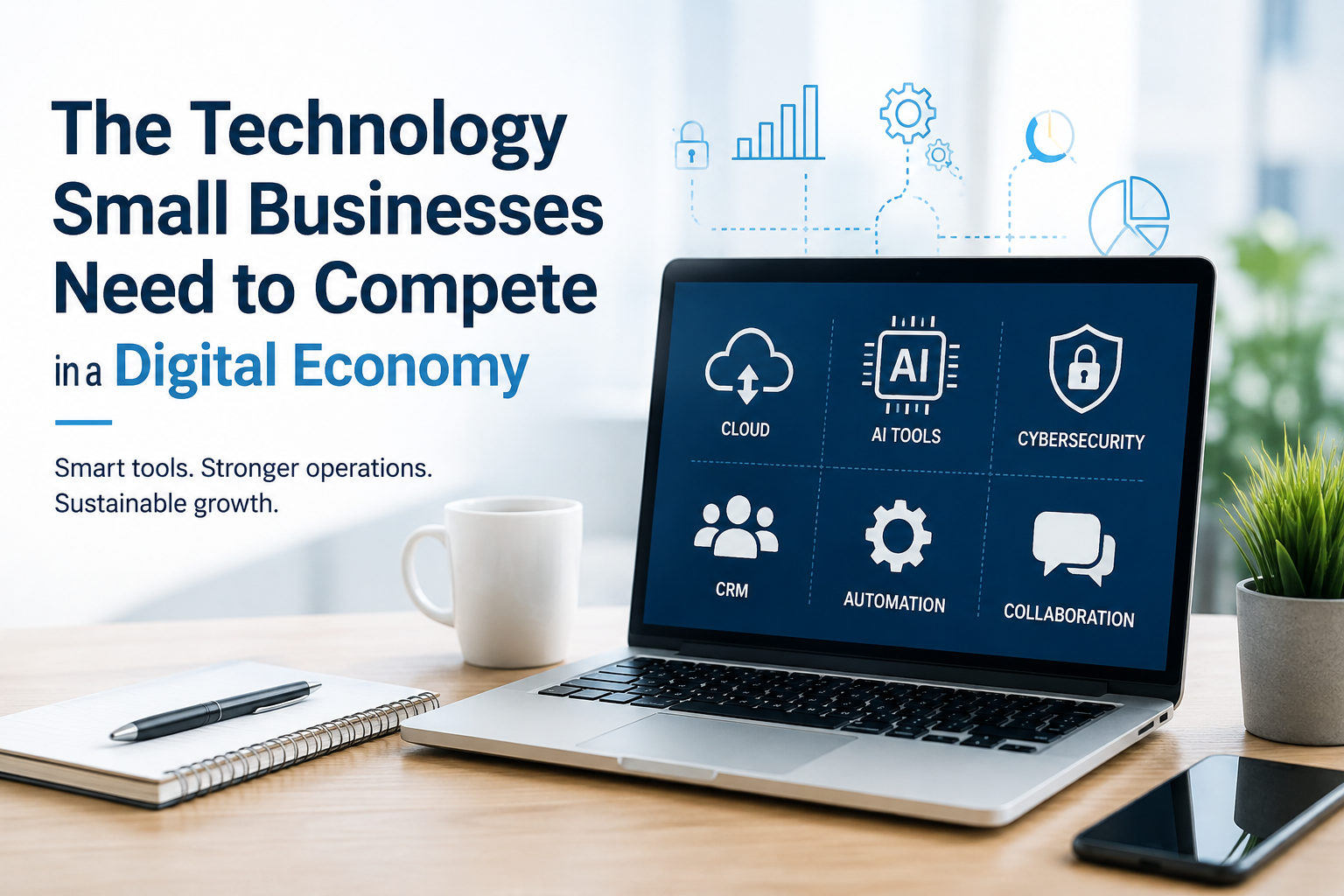
Cloud services can simplify collaboration, cybersecurity can protect important information, CRM systems can keep customer activity organised, and automation can reduce repetitive work. AI can add another layer of assistance where it genuinely improves a process.
None of these tools replaces good decision-making or strong customer relationships. The real advantage comes from putting the right technology behind the people already doing the work.
For UK small businesses, that practical approach can be more valuable than chasing every new technology trend. The goal is not to have the biggest technology stack. It is to have one that helps the business operate reliably, serve customers well and remain ready for its next stage of growth.















Leave a comment