
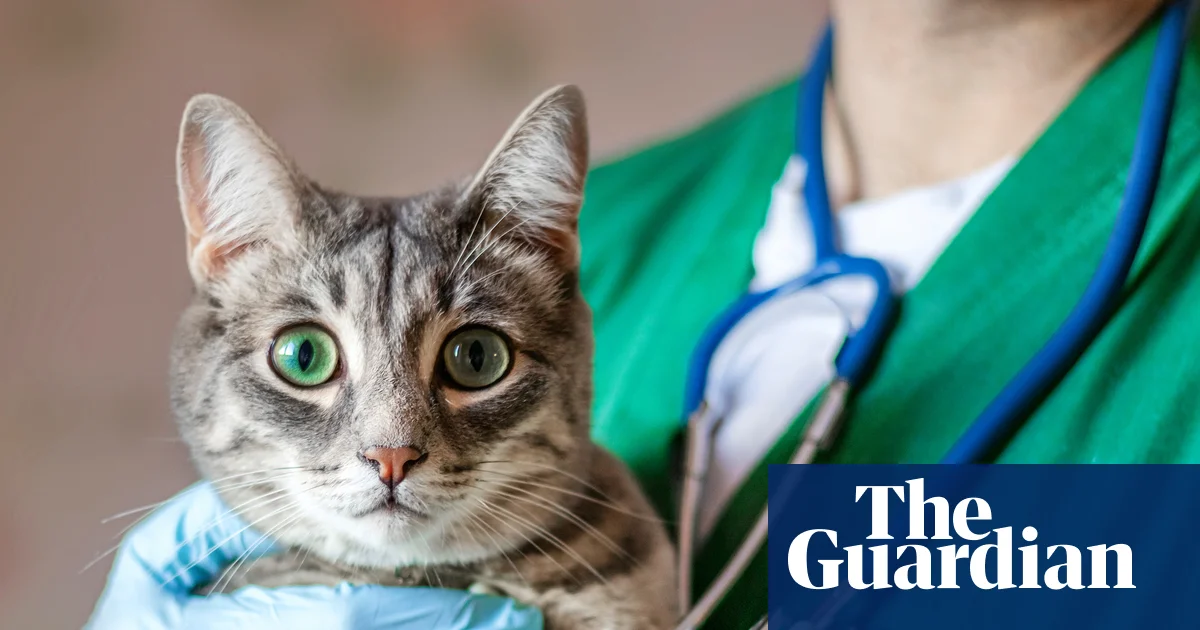
Pet owners have been warned that they could be unknowingly ripped off by private equity firms who have bought local vet clinics, after the Competition and Markets Authority (CMA) removed requirements for multinational companies to disclose which practices they own.
The CMA recently ran an investigation into the monopolisation of vet practices, and found that the lack of competition and transparency of ownership had led to high prices and a lack of information for customers. Pet owners were often unaware their local vet practice could be owned by an international private equity company.
It revealed pet owners pay 16.6% more on average at large vet groups than at independent practices. It said the £6.3bn market was not fit for purpose and needed to be modernised.
As a result, the CMA and ministers announced new rules in a white paper earlier this summer proposing capping prescriptions for pet medicine at £21 and more transparency over ownership.
But the Progressive Veterinary Association (PVA), made up of a group of vets, has threatened the government body with a judicial review, after the CMA changed the wording in its plans in a way the PVA says allows multinational companies to obscure their ownership of vet practices.
More than 60% of veterinary practices are owned in whole or in part by six groups: CVS, Pets at Home, Medivet, IVC and VetPartners, which are owned by private equity investors; and Linnaeus, whose parent company is Mars Petcare, a subsidiary of the US confectionery group Mars.
Rather than the name of one of the large multinational companies or private equity investors being listed as the owner of the vet practice, the new rules will allow corporates to use a brand name, or the name of the original independent practice.
The initial wording of the orders from the CMA said that vets had to disclose their ownership and name the “corporate vet group”. This language has been softened to “network or group”, meaning the name of the vet practice or subsidiary of the company could be named, instead of the large conglomerate.
Dr Iain McGill, a director of the PVA, told the Guardian: “This is bad news for pet-owners and their animals. Ultimately, large corporations would be allowed to hide the fact that they are the ultimate controller of local vet practices and operate behind sometimes misleading brand names.
“Where they have a choice, pet owners often prefer independent practices, which the CMA found, on average, to be cheaper than corporate practices. It would be good to hear from prime minister Andy Burnham that he is on the side of small British-owned businesses rather than often foreign private equity and corporate investors.”
The CMA told vets who complained that the disclosure of the ultimate parent company names might not be of any meaningful benefit to pet owners. They added that these names can be unrecognisable corporate names and that pet owners are more familiar with the high street vet or pet company names.
But the vets argued that pet owners have the right to know if their local vet was owned by a large conglomerate.
The PVA said in its submission to the government regulator: “The suggestion that accurate corporate ownership information may provide no meaningful benefit to pet owners perhaps rather underestimates the intelligence of the average pet owner. Knowing full ownership information is necessary so that pet owners can make an informed choice. Lack of informed market choices is likely to lead to less competition and pet owner detriment.”
A CMA spokesperson said: “It is critical that pet owners know whether their local practice is part of a national group or locally owned, and we are confident the changes we are making will achieve this. In future, all practices will have to make ownership links clear by using brand names that people recognise on signs and online. We will no longer have the unacceptable situation of people thinking they are using a local practice when in fact it is part of a bigger group.
“We consulted extensively on this. Our proposals were supported by large and small vet practices and consumer groups, and we made our decision on this in our final report in March. We’re now considering comments on exactly how the changes should be put in place, to make sure they are clear and workable for pet owners and vets.”
















Leave a comment