

The UK needs to build data centers at a dramatically faster pace if it wants to avoid becoming a tenant in someone else’s AI future. That was the core message from Kanishka Narayan, the country’s AI minister, speaking at the Labour Party conference in Liverpool.
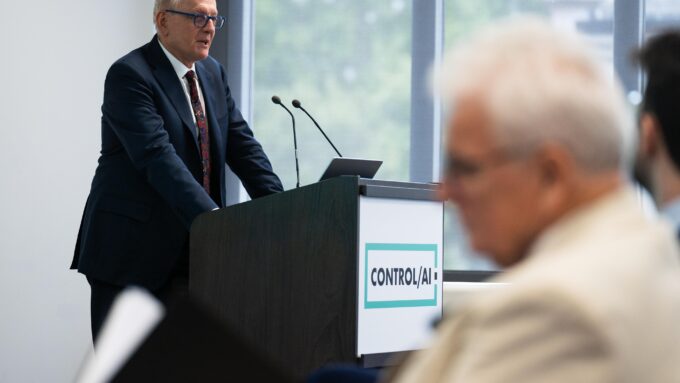
Narayan, who was appointed on July 20, 2026 as the first Minister for Artificial Intelligence with a seat at the cabinet table, used the September 29 address to call for a “sovereign level of compute.”
The capacity gap is massive
The UK’s current live data center capacity sits at roughly 2 to 2.6 GW. The US, by comparison, commands more than 50 GW. To close that gap, the government has laid out a plan to triple domestic data center capacity by 2030. The pipeline already includes more than 14 GW of planned capacity spread across 173 projects, with a heavy tilt toward northern England and Scotland.
Narayan framed the buildout as a matter of national values, not just national interest. If the servers running your AI systems sit in another country, governed by another country’s rules, your sovereignty over those systems is theoretical at best.
Where the money is going
The government has established a £500 million Sovereign AI Fund designed to seed domestic compute infrastructure. On top of that sits a £1.1 billion AI Hardware Plan focused on the physical components, from chips to cooling systems, that data centers require at scale.
Perhaps the most eye-catching project is a £750 million national supercomputer being built in Edinburgh. It’s expected to come online by 2028.
The government has also launched what it calls AI Growth Zones, geographic areas where planning permissions and grid connections are being fast-tracked. The locations are concentrated in northern England and Scotland, where construction jobs and ongoing operations staff could inject meaningful employment into communities that haven’t always benefited from London’s tech boom.
Energy is the bottleneck everyone sees coming
Plans call for integrating clean energy solutions including small modular nuclear reactors and renewable sources into the data center supply chain.












Leave a comment