
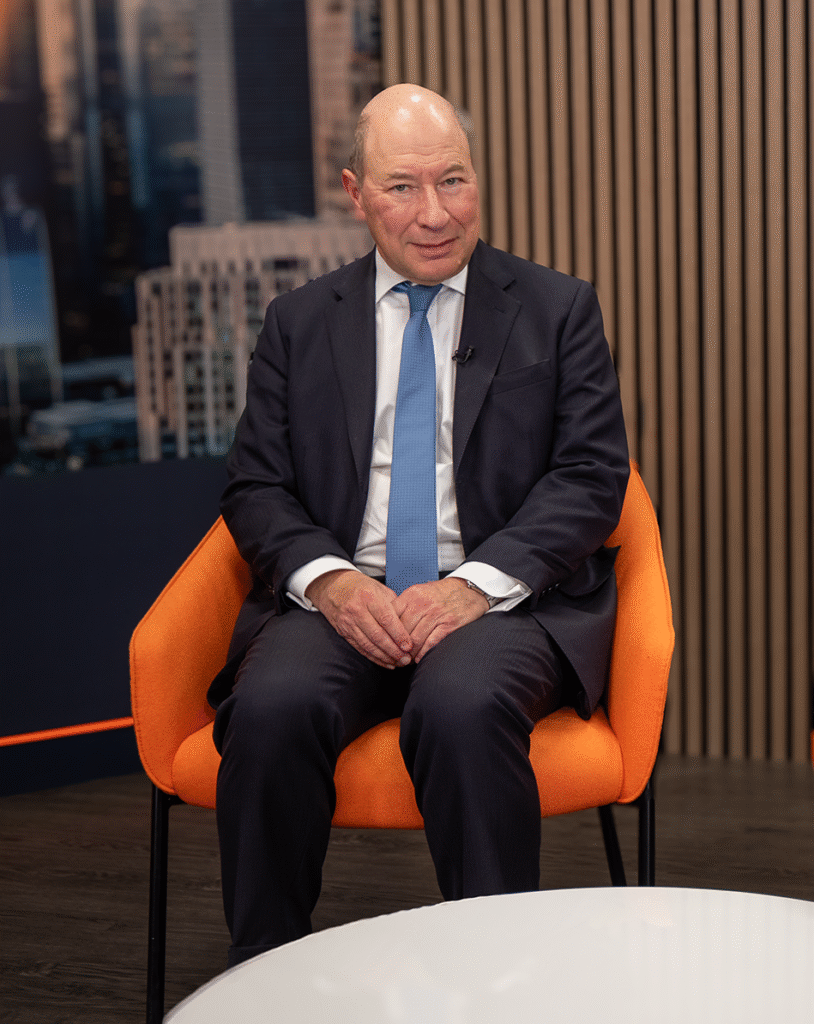
Investors in UK equities are being “paid while they wait” for the market’s valuation discount to overseas markets to close, according to Job Curtis, manager of the £3bn City of London Investment Trust.
Curtis, who has managed the trust since 1991, exclusively told Money Marketing that UK equities currently offer an attractive starting point for investors, with a dividend yield of around 3% supplemented by share buybacks equivalent to roughly 2% of the market’s capitalisation.
He described the combination as a “total distribution yield” of close to 5%, arguing that it provides investors with an income return while they wait for UK companies to be re-rated.
“We have a very attractive dividend yield on the market of around 3%,” Curtis said. “Companies are engaging in share buybacks much more than they used to do.”
He added that UK companies were increasingly returning capital through buybacks, which had historically been more associated with the US market.
Curtis’s comments come as the City of London Investment Trust marks its 60th consecutive year of dividend growth.
The trust increased its dividend by 4% for the year to 30 June, extending the longest record of consecutive annual dividend increases in the investment trust sector.
Curtis said the UK market’s valuation discount was also being demonstrated by the level of takeover activity involving UK-listed companies.
Charles Younes: The quiet comeback of UK equities
Since the beginning of 2026, five companies held by the trust have received takeover bids from overseas buyers, he said, including specialist insurer Beazley, engineering company Rotork, real estate group Segro, food producer Tate & Lyle and asset manager Schroders.
“I just think that illustrates the value in the UK stock market,” Curtis said.
He argued that UK-listed companies, particularly at the larger end of the market, offered relatively cheap valuations despite having significant international exposure.
“The longer the valuation discount persists, I expect you’ll see more takeovers and that will kind of help to close discounts,” he said.
Curtis said he expected the UK market could ultimately “rerate upwards”, although he was not making a short-term call on when that might happen.
Banks offer further dividend growth
Financials remain a key part of the trust’s income strategy, with Curtis saying banks and insurers were currently in good shape.
Banks account for around 18% of the portfolio, while life insurers represent around 7%. HSBC, Lloyds and NatWest are among the trust’s top 10 holdings.
Curtis said there was scope for banks to continue increasing dividends because their payout levels remained relatively conservative compared with profitability.
“I think that the dividend growth is set to continue,” he said. “The amount they’re paying out in dividends relative to their profitability is quite conservative. And so I think they have got scope to continue.”
He also pointed to the impact of higher interest rates on bank profitability, saying banks were able to reinvest deposits and other balances at higher rates as previous hedges matured.
Curtis said this had been “a big factor” behind the performance of the banking sector over recent years.
AI creates opportunities as well as risks
Curtis also highlighted the impact of artificial intelligence on UK equities, saying the trust had avoided some companies whose shares had come under pressure because of concerns about AI disruption.
However, the manager has also used the sell-off to invest in companies where he believes the market may be underestimating the potential benefits of AI.
One example is property portal Rightmove, which the trust bought after its shares fell on concerns about AI.
Curtis said around 90% of estate agents subscribe to the platform and argued that its proprietary data provided a competitive advantage.
“We think that’s a big opportunity after the big fall in the share price,” he said.
He added that banks could also benefit from AI through cost savings and productivity improvements.
However, Curtis said the huge investment required to build AI infrastructure was already contributing to higher prices for areas including semiconductors and copper, as well as construction costs for data centres.
In the longer term, Curtis expects AI to improve productivity across the wider economy.
Cautious on gearing
Despite his constructive view on UK valuations and corporate dividends, Curtis said the trust was currently taking a cautious approach to gearing.
Gearing stood at 4.7% at the end of June, which he described as being towards the lower end of its historical range.
The trust has £80m of long-term fixed-rate borrowing, including £30m at a 2.67% coupon running to 2046 and £50m at 2.94% running to 2049.
Curtis said the low-cost borrowing remained attractive but pointed to geopolitical tensions, elevated oil prices and rising bond yields as reasons for keeping gearing relatively low.
“Against that backdrop, we’re fairly cautious overall,” he said. “The gearing is at a low level compared to where it’s been historically.”
The cautious stance comes despite the trust delivering a 21.9% NAV total return in the year to 30 June, in line with the FTSE All-Share.















Leave a comment