
Support CleanTechnica’s work through a Substack subscription, on Patreon, or on Stripe. Help us produce all of the high-quality, original content we publish week after week despite the challenges of content-scraping AI, antisocial media, inflation, and other hurdles.
My colleague José Pontes did a masterful report on the status of electric car sales in Europe last week. The news was all good, but I wanted to focus on one country where the news is particularly heartening for those who support the EV revolution. The bottom line is that in September, 2026, there were 99,199 electric cars sold in the UK — up a whopping 36 percent from September of last year — and more than double the rate of sales from three years ago.
British news service GBN reports sales of battery electric cars in the UK in September claimed a 28.3 percent market share, which is within striking distance of the 37.6 percent share attributable to gasoline powered cars.
The Society of Motor Manufacturers and Traders said new car sales were up more than 12 percent in September, the tenth month in a row that new car sales have increased. It attributed the increase in EV sales to an unprecedented number of model choices — especially in the smaller segments, compelling discounts, as well as the government’s electric car grant. The desire not to spend one’s entire paycheck to purchase gasoline was surely a factor as well.
Mike Hawes, the CEO of SMMT, said in a statement, “September’s record EV performance is a major achievement. Drivers are increasingly embracing the growing choice of models made available, and high fuel prices are also undoubtedly giving more consumers reason to consider going electric. The industry’s commitment is clear, with billions of pounds of investment in new models, new technology, and incentives.”
The Top Ten EVs
Here are the top ten best selling EV models in the UK in September:
| Model | ||
|---|---|---|
| 1 | TESLA MODEL 3 | 9,929 |
| 2 | TESLA MODEL Y | 5,946 |
| 3 | BYD SEALION 7 | 3,191 |
| 4 | BYD SEAL | 3,184 |
| 5 | KIA EV3 | 3,026 |
| 6 | SKODA ENYAQ | 2,214 |
| 7 | VOLVO EX30 | 1,961 |
| 8 | MERCEDES CLA | 1,921 |
| 9 | SKODA ELROQ | 1,897 |
| 10 | LEAPMOTOR B10 | 1,883 |
Sales of hybrid cars were down 4.2 percent in September with a market share of 13 percent, but sales of plug-in hybrids surged by almost 56 percent to claim a 17 percent market share. In all, hybrids, EVs and PHEVs had a combined market share of 58.4 percent — an extraordinary number!
In the US, hybrids in September had a market share of around 18 percent, EVs around 7 percent, with PHEVs less than 2 percent. Stats like that prompted regular reader Are Hansen of Norway to ask recently if electric car sales in the US are the lowest of any country in the world. We don’t have current stats for all 195 nations, but it seems likely the US could well be at the bottom of the heap. Greatness means different things to different people, apparently.
EV Models Have Doubled In The UK
SMMT said that since 2023 the number of BEV models on the market in the UK has more than doubled to 178. There are now 110 PHEV models and 50 hybrid models. In total, three quarters of all the new car models available in the UK are “electrified,” meaning they are either a hybrid, a plug-in hybrid, or an EV.
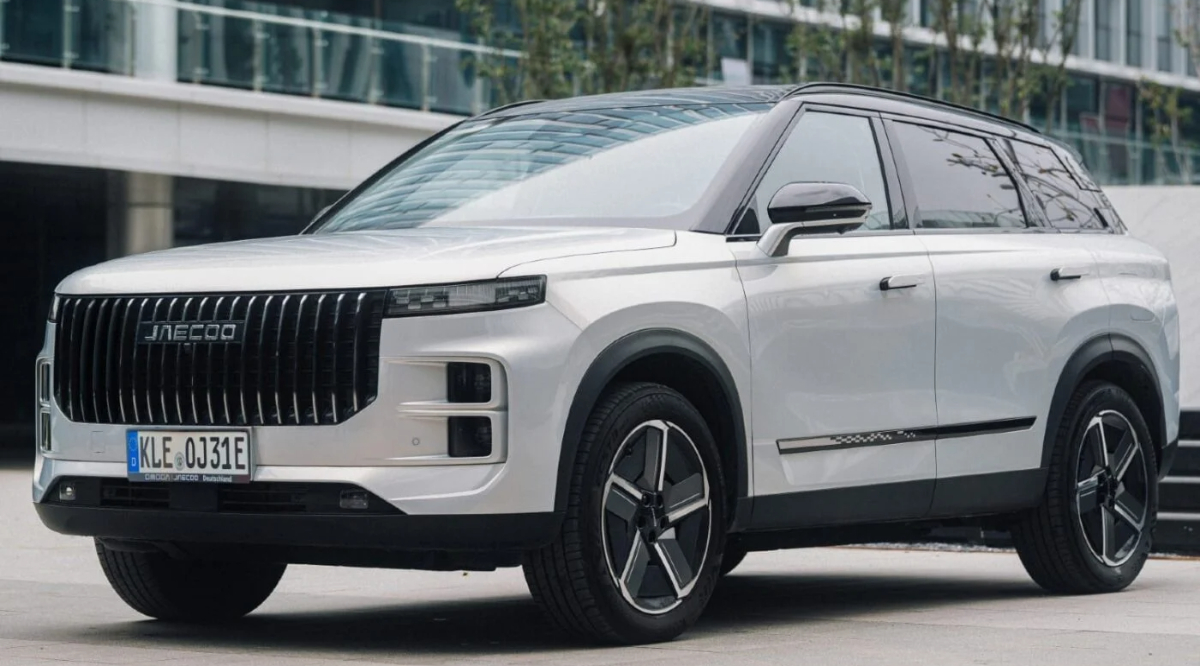
According to The Independent, 20 percent of new car sales in the UK in September were from Chinese brands such as BYD, Jaecoo, Chery, Omoda, Changan, or Geely. The Ford Puma is the best selling car in the UK this year, but the Jaecoo 7 — which looks a lot like the iconic Range Rover — is in second place overall. More than 10,000 of them were sold in the UK last month.
BYD, with 20,140 cars sold, is up more than 80 percent in the UK so far this year, putting it in second place in total sales behind Volkswagen. Kia is in third place, followed by MG and Audi. Tesla is in sixth place, just ahead of BMW. The Model 3 was the second best selling car in September, with the Model Y in fifth place.
“These figures are an incredible result for BYD, so I’d like to say a big thank you to all of our customers who buy our cars and enjoy them on a daily basis,” said Steve Beattie, deputy manager for BYD UK. “While it’s a huge result for us, we believe that there is still more to come. We’ve launched several other cars recently or are about to.
“The Dolphin G takes us into the hugely popular super-mini segment, and despite the car only arriving with our retailers in August, we’ve already taken over 500 orders. Pre-orders for the seven seat Ti 7 SUV are proving extremely strong, and the Shark pickup is generating a huge amount of interest too. I can’t wait to see what the rest of the year brings.”
Chinese brands also dominated the list of fastest growing brands, with Changan and Chery seeing strong growth, as is Leapmotor, which is partly owned by Stellantis and sells its cars at dealers that also carry Vauxhall, Citroen, Peugeot, and Fiat models.
Traditional brands are the biggest losers so far this year. Fiat sales are down more than 27 percent and Peugeot is down 16 percent. Seat, which is part of the Volkswagen Group, has seen its sale plummet by 28 percent, Mazda is down 17 percent, Honda is down 16 percent, and both Nissan and Hyundai have fallen by more than 16 percent so far this year.
Regulatory Hurdles Ahead
Despite all the good news about EVs in the UK, that country has mandated they be 33 percent of sales next year. Mike Hawes of SMMT said, “Despite all these factors, uptake remains behind mandated targets and, whilst flexibilities help, the UK still has the world’s toughest targets and highest energy costs.” Calls to adjust that mandate are increasing as the end of 2026 gets closer.
A spokesperson for the Department of Transportation told The Independent, “September was another record breaking month for electric car sales in the UK — up 36 percent in a year and nearly 100,000 electric cars sold in a single month alone. The EV revolution is really picking up speed now, and it’s never been cheaper or easier to go electric.
“Our £2 billion Electric Car Grant is already helping over 190,000 drivers make the switch, backed by £600 million to roll out hundreds of thousands more chargers. While global fuel prices keep fluctuating, the message is clear — electric isn’t just the future, it’s the present, and we’re making sure Britain leads the charge.”
Sign up for CleanTechnica’s Weekly Substack for Zach and Scott’s in-depth analyses and high level summaries, sign up for our daily newsletter, and follow us on Google News!
Have a tip for CleanTechnica? Want to advertise? Want to suggest a guest for our CleanTech Talk podcast? Contact us here.
Sign up for our daily newsletter for 10–15 new cleantech stories a day. Or sign up for our weekly one on top stories of the week if daily is too frequent.


CleanTechnica uses affiliate links. See our policy here.
CleanTechnica’s Comment Policy















Leave a comment