
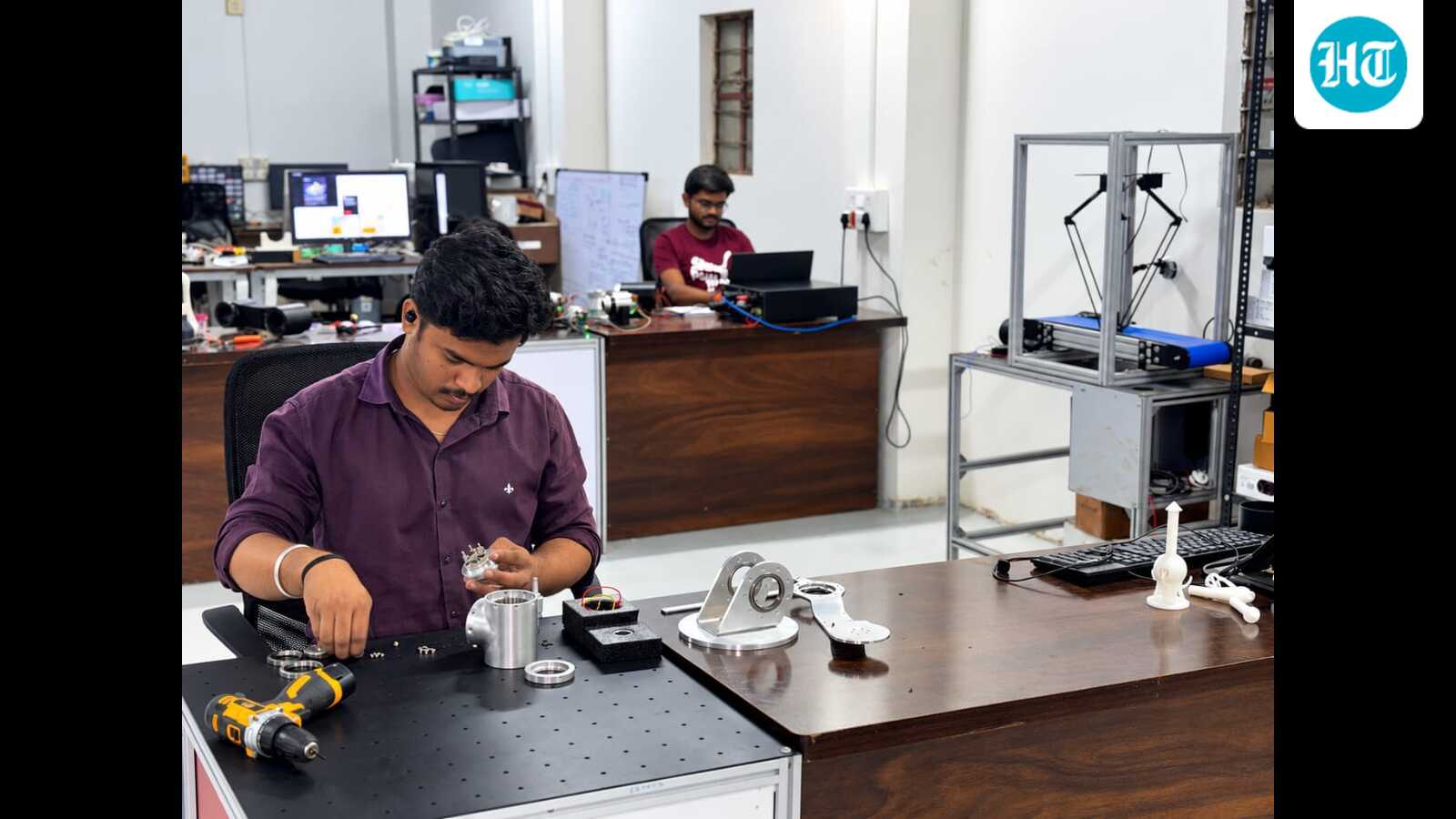
For Raghavendra Sutar, the founder of Kikobot Robotics, an interest in robotics came with a question: why did advanced robotic systems have to be so expensive, and why was India so dependent on imported robots and components?
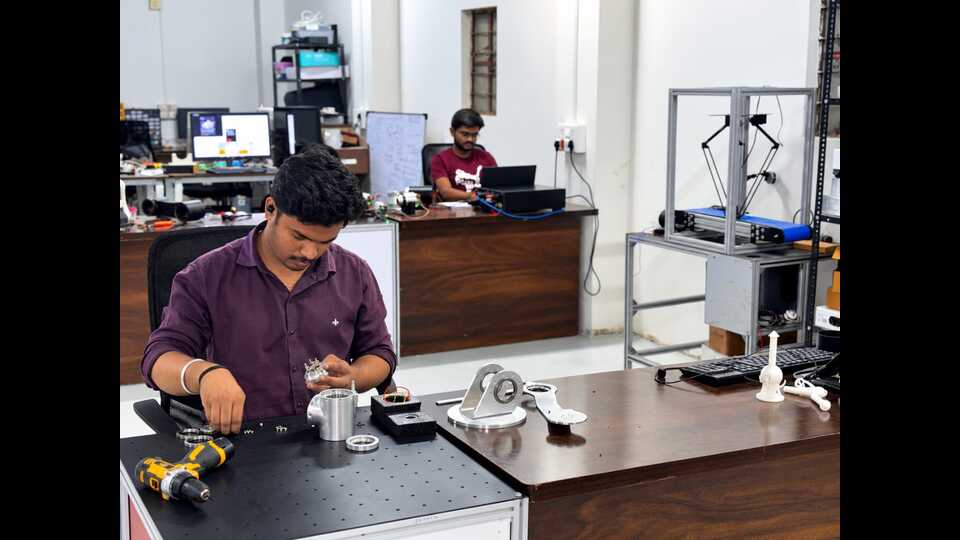
With a background in mechatronics, Sutar wanted to build something in the field. Engineering college brought the opportunity into focus. Sutar believed there was room for an Indian company developing robotic technologies that industries, colleges, and research institutions could access more easily.
That idea led to Kikobot Robotics in 2024. Starting with educational robots, the Pune-based company has since expanded into collaborative robots, or cobots, delta robots, Cartesian systems, and robotic actuators, the components that enable controlled movement.
“I felt there was an opportunity to build these technologies in India and make them more accessible to industries, colleges and research institutions,” Sutar say.
Building from scratch
Turning that ambition into working products required Sutar to take on several roles. Mechanical design, electronics, firmware, prototyping and testing were all part of the job, alongside finding customers and understanding their requirements.
Resources were limited, making development a gradual process of building, testing and revising. Each design iteration provided lessons for the next, helping the company strengthen its engineering capabilities while improving its products.
“It has been a hands-on journey. In the beginning, I was involved in almost everything,” Raghavendra says. “We had to build things step by step, learn from our mistakes, and make the most of what we had.”
Kikobot gradually assembled a small team and a network of manufacturing partners. Developing robotic hardware, software and actuators in-house became a central part of its approach.
For the company, this meant taking on the engineering work behind the products it wanted to sell. It also meant committing resources to research and development before preparing to manufacture at greater volumes.
Winning the first customers
The education and research market provided Kikobot with its first customers. These included engineering colleges, IITs and research institutions, according to Sutar.
Winning their business involved direct outreach, demonstrations and repeated conversations. Customers needed to see what the robots could do and gain confidence in equipment developed by a young Indian company.
Those early interactions served two purposes: they brought in sales and helped Kikobot understand where its products needed improvement.
In its first year of commercial operations, the company says it sold more than 55 robots in India. For Raghavendra, those orders offered evidence of demand for locally developed robotic systems.
Its sales approach now varies with the customer. Educational products are sold through direct relationships, online channels and distribution partners. For industrial robotics, Kikobot works directly with customers and system integration partners, who help incorporate robots into a working automation system.
Revenue comes from robot arm sales and robotics and automation services. The company is now seeking to expand its industrial product business.
The manufacturing challenge
Kikobot has followed a lean approach, directing resources back into product development and business growth. A significant share of its investment has gone towards developing six-axis cobots, delta robots and robotic actuators.
The company has chosen not to disclose the investment amount, revenue figures or a specific funding requirement.
The next challenge is manufacturing at higher volumes. Kikobot plans to build more in-house manufacturing and testing capabilities for selected products, aiming to improve quality, reduce dependence on external vendors and shorten the journey from production to deployment.
This shift brings a different set of demands. Developing a robot establishes that a design can work; fulfilling larger orders requires the capacity to produce, test and deliver systems consistently.
Making automation easier
Over the coming year, Kikobot wants to scale its cobots, delta robots, Cartesian systems and actuators while preparing to serve more customers and handle larger orders.
Its longer-term ambition is to develop Indian-made, AI-powered robotics platforms that businesses can adopt without large engineering teams or complicated integration processes. Making robots easier to program, integrate and deploy is central to that vision.
“In five years, I want Kikobot to be recognised as a leading Indian robotics company, building its own robotic hardware, actuators, motion-control systems and intelligent software,” he says.
For now, the task is to turn its expanding product range into a larger manufacturing business. Its early educational robot sales have provided a starting point. The next stage will test how effectively Kikobot can translate its engineering capabilities into industrial orders and repeatable production.














Leave a comment