

Balaji Sreenivasan is the founder and CEO of Aurigo Software.

America’s infrastructure moment is here, and the stakes are higher than ever. With trillions flowing from surging private investment in data centers, clean energy and advanced manufacturing, alongside landmark public initiatives like the Infrastructure Investment and Jobs Act (IIJA) and the Inflation Reduction Act (IRA), the scale and scope of development today are unmatched.
However, even as funding finally aligns with need, a persistent execution gap threatens to blunt impact. According to the American Society of Civil Engineers (ASCE), the U.S. still faces a $3.7 trillion shortfall in infrastructure investment through 2033, and projects continue to suffer delays, cost overruns and sluggish decision making—all symptoms of systems built for a previous era.
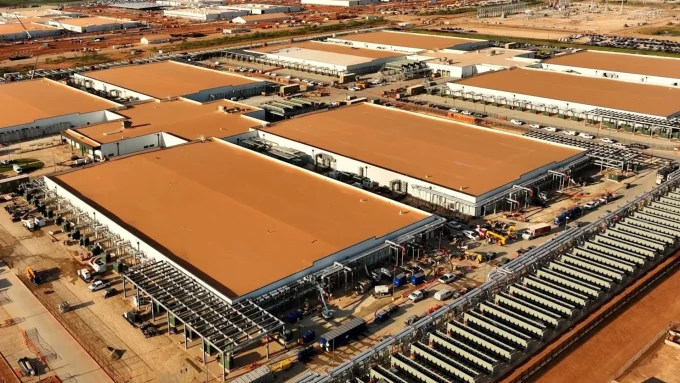
Today’s infrastructure is about more than roads and bridges; it encompasses digital networks, AI processing hubs, electric vehicle infrastructure and smart utilities. Data centers, for instance, are projected to double their electricity demand from 17 gigawatts (GW) in 2022 to 35 GW by 2030, with a growth rate of roughly 10% per year. But despite these next-generation challenges, many public agencies continue to rely on manual workflows, spreadsheets and siloed systems that are ill-equipped to keep pace with the complexity and urgency of today’s capital programs.
5 Best Practices To Modernize Capital Programs Using AI
This growing mismatch between modern-day infrastructure demands and outdated delivery methods requires more than just an incremental change. It’s no longer enough to digitize processes or monitor performance in isolation. The familiar language of “predictive analytics,” “real-time dashboards” and “workflow automation” has become table stakes; elevating performance standards requires a shift to an AI-first, closed-loop delivery fabric that doesn’t merely surface insight but reasons, adapts and acts across the full asset lifecycle.
By embedding AI across planning, asset intelligence, workflows and maintenance, agencies can move from fragmented oversight to a closed-loop delivery model that continuously aligns funding, priorities and execution. Rather than treating insight as an endpoint, this approach enables systems that learn from outcomes, adapt decisions in real time and translate funding intent into on-the-ground results.
Here are some best practices fit for the coming year and beyond:
1. Switching To A Planning-Led Approach
A planning-led approach repositions strategic planning as the primary driver of capital investment decisions, rather than a downstream validation step once projects are already defined. Instead of iterating manually on pre-selected options, generative AI enables planners to shape the investment portfolio upfront.
By encoding policy constraints, funding priorities, environmental sensitivities and performance goals into generative design engines, planners can rapidly generate and compare coherent bundles of scenarios, each with embedded cost, timeline and impact trade-offs.
This shifts capital planning from reactive project adjustment to proactive portfolio design—allowing decision makers to optimize allocations before commitments are made and ensuring that projects emerge from strategic intent, not the other way around.
2. Using Asset-Driven Intelligence
Traditional project prioritization often treats assets in isolation or through static scoring. The next wave layers multisource condition data, lifecycle forecasts, usage patterns and socioeconomic impact into AI agents that define coherent investment strategies. This “smart project definition” highlights combinations of investments that maximize system resilience and public value, shifting the conversation from “what can we afford” to “what drives the greatest sustained impact.”
3. Automating Workflows Across Departments
Infrastructure delivery is often slowed by fragmented workflows across budgeting, permitting, environmental review and right-of-way acquisition. A cross-departmental, cloud-based workflow layer can shift these functions from loosely coordinated handoffs to a shared, end-to-end operating model.
AI further strengthens this approach by continuously monitoring dependencies across functions—flagging emerging risks such as land acquisition delays, misaligned permitting timelines or underutilized contingency budgets—and recommending corrective actions before they cascade into schedule impacts.
In large, multi-stakeholder programs, this moves coordination from ad hoc escalation to built-in governance, making cross-functional alignment a core system capability rather than a manual effort.
4. Shifting To Intelligent Maintenance
The 2025 ASCE report assigns the U.S. a “C” rating, up from a “C-” in 2024. While this points to a welcome improvement, over 45,000 bridges remain structurally deficient, and two in five roads remain in poor condition.
Fixing this requires a shift from reactive repairs to proactive, AI-assisted maintenance. Autonomous systems can be used to collect high-resolution imagery, detect microfractures and enable safer, faster inspections without disrupting traffic. When combined with AI-powered sensors and LiDAR, agencies are able to predict structural degradation long before it becomes dangerous, allowing for more cost-effective interventions and extending the asset’s usable life.
5. Using An AI-First Decision Fabric
An AI-first decision fabric embeds intelligence directly into how capital programs are governed, shifting leadership from periodic review to continuous orchestration. Rather than relying on static forecasts and manual escalation, this model assigns defined decision rights to AI systems across scheduling, risk and funding adjustments within policy and budget guardrails set by leadership.
In practice, AI agents continuously monitor supply chains, contractor performance, permitting status and financial exposure. When deviations emerge, the system can automatically propose or execute bounded actions—such as resequencing work packages, reallocating contingency funds or triggering pre-approved design alternatives—while escalating only high-impact or out-of-policy decisions to executives.
This creates a decision fabric that connects insight to action in real time, allowing leaders to focus on strategic trade-offs and governance rather than operational firefighting, while keeping delivery aligned with long-term program intent.
Conclusion
The next frontier of infrastructure delivery is not merely faster or cheaper. It is smarter, grounded in AI-powered systems that learn from outcomes, anticipate disruption and execute adaptively.
I believe those who embrace this evolution with a strategic approach can successfully narrow the longstanding gulf between funding ambition and execution reality, unlocking the full promise of 21st-century infrastructure.
Forbes Technology Council is an invitation-only community for world-class CIOs, CTOs and technology executives. Do I qualify?















Leave a comment