
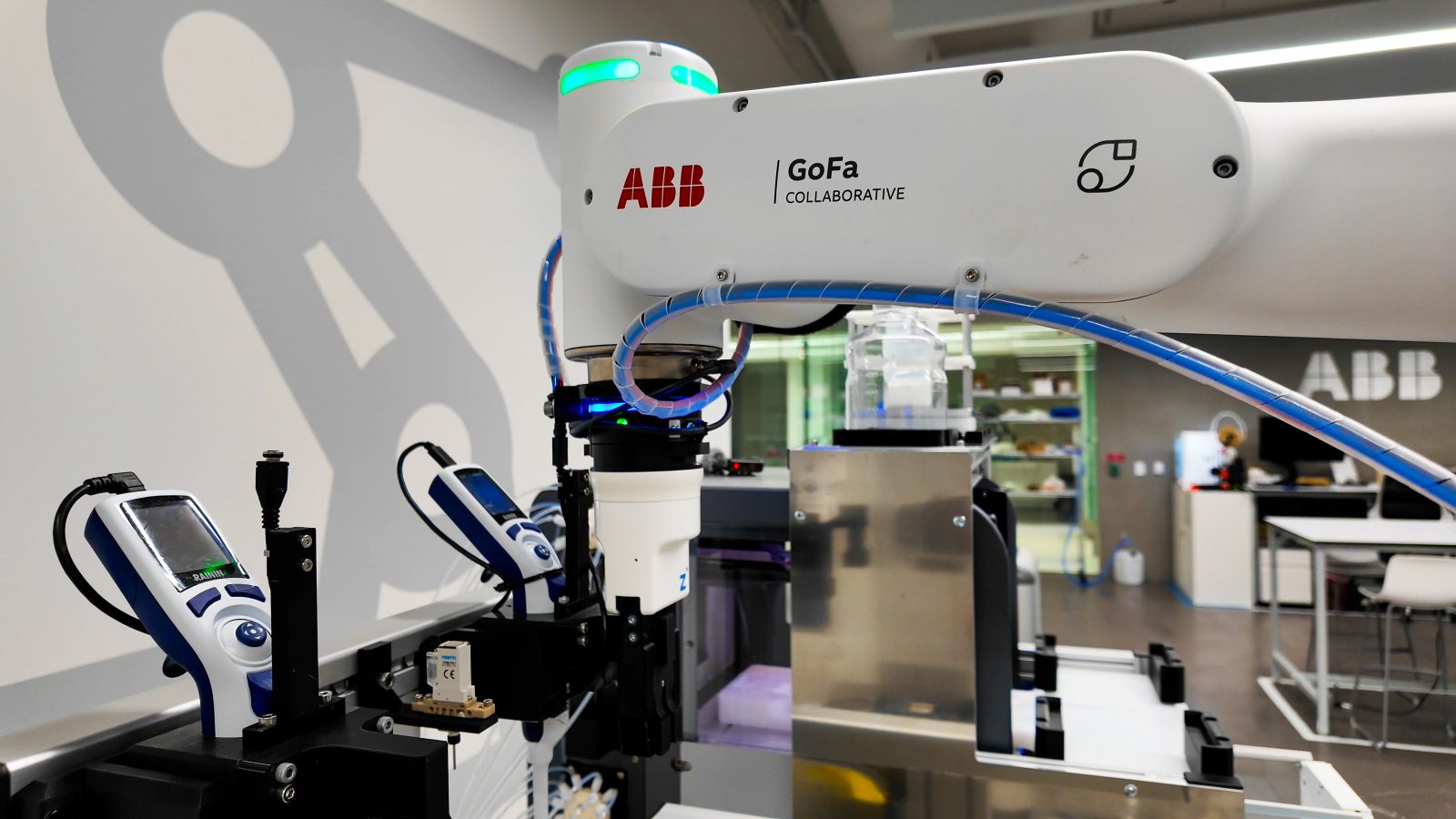
ABB Robotics will present live demonstrations highlighting how artificial intelligence and collaborative robots can deliver faster, more connected laboratory operations.
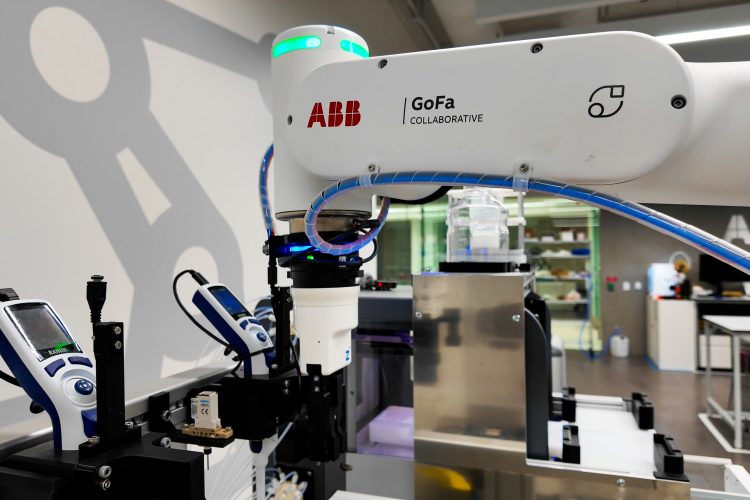
At SLAS 2026, ABB Robotics is demonstrating how artificial intelligence (AI) and collaborative robotics can make laboratory automation more flexible, interoperable and accessible.
At Booth #2027 in Boston, the company plans to showcase its Autonomous Versatile Robotics (AVR™) platform, highlighting how AI-enabled systems can deliver higher throughput, improved reproducibility and more seamless integration across instruments and software.
The demonstrations will focus on moving laboratories beyond isolated automation projects toward fully connected, data-driven workflows.
Laboratories worldwide are moving from isolated automation pilots to fully connected, AI-ready operations.
“Laboratories worldwide are moving from isolated automation pilots to fully connected, AI-ready operations,” said Jose-Manuel Collados, Service Robotics Product Line Manager at ABB Robotics. “At SLAS 2026 we will show how ABB Robotics and its partners are helping customers make that transition – combining more autonomous and versatile collaborative robots with interoperable solutions that seamlessly connect instruments, data and digital tools.”
According to Collados, this shift is enabling laboratories of all sizes to scale faster, operate more reliably and extract deeper insights from experiments.
Interoperability at the heart of automation
A central theme of ABB’s presence at the event will be practical interoperability. Rather than presenting robotics as standalone equipment, the company aims to show how collaborative robots can be integrated with existing analytical instruments and laboratory software to create end-to-end automated processes.
Three collaborative robot process cells will be on display, each designed to reflect realistic laboratory workflows. Developed in collaboration with instrument partners including Agilent and Mettler Toledo, the systems are intended to demonstrate how automation can enhance throughput, strengthen traceability and free researchers to focus on higher-value scientific tasks.
The demonstrations are built around ABB’s GoFa™ collaborative robot platform, which is designed for safe operation alongside laboratory personnel while performing routine, repetitive procedures.
One exhibit will feature a multi-step analytical workflow using Mettler Toledo instruments orchestrated through the LabX™ management software platform. The system will include processes such as liquid and solid sample preparation, weighing, titration, oven cycling and UV-Vis analysis. In this setup, the GoFa robot will carry out tasks including pipetting, decanting and vial capping and uncapping, providing improved consistency and increased operator walkaway time.
A second demonstration at the ABB booth will focus on gas chromatography sample preparation. The robot will perform automated solid dispensing, volumetric flask handling, filtration into 2 mL vials and GC loading. The workflow will also include a reset cycle to illustrate reliable, end-to-end robotics for complex mixed dry and wet laboratory tasks.
This system will be supported by ABB Robotics OptiFact™, an integrated software platform designed to collect, manage and analyse facility data, further underlining the importance of digital connectivity alongside physical automation.
Bringing AI and robotics together
A third collaborative demonstration will be hosted at the Agilent Technologies booth. This installation will show robotic transfer of SBS and SLAS plates and consumables between a plate hotel, an Agilent Bravo liquid handler and a high-pressure liquid chromatography system. The cell is intended to replicate validated motion paths and illustrate repeatable, high-throughput handling that complements existing instrument operations.
Together, ABB says, the three systems will offer a realistic vision of the lab of the future, with robots working across vendor ecosystems to streamline sample preparation and analysis while improving repeatability and efficiency.
In addition to the exhibition demonstrations, ABB Robotics will host an industry roundtable discussion on 10 February entitled “From insight to impact: AI, robotics and the convergence toward the lab of the future.” The session will bring together representatives from Atinary, Agilent, Mettler Toledo, Sanofi and ABB Robotics to explore how AI, robotics and interoperable platforms are transforming laboratory operations.
As laboratories face growing pressure to increase productivity while maintaining reproducibility and regulatory compliance, ABB believes that collaborative robotics combined with AI-driven orchestration will become an essential part of future research infrastructure.















Leave a comment