
In 2025, the global market value of industrial robot installations reached an all-time high of €14.309 billion. Future demand will be driven by a number of technological innovations, market forces and new business fields.
In a report published earlier this year, the International Federation of Robotics analysed the five main trends for the robotics industry for 2026. These trends clearly show the impact of the use of tools and the search for new forms of human-machine collaboration.
AI and autonomy in robotics
Robots that use artificial intelligence to work independently are becoming increasingly common. The main advantage of AI in this context is the greater autonomy of robots powered by AI. Different types of AI are driving this trend: analytical AI helps to process large data sets, detect patterns and provide useful information.
Generative AI, meanwhile, marks a shift from rule-based automation to intelligent, self-evolving systems. GenAI creates new outputs and enables robots to learn new tasks autonomously and generate training data through simulation. This also enables a new type of interaction between humans and robots using natural language and vision-based commands.
A key trend for further developing autonomy in robotics is agentic AI. This technology combines analytical AI for structured decision-making and generative AI for adaptability. The hybrid approach aims to make modern robotics capable of working independently in complex real-world environments.
Greater versatility thanks to the convergence of IT and OT

The demand for versatile robots is accelerating. This directly reflects the market’s drive towards convergence between information technology (IT) and operational technology (OT). The fusion of IT’s data processing capabilities and OT’s physical control capabilities enhances the versatility of robotics through real-time data exchange, automation, and advanced analytics.
Safety and security in robotics
As robots increasingly work alongside humans in factories and service environments, ensuring their safe operation is not only important, but essential for the robotics industry. AI-driven autonomy fundamentally changes the safety landscape, making testing, validation, and human oversight much more complex, but also more necessary. This is especially clear in the intended use of humanoid robots.
In the context of AI in robotics and the convergence of IT and OT, a number of safety and security concerns arise that require strong governance and clear assignment of responsibilities. The rapid expansion of robotic systems into cloud-connected, AI-driven environments is exposing industrial production to a growing variety of cybersecurity threats. As robots become increasingly integrated into workplaces, concerns are growing about the sensitive data they collect, including video, audio and sensor streams. Legal and ethical ambiguity surrounding liability has led to calls for clear frameworks to regulate the deployment of AI.
Allies in tackling labour shortages
Employers around the world are struggling to find people with the specialist skills they need. These vacancies are forcing existing staff to cover extra shifts, increasing stress and fatigue across all sectors. A key strategy for addressing this issue is to embrace robotics and automation. Close cooperation with employees in the implementation of robots plays a crucial role in ensuring their acceptance. The advantages that robots bring make them accepted as allies in the workplace. At the same time, robots are a way to make the workplace much more attractive to young people.
Humanoids prove their reliability and efficiency
The field of humanoid robotics is expanding rapidly. Humanoid robots for industrial use are considered a promising technology when flexibility is required, typically in environments designed for humans. Driven by the automotive industry, applications in warehouses and factories are gaining prominence around the world.
Today, companies and researchers are moving beyond prototypes to implement humanoids in real life. Reliability and efficiency are key to success: to compete with traditional automation, humanoid robots must meet high industrial requirements in terms of cycle times, energy consumption and maintenance costs.
Human-robot collaboration, the case of Hyundai

In this context, Hyundai Motor Group unveiled its transformative AI Robotics Strategy at the Consumer Electronics Show 2026 (CES 2026), held from 6 to 9 January in Las Vegas (United States). It presented a roadmap for advancing human-robot collaboration under the slogan ‘Partnering Human Progress’.
The Group’s AI Robotics Strategy is based on three foundational partnerships to drive progress and unlock entirely new possibilities for industry and society.
Firstly, partnering humans with collaborative robots: Robots designed to assist and collaborate with people in manufacturing environments, performing dangerous and risky tasks, as well as repetitive ones.
Next is cooperation with the Group’s value network with Boston Dynamics: Combining Boston Dynamics’ expertise in AI robotics with Hyundai Motor Group’s global scale and manufacturing capabilities creates safe training grounds and an end-to-end (E2E) AI robotics value chain.
Finally, there is collaboration with global AI pioneers to open new chapters in AI robotics innovation and drive the vision of ‘Progress for Humanity’.
Based on this strategy, Hyundai Motor Group plans to position itself as a human-centred leader in the physical AI industry by leveraging its group-wide value chain and broad product portfolio.
As the group obtains essential data for the implementation of physical AI across the value chain—from manufacturing and logistics to sales—it will establish a cycle of continuous improvement by digitising real-world data for AI learning and applying it to products. This approach will enable the expansion of industries ranging from mobility to robotics.
Next is cooperation with the Group’s value network with Boston Dynamics: Combining Boston Dynamics’ expertise in AI robotics with Hyundai Motor Group’s global scale and manufacturing capabilities creates safe training grounds and an end-to-end (E2E) AI robotics value chain.
Finally, there is collaboration with global AI pioneers to open new chapters in AI robotics innovation and drive the vision of ‘Progress for Humanity’.
Based on this strategy, Hyundai Motor Group plans to position itself as a human-centred leader in the physical AI industry by leveraging its group-wide value chain and broad product portfolio.
As the group obtains essential data for the implementation of physical AI across the value chain—from manufacturing and logistics to sales—it will establish a cycle of continuous improvement by digitising real-world data for AI learning and applying it to products. This approach will enable the expansion of industries ranging from mobility to robotics.
The group will also promote the creation of the Hyundai Motor Group Physical AI Application Centre, which will play a key role in advancing the Physical AI ecosystem. In addition, the Group plans to build a robot manufacturing and casting plant based on customised robotic technologies developed through Physical AI.
Tangible results and launches

Hyundai Motor Group has already demonstrated tangible results and scalability by deploying Boston Dynamics robots in industrial environments to increase safety and improve efficiency. Spot, the agile quadruped, is already operational in more than 40 countries, performing critical tasks such as data collection and safety monitoring in industrial facilities. And Stretch, the warehouse robot, has unloaded more than 20 million boxes worldwide since its launch in 2023.
Unveiled at CES 2026, the Atlas humanoid robot represents a leap forward in robotic innovation designed for industrial applications. The Atlas prototype serves as a research model, testing essential capabilities for future products. Equipped with rotating joints and advanced sensors, Atlas can navigate complex industrial environments, perform repetitive tasks, and leverage AI-based learning to quickly adapt to new functions. The Group plans to integrate Atlas throughout its global network, including Hyundai Motor Group Metaplant America (HMGMA) in Savannah, Georgia (USA), enabling it to perform real-world tasks on site.

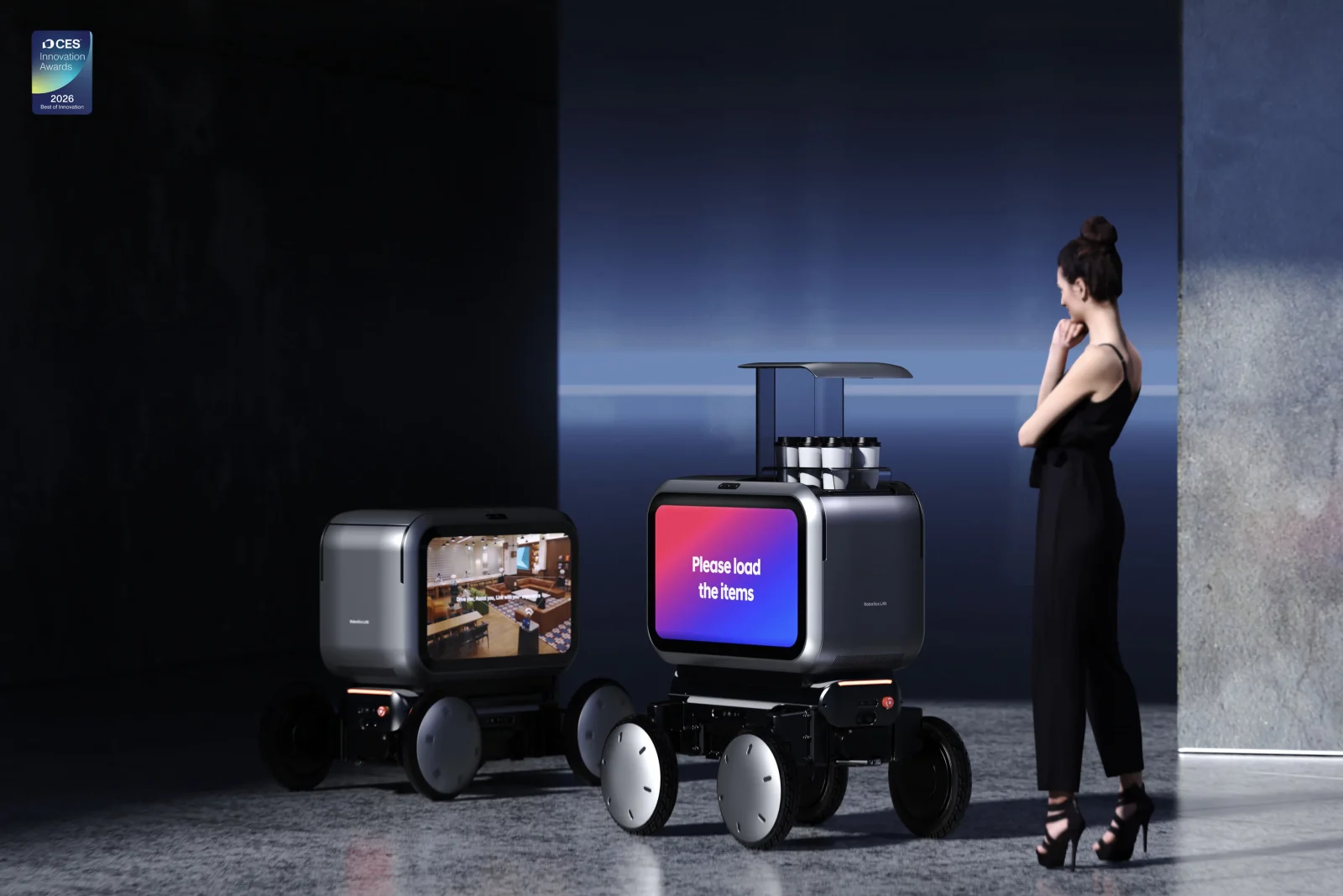
On the other hand, the Korean manufacturer received the CES Award for Best Robotics Innovation for MobED, a versatile mobility platform designed to operate on various terrains and adapt to diverse industrial and everyday applications. Available in two models – MobED Basic and MobED Pro – it meets a wide range of needs. MobED Basic works with a controller, offering flexibility for research and development, while eMobED Pro leverages the advanced autonomous capabilities offered by integrated LiDAR-camera fusion sensors, ensuring accurate and smooth navigation. This second version is equipped with an AI-based algorithm and autonomous navigation. Both will go on sale in the first quarter of the year.
















Leave a comment