
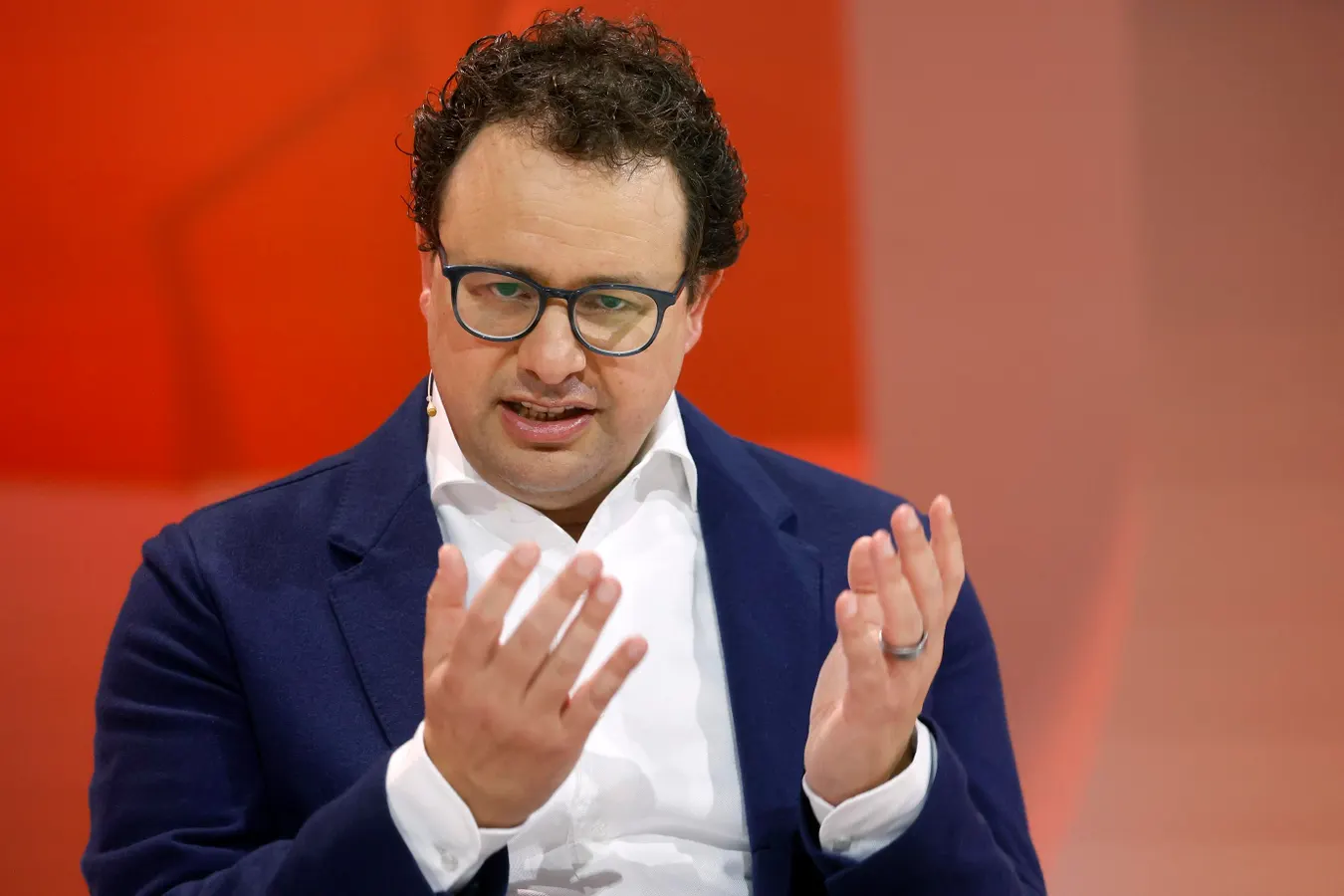

PARIS, FRANCE – MAY 22: Co-founder and CEO of Anthropic, Dario Amodei, an artificial intelligence safety and research company attends the Viva Technology show at Parc des Expositions Porte de Versailles on May 22, 2024 in Paris, France. Viva Technology, the biggest tech show in Europe but also in a unique digital format, for 4 days of reconnection and relaunch thanks to innovation. The event brings together startups, CEOs, investors, tech leaders and all of the digital transformation players who are shaping the future of the Internet. The annual technology conference, also known as VivaTech, was founded in 2016 by Publicis Groupe and Groupe Les Echos and is dedicated to promoting innovation and startups. (Photo by Chesnot/Getty Images)
Getty Images
Anthropic entered the 2026 midterm cycle this week with a $20 million commitment to Public First Action, a bipartisan political group backing candidates who support AI oversight. The donation follows Anthropic’s recent funding round that reportedly values the company at roughly $380 billion, placing it among the most highly valued private AI firms in the world. Public First Action was formed to counter Leading the Future, a PAC backed by OpenAI cofounder Greg Brockman and venture capitalist Marc Andreessen, which has raised $125 million to oppose stricter AI regulation. Anthropic said companies building advanced AI “have a responsibility to help ensure the technology serves the public good,” and argued it does not want to sit on the sidelines as policy is written. The group has already begun six figure ad buys for candidates including Tennessee gubernatorial candidate Marsha Blackburn, who has supported AI oversight measures. This sets up a direct political clash between two leading AI companies and their investors, one supporting guardrails, the other funding opposition to them. With AI safety now a campaign issue, this is no longer a theoretical policy debate.
Exhibitor Meta showcasing the Ray-Ban Meta AI glasses, at the annual British Educational Training and Technology conference at ExCeL London, where Education Secretary Bridget Phillipson set out plans to use technology to “modernise” the education system, support teachers and “deliver” for pupils. Picture date: Wednesday January 22, 2025. (Photo by Yui Mok/PA Images via Getty Images)
PA Images via Getty Images
Meta’s smart glasses quietly became one of the most successful hardware stories of the year. The company sold more than seven million units last year, effectively tripling sales in 2025 alone. While Meta does not break out detailed unit economics, the scale matters. In a hardware market where most XR devices struggle to clear low single digit millions, seven million units suggests that AI infused wearables have found product market fit in a way headsets have not.
BERLIN – NOVEMBER 11: Rene Obermann, CEO of T-Mobile, speaks to the media at the Foreign Journalists Association on November 11, 2004 in Berlin, Germany. (Photo by Carsten Koall/Getty Images)
Getty Images
T Mobile introduced a network level AI translation service that could have wide consumer impact. By dialing star 87 during a call, users can activate live, two way translation in more than 50 languages. No app, no download, no hardware upgrade is required, and only one caller needs to be a T Mobile subscriber. Beta registration opened for postpaid members this week, with wider access expected this spring. According to the U.S. Census Bureau, nearly 68 million Americans speak a language other than English at home. If the service works as described, it could turn the carrier network into an AI distribution platform, not just a connectivity pipe.
ByteDance released Seedance 2.0, a video model that immediately triggered copyright alarms in Hollywood. Within hours of launch, Irish filmmaker Ruairi Robinson generated a short clip depicting Tom Cruise fighting Brad Pitt on a rooftop from a simple text prompt. The video spread rapidly across social platforms. Variations referencing Spider Man, Titanic, Stranger Things, Lord of the Rings, and Shrek followed in volume. The Motion Picture Association condemned what it called massive copyright infringement. Rhett Reese, writer of the Deadpool films, posted, “It’s likely over for us.” Seedance 2.0 is the most fluid consumer facing video model I have seen to date. Motion, lighting, and character consistency have improved noticeably, and the barrier to entry is now minimal. Legal challenges are likely, but enforcement across jurisdictions will be uneven. ByteDance is a Chinese company and not subject to the same pressures as U.S. firms that have begun licensing content libraries for training and distribution.
Another Chinese video model, Kling 3.0, also circulated widely this week, reinforcing how quickly generative video quality is advancing outside the United States. Each release narrows the gap between studio grade production and prompt driven experimentation.
Holywater, a major Western player in the fast growing microdrama and vertical video market, acquired Jeynix, an AI assisted production studio known for hyper realistic visual effects and performance preserving techniques. The deal follows Holywater’s $22 million financing round and a 2025 equity investment from FOX Entertainment, which is producing 200 original microdramas with the company. Founded in 2025, Jeynix integrates AI tools into professional VFX pipelines, specializing in facial animation, face replacement, de-aging, and lip sync designed to match traditional high end post production quality.
The Dor Brothers posted this compelling video to announce they are in the process of closing several multimillion dollar deals for original films and TV series. Over the coming months, they say they’ll be releasing multiple trailers for new, original shows.
This column has a companion, The AI/XR Podcast, hosted by its author, Charlie Fink, and Ted Schilowitz, former studio executive and futurist for Paramount and Fox, and Rony Abovitz, founder of Magic Leap. This week our guest is Kristi Woolsey, who heads the AR practice at Boston Consulting Group. We can be found on Spotify, iTunes, and YouTube.
















Leave a comment