
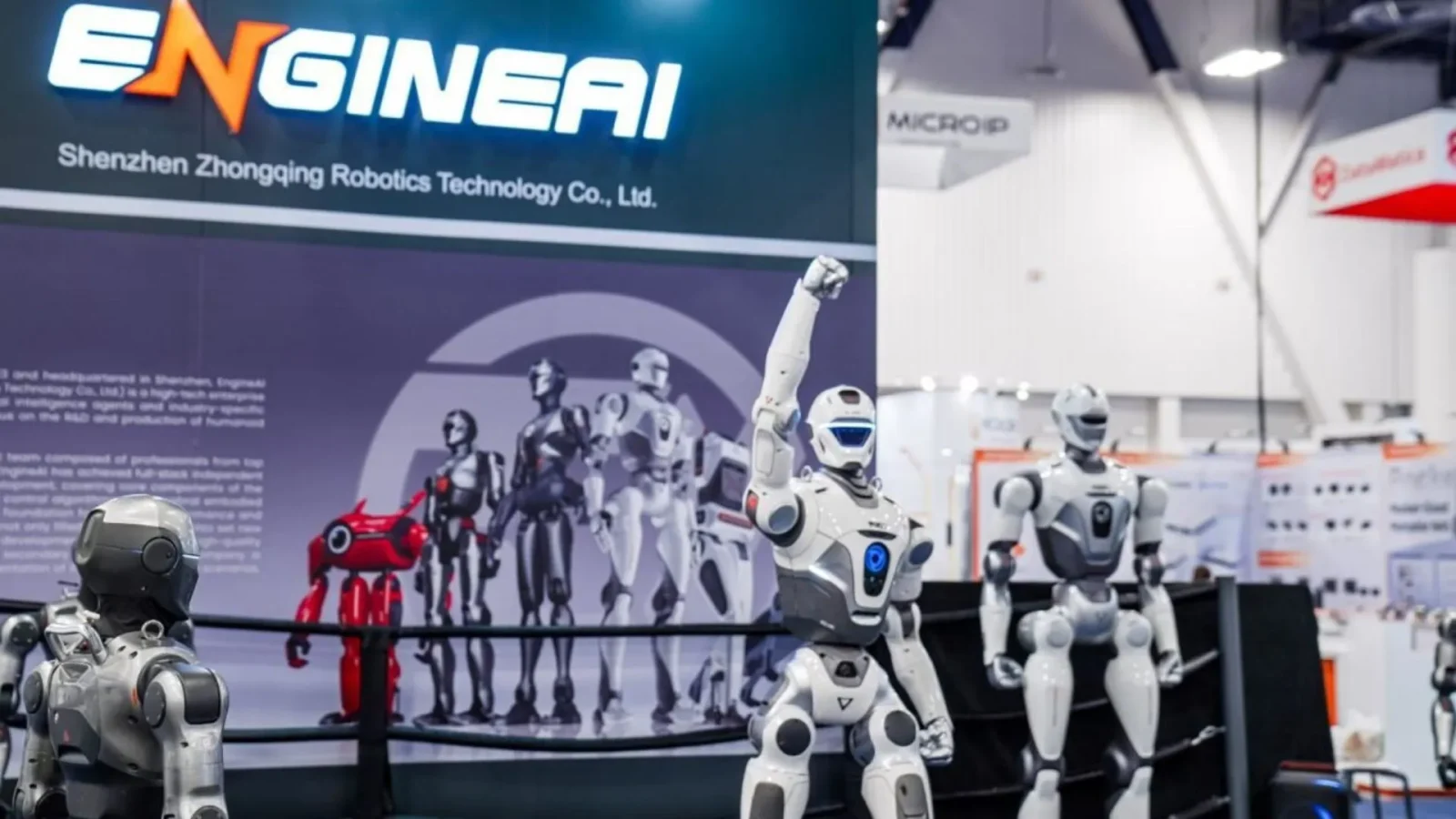
At CES 2026, Chinese robotics firm EngineAI lined up its latest advancements in embodied intelligence with its latest generation of humanoid robots.
The company showcased two flagship products: the PM01, a lightweight, highly mobile general-purpose agent, and the T800, a full-scale, high-efficiency humanoid making its global debut. Demonstrations highlighted their performance and practical applications, offering a glimpse into the future of human-robot collaboration.
According to EngineAI, CES 2026 robotics firms are focused on showcasing deployable intelligent systems, marking a shift from concept to action and underscoring the rapid evolution of autonomous, collaborative robotics.
Last month, EngineAI addressed skepticism over its T800 humanoid’s skills with a new video showing its CEO being safely kicked by the robot.
Embodied intelligence showcased
Engine AI drew steady attention with live demonstrations of its T800 humanoid and PM01 mobile robot at CES 2026, showcasing advanced capabilities in full-body coordination and fine motor control.
The PM01, a lightweight and highly adaptable general-purpose robot, is moving toward scaled deployment across multiple applications, including public transportation support, guided tours, retail services, and automated patrol and inspection tasks. According to Engine AI, its design emphasizes practicality and use-case-driven functionality, addressing specific operational needs in intelligent transformation initiatives. Attendees widely acknowledged the robot’s stable, repeatable performance, highlighting its potential as a reliable tool for industry adoption.
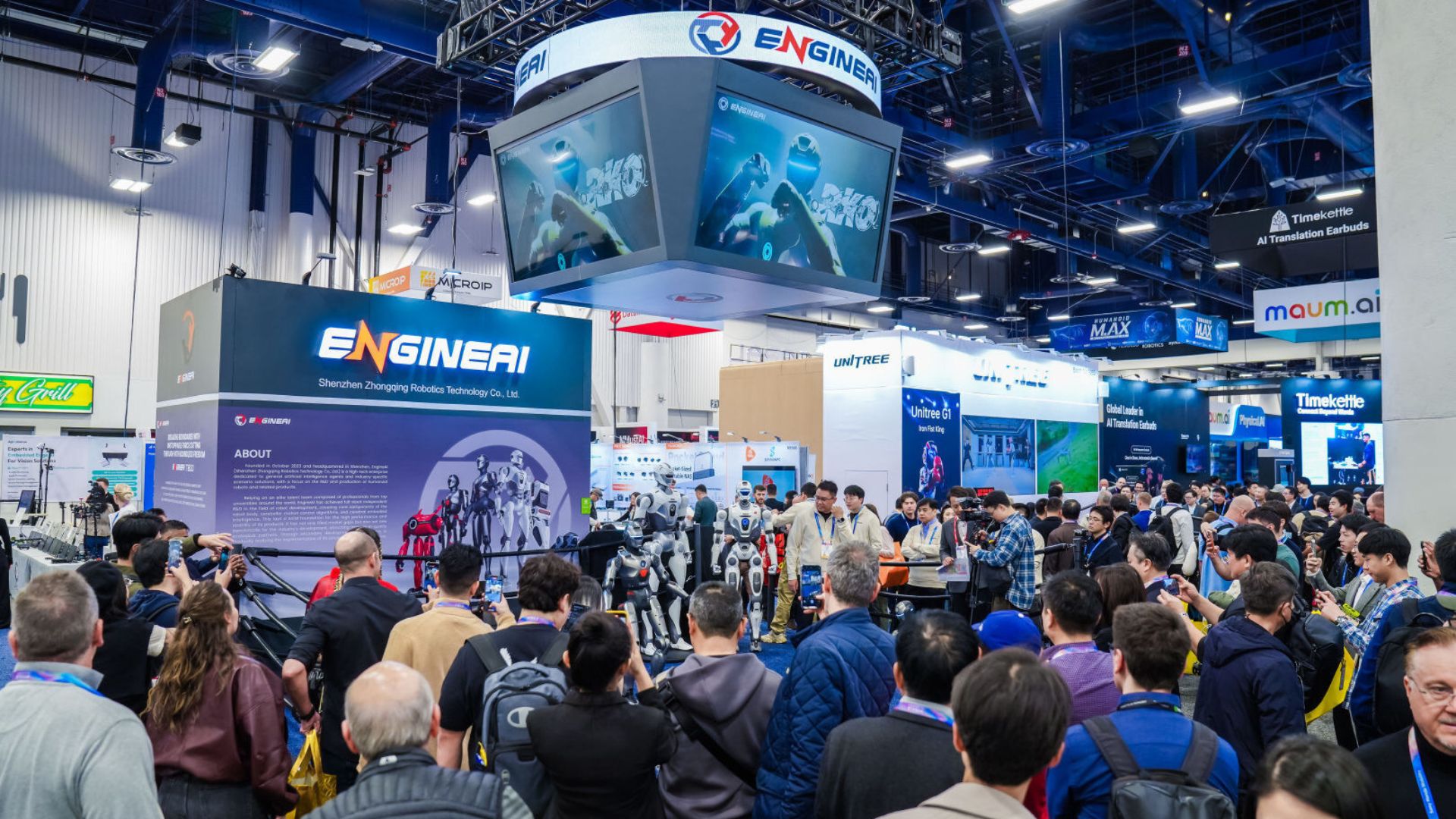
The EngineAI T800, making its global debut, also drew significant attention for its advanced robotics capabilities. The full-scale humanoid features a fully integrated high-torque joint module system capable of delivering up to 450 Nm of peak torque and 14,000W of instantaneous joint power. Combined with high-degree-of-freedom joint structures in the neck, waist, and hands, the robot achieves anthropomorphic mobility and performs high-dynamic tasks such as running and martial arts with industry-leading output and load-handling capacity.
According to the firm, demonstrations emphasized EngineAI’s expertise in system-level integration and its progress toward practical, real-world deployment of intelligent humanoid platforms. The showcase underlined the company’s focus on translating advanced robotics research into deployable solutions, signaling a growing shift toward practical, collaborative robotic systems across industries.
T800 stunt controversy
EngineAI recently stirred global attention with its T800 humanoid robot, following skepticism over earlier demonstration videos.
To counter doubts, the Shenzhen-based company released new footage showing founder and CEO Zhao Tongyang being safely knocked to the ground by a forceful kick from the T800. Shot from multiple angles in a plain studio, the clip highlights the robot’s stability and precise, high-speed movements, offering clear evidence that the stunts are physically real.
The T800 first gained notoriety with dramatic videos of flying kicks and door-breaking, which some viewers suspected were CGI due to stylized lighting and editing. EngineAI has emphasized that its demonstrations involve no CGI, AI manipulation, or video speed adjustments.
Unlike competitors such as Tesla, Boston Dynamics, and Figure AI, which focus on industrial and logistics applications, EngineAI is promoting the T800 with a “combat-ready” image. The company has announced plans for a robot fighting tournament, with the CEO’s sparring session serving as a preview for the upcoming “Robot Boxer” event on December 24. This strategy, while generating attention, also raises questions about balancing spectacle with practical applications in humanoid robotics.
For ongoing news, in-depth reporting, and key developments from CES 2026, read the IE team’s coverage here.














Leave a comment