
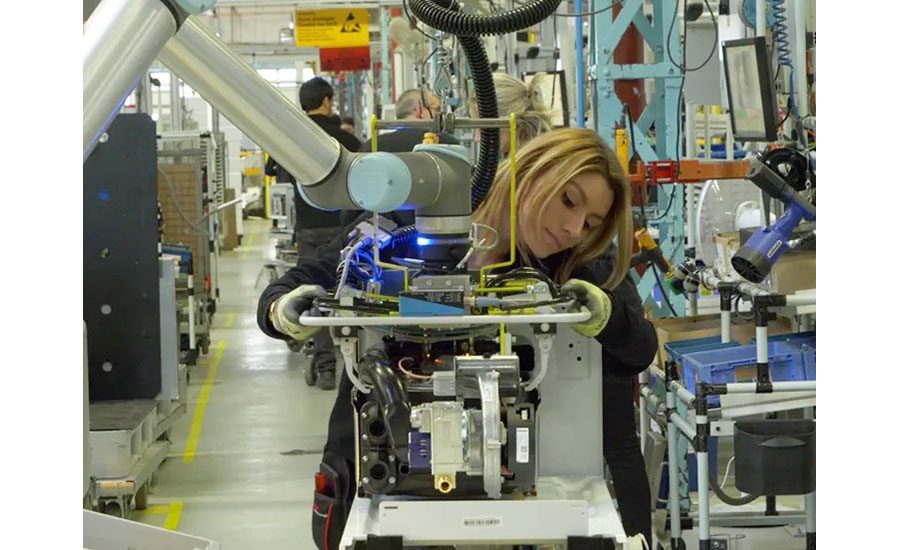
BINGHAMTON, NY—Discussion of AI and robots often centers on adoption speed, workplace disruption and job displacement. However, new research from Binghamton University indicates that these technologies can strengthen teamwork and coordination, improve work environments, and support value creation and competitive advantage.
“Simply put, deploying robots in a collaborative manner with humans can alter social dynamics in ways that encourage unit members to feel, act and think together,” says Chou-Yu (Joey) Tsai, Ph.D., an associate professor of entrepreneurship who recently conducted a study that focused on human-robot collaboration.
“By leveraging these resources through the deployment of robots in collaborative settings, organizations can not only generate additional economic value from their human capital, but also improve their ability to capture a greater share of that value in the competitive market,” notes Tsai.
Tsai and his colleagues initially wanted to explore how human-robot interfaces could affect an organization’s leadership, but then realized it would be more beneficial to focus on its impact on the organization as a whole.
The study examined the issue from two viewpoints: a substitute view and a complementary view. According to Tsai, both can enhance an organization’s desired outcomes in efficiency and productivity. However, those who adopt a complementary view of human-robot collaboration were more likely to foster a greater and more positive sense of commitment among employees.
“The most successful organizations will find a way to extract the best value from these technologies to achieve their unique goals,” explains Tsai. “If you’re focused on going up against other companies by introducing robots to replace some key roles traditionally carried out by humans, that’s not always the best strategic thinking, because your competitors could easily do the same thing.”
Tsai warns that delegating robots to tasks that potentially offer meaning, autonomy or opportunities for mastery could undermine not only employees’ mental health, but also the very efficiency gains that companies are striving for.
Looking for quick answers on assembly and manufacturing topics?
Try Ask ASM, our new smart AI search tool.
Ask ASM
















Leave a comment