
Stay informed with free updates
Simply sign up to the Technology sector myFT Digest — delivered directly to your inbox.
High-tech memory and computer storage stocks are soaring due to “insatiable” demand for their chips and a shortage of supply, as investors hunt for the next winners in the booming AI sector.
Data storage makers have long been overlooked as an unglamorous and less innovative corner of the IT hardware market. But their stocks have rocketed in price in recent months in the face of an AI infrastructure build-out forecast to exceed $500bn this year.
The gains have come even as the huge rally in megacap tech has fizzled out in recent months.
SanDisk shares have nearly doubled since the start of January and are up almost 1,100 per cent since August last year. Micron and Western Digital have tripled over the same period, as has Korean chipmaker SK Hynix.
The share price moves have handed billions of dollars in profits to hedge funds such as DE Shaw and Arrowstreet Capital, which made timely bets.
“By any measure, that’s an eye-watering few months,” said Arun Sai, a multi-asset strategist at Pictet Asset Management, referring to SanDisk’s gains. “The narrative [in the AI rally] has shifted to memory being the choke point in the sustained AI capex build-out.”

The sector’s rally was reignited earlier this month, when Nvidia chief executive Jensen Huang said that “holding the working memory of the world’s AIs” could soon become “the largest storage market in the world”.
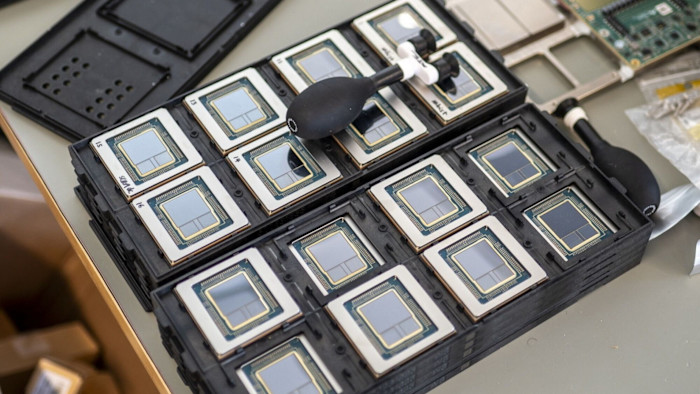
Micron, SK Hynix and Samsung are the primary manufacturers of the fast “solid state” memory chips needed to feed data to the powerful Nvidia processors that train and run large AI systems, such as the large language models behind OpenAI’s ChatGPT.
As AI models have grown more sophisticated, the amount of data they consume and produce has skyrocketed, boosting sales of flash-based storage from the likes of SanDisk. Given the high cost of this type of memory, AI’s appetite for data is also feeding through to manufacturers of more traditional storage systems, such as Western Digital and Seagate’s magnetic hard disc drives.
“The use for this high-bandwidth memory [in AI] has just exploded,” Rene Haas, chief executive of chip designer Arm, told the FT in Davos this week, describing demand as “an insatiable need”.
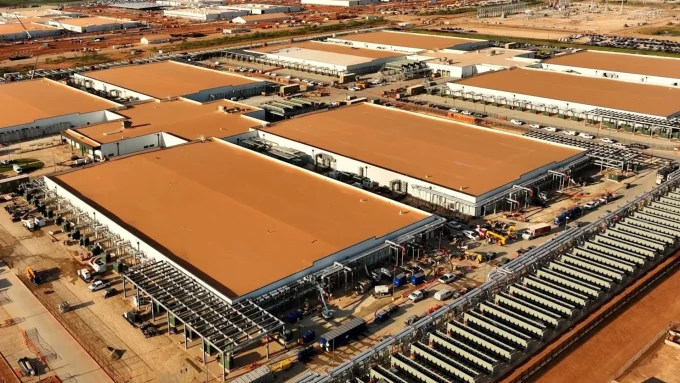
However, due to the historic cyclicality of the memory market — which typically swings from shortage to glut every few years — manufacturers are not significantly increasing their production capacity, particularly given the high cost and time needed to build new factories.
The supply squeeze and high demand has sent the price of chips — alongside the stocks that make them — soaring. “Like any other commodity, you end up with pricing just going berserk,” said Richard Clode, a tech portfolio manager at Janus Henderson.
Ben Bajarin of tech consultancy Creative Strategies predicts the shortages will continue until “2028 at least”.
Investors’ hunt for the next winners of the AI trade comes as the long-running rally in megacap tech stocks, which has driven much of the S&P 500’s gains in recent years, has petered out following a mid-November sell-off prompted by concerns over high valuations and huge amounts of spending.
Nvidia remains 11 per cent below its October peak, after a record-breaking rally that made the chipmaker the world’s first $5tn company last year. Among the so-called hyperscalers — big tech companies building vast data centres, including Oracle, Meta, Microsoft and Amazon — Alphabet is the only stock to have reached new highs since November.

“The AI trade is no longer just about holding a basket of exposed names. The market has turned more discerning between winners and losers,” said Sai at Pictet.
A number of big-name hedge funds appear to have made well-timed bets on the newly fashionable memory sector, according to regulatory filings, echoing the huge gains that some made betting on Nvidia in early 2024.
DE Shaw increased its holdings in SanDisk, Micron, Seagate and Western Digital in the third quarter of last year. If they held on to these four stocks until now, they would have made a profit of roughly $3.9bn since the end of September, according to FT calculations.
Arrowstreet increased its positions in SanDisk and Seagate in the three months to September, and would have made gains of $1.3bn if it had maintained these. Renaissance Technologies doubled its position in SanDisk and increased its Western Digital holdings fivefold over the same period, reaping profits of $435mn if it held on to them.
DE Shaw and Renaissance Technologies declined to comment. Arrowstreet did not respond to requests for comment.













Leave a comment