
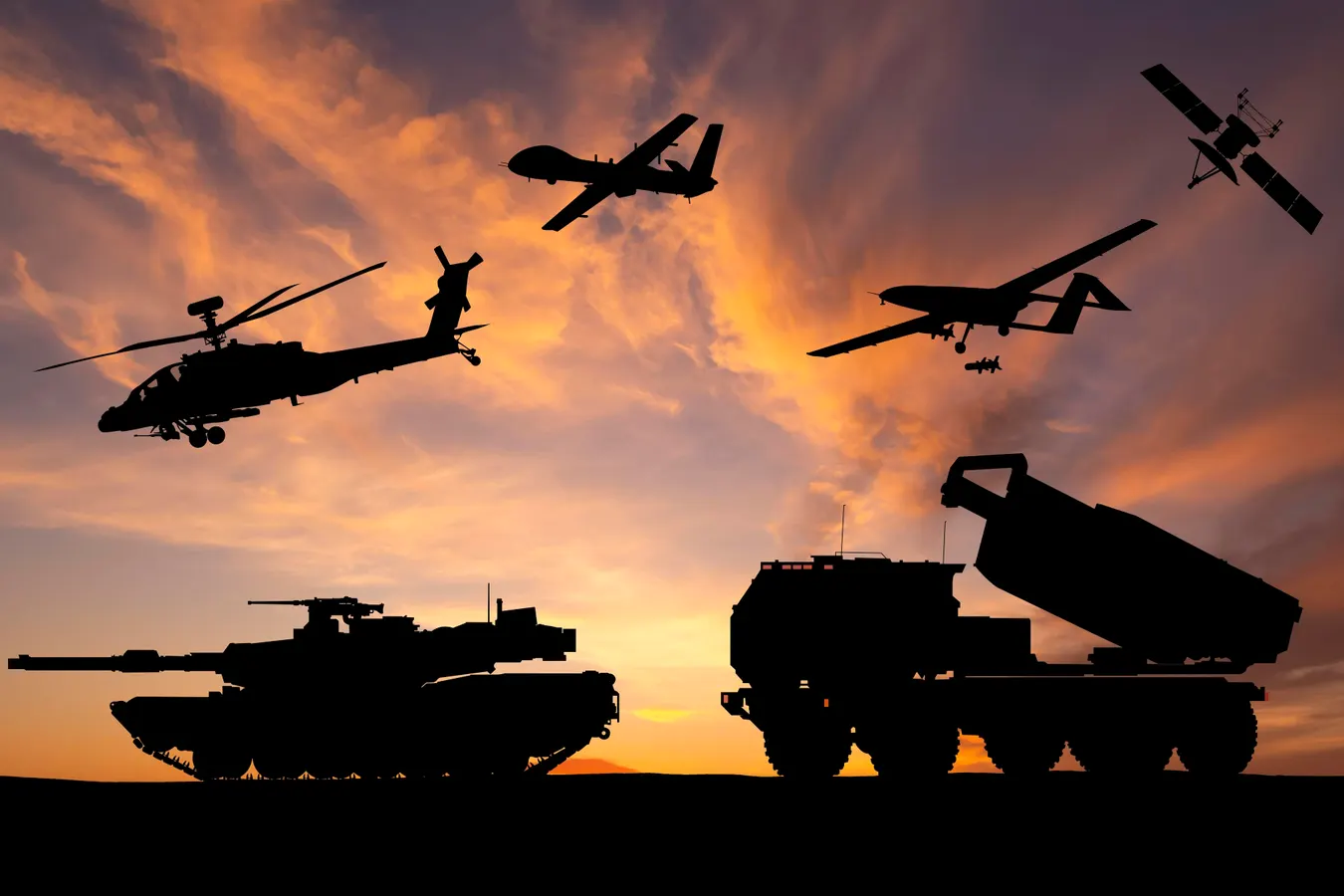

Pentagon and Anthropic’s dispute symbolizes the widening rift over who sets the rules for military AI: corporate guardrails or government authority.
getty
The standoff between Anthropic and the Pentagon over how AI should be used in defense settings has exposed the tensions between technology companies and the U.S. government, each with competing visions of national security and safety. What is emerging, beyond a commercial dispute, is a contest over the terms governing AI’s role in warfighting, surveillance and global power politics.
Anthropic, the AI developer behind the Claude family of large language models, signed a contract last summer with the U.S. Department of Defense worth up to $200 million. Those tools are already in use on classified military networks through third-party partners like Palantir. But in recent negotiations, Anthropic has resisted Pentagon calls to drop key restrictions it has placed on Claude’s use, particularly around fully autonomous weapons and mass domestic surveillance.
The Pentagon has threatened to end its partnership with Anthropic and floated labeling the company a “supply chain risk,” a designation typically reserved for adversarial foreign actors. Anthropic said it has not discussed specific operational uses of its models beyond routine technical matters. Defense officials insist contractors must permit all lawful uses of their technology, turning what began as a contract dispute into a broader clash over who sets the ethical boundaries for military AI.
When AI Ethics Debates Reach The Battlefield
This clash illustrates how divergent ethical frameworks can collide when private AI companies intersect with national defense priorities. Anthropic’s approach reflects a risk-averse philosophy, one that sees AI safety and ethical constraints as central to its mission. The Pentagon’s stance embodies a different calculation: it wants to harness powerful tools wherever and however lawful, guided by existing legal and military frameworks rather than corporate usage policies.
The dispute also underscores gaps in public policy and international norms. The DoD has its own ethical AI principles emphasizing responsible use, human oversight, reliability and accountability. These principles were intended to shape military AI integration in a way that respects existing laws and ethical norms. But there is a difference between broad principles and enforceable operational standards on the ground.
Different regional approaches highlight the messiness of this governance challenge. In Europe, robust regulatory frameworks like the EU’s AI Act focus on human-centric and risk-based governance and the act explicitly excludes military AI use. India’s AI strategy reflects similar efforts to balance innovation with trustworthiness and societal impact. China’s approach is more state-driven, integrating AI into defense innovation under a broader military-civil fusion strategy with limited public ethical debate. These divergent trajectories illustrate that there is no global consensus on how to govern AI in the military domain.
That fragmentation raises real stakes. The dispute reportedly intensified over Anthropic’s concerns about the military’s use of Claude in intelligence operations tied to the capture of Venezuelan President Nicolás Maduro, underscoring how quickly AI tools can move from analysis to operational impact.
Military AI systems are already used to help identify targets, analyze drone surveillance and provide real-time battlefield coordination. If an autonomous or semi-autonomous system misclassifies a civilian vehicle as hostile or generates flawed intelligence that accelerates a strike decision, the window for human review can shrink to seconds or less in ways humans cannot always monitor or correct. In that context, errors can lead to civilian casualties or unintended escalation between states.
Military AI Needs Enforceable Safeguards
A recent report on military AI governance from my colleagues at the Harvard Belfer Center argues that enforceable safeguards, not just broad principles, are essential to preserve meaningful human judgment in high-stakes decisions and preserve space for diplomacy.
The cost of failing to govern effectively is not theoretical. AI systems can make plausible but erroneous recommendations. These risks demand governance frameworks that reflect both technological realities and commitments to human rights, legal standards and democratic accountability.
Anthropic’s stand raises uncomfortable questions for the tech industry and policymakers alike. If private companies set ethical boundaries for technology use, what happens when those boundaries conflict with government demands? Conversely, if governments abandon all ethical constraints in favor of operational imperatives, what does that mean for civil liberties and international norms? Somewhere in between should lie policies that balance safety, accountability and national security.
The Stakes In the Pentagon/Anthropic Standoff
If the Pentagon pushes ahead without constraints, it may expedite military adoption of AI but stoke public concern and geopolitical unease. On the other hand, if one company insists on ethical guardrails incompatible with defense requirements, governments may seek to develop indigenous capabilities or work with firms willing to relax these constraints. Case in point, OpenAI recently expanded its partnership with the DoD. Together with Google and Elon Musk’s xAI, the three have waived safeguards in their government contracts for non-classified use.
Anthropic and the U.S. government have been at odds, given the company’s focus on safety and ethical use. David Sacks, the U.S. special advisor for AI and crypto, regularly labels Anthropic “woke AI” and accuses it of driving regulatory capture based on fear. At Davos, Dario Amodei, Anthropic’s CEO, repeated his sharp criticism of the administration’s AI chips export controls policy, calling it “crazy” and equivalent to “selling nuclear weapons to North Korea.” The outcome of this debate will matter far beyond the boardroom of Anthropic or the halls of the Pentagon. It starts to define the contours of how AI strengthens or destabilizes the world’s geopolitical and ethical landscape.















Leave a comment