
The Expanding Robot Industry in India
Market Size and Growth Projections
The robotics market in India is really taking off. We’re looking at a market that was valued at about USD 493.25 million in 2024. Projections show it’s set to hit USD 522.12 million by 2025 and is expected to reach a substantial USD 733.91 million by 2033. That’s a pretty solid growth rate, with a compound annual growth rate (CAGR) of around 9.6% expected between 2025 and 2033. This isn’t just a small bump; it’s a significant expansion driven by a lot of different factors.
| Year | Market Size (USD Million) |
|---|---|
| 2024 | 493.25 |
| 2025 | 522.12 |
| 2033 | 733.91 |
Key Market Drivers
So, what’s pushing this growth? A few things stand out. First off, there’s a big push for automation across pretty much every industry you can think of, especially in manufacturing, automotive, and electronics. Companies are looking to boost efficiency and cut costs, and robots are a big part of that. The government’s “Make in India” and “Digital India” initiatives are also playing a huge role, encouraging local production and the adoption of new technologies. Plus, let’s be honest, there’s a growing need for solutions that can handle tasks where there’s a shortage of skilled human workers. It’s a mix of business needs, government support, and practical challenges.
- Automation Demand: Industries are increasingly turning to robots to improve production speed and consistency.
- Government Support: Initiatives like “Make in India” and “Digital India” are creating a favorable environment for robotics.
- Efficiency and Cost Savings: Businesses are adopting robots to streamline operations and reduce long-term expenses.
- Labor Shortages: Robots are filling gaps in sectors facing a scarcity of skilled labor.
Emerging Trends in Robotics
Beyond just growth, the type of robots and how they’re used is changing too. We’re seeing a rise in collaborative robots, or ‘cobots’, which are designed to work safely alongside humans. This is a big deal for smaller businesses and for tasks that need a human touch. Artificial intelligence (AI) and machine learning are also becoming standard, making robots smarter and more adaptable. Think robots that can learn from their environment or make decisions on the fly. Advancements in sensors and vision systems are also making robots more precise and capable of handling complex tasks. It’s all about making robots more intelligent, flexible, and easier to integrate into existing workflows.
Innovations Shaping the Robot Landscape
It feels like every week there’s something new happening in the world of robotics, especially here in India. We’re seeing some really cool tech emerge that’s changing how robots work and what they can do. It’s not just about bigger, faster machines anymore; it’s about smarter, more adaptable ones.
Rise of Collaborative Robots
One of the biggest shifts we’re noticing is the growing popularity of ‘cobots,’ or collaborative robots. These aren’t the hulking industrial robots of the past that needed to be caged off. Cobots are designed to work right alongside people, making them much safer and easier to use. This is a game-changer, especially for smaller businesses that might not have the space or budget for traditional automation. They’re showing up in all sorts of places, not just factories. Think about labs needing help with repetitive tasks, or even in packaging lines where human dexterity is still important.
- Safer human-robot interaction: Built-in sensors stop them if they bump into something.
- Easy to program: Often, you can just show them what to do by moving their arms.
- Flexible deployment: They’re lighter and smaller, so you can move them around as needed.
Integration of AI and Machine Learning
What’s really making these robots smarter is the integration of Artificial Intelligence (AI) and Machine Learning (ML). It’s like giving them a brain. These systems allow robots to process information in real-time, make decisions on their own, and even learn from their experiences. This means they can handle more complex jobs and adapt to changing situations without needing constant human input. For example, AI helps robots predict when a machine might need maintenance before it breaks down, saving a lot of hassle. It also helps them recognize different objects, which is super useful in places like warehouses or for quality checks on production lines.
Advancements in Sensors and Vision Systems
And how do these robots ‘see’ and ‘feel’ the world around them? Through better sensors and vision systems, of course. We’re talking about cameras that can see in incredible detail, even in tricky lighting, and sensors that can detect tiny changes in pressure or temperature. This advanced perception allows robots to perform tasks with much higher precision. Imagine a robot arm carefully picking up delicate electronic components or a mobile robot navigating a busy factory floor without bumping into anything. These improvements in sensing are key to robots performing more intricate and sensitive tasks.
| Sensor Type | Key Advancement |
|---|---|
| Vision Systems | Higher resolution cameras, 3D depth sensing |
| Tactile Sensors | Improved grip control, force feedback |
| Proximity Sensors | Enhanced object detection range and accuracy |
| Inertial Sensors | Better motion tracking and stabilization |
Sectoral Adoption of Robotics
Robots aren’t just for sci-fi movies anymore; they’re becoming a real part of how things get done across India. From making cars to delivering packages, different industries are starting to see the benefits of bringing robots into their operations. It’s not just about big factories either; smaller businesses are looking at how robots can help them too.
Manufacturing and Automotive Sectors
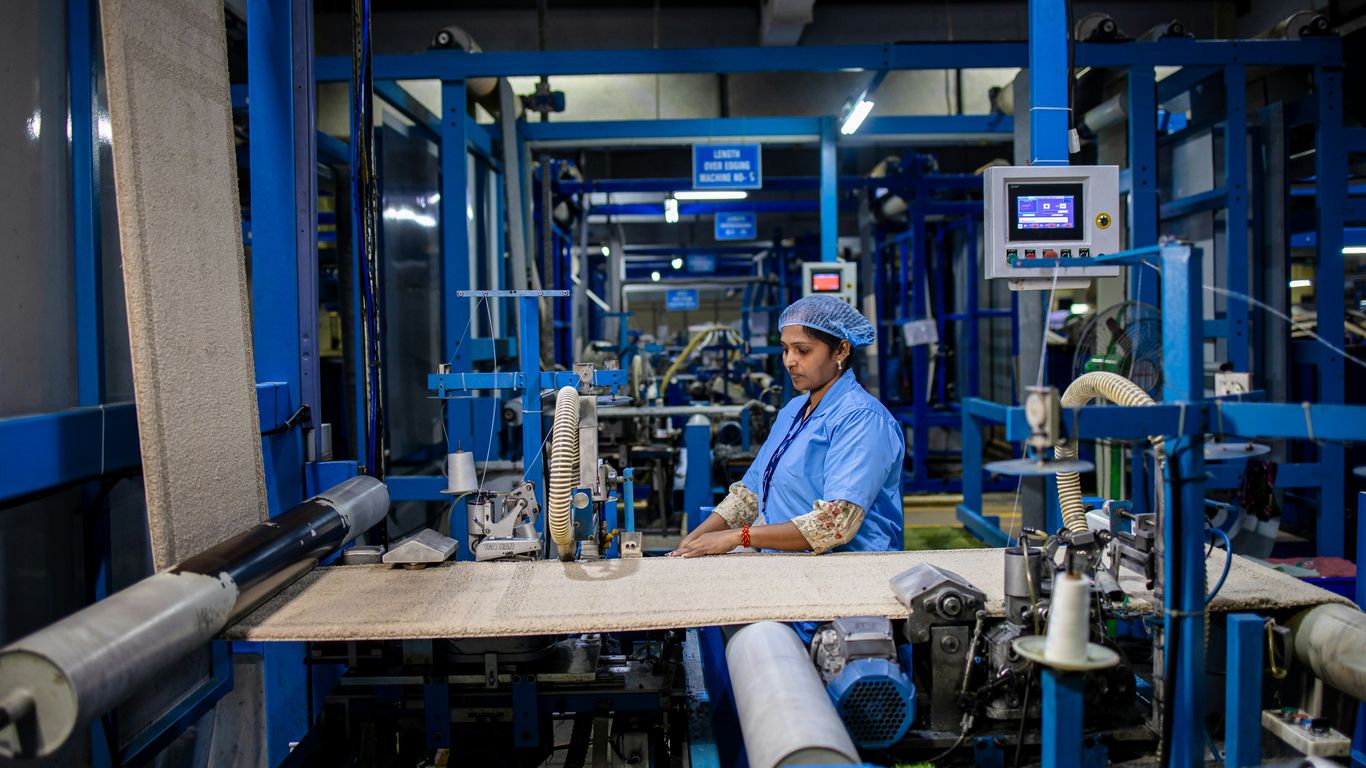
This is where robots have really made their mark. Think about car assembly lines – robots have been doing repetitive tasks like welding and painting for ages. They’re super consistent and can work non-stop, which is a big deal for keeping production high. In India, especially with the push for ‘Make in India’, manufacturers are looking at robots to improve quality and speed. They’re not just using the big, heavy-duty ones anymore either. Smaller, more adaptable robots are showing up for tasks like picking and placing parts, or even for quality checks. This helps make sure products are made to a high standard, reducing errors that humans might make, especially after a long shift.
Logistics and E-commerce Automation
Remember how busy online shopping got? Well, robots are a huge part of how companies handle all those orders. Warehouses are getting kitted out with robots that can move shelves, sort packages, and load trucks. This is especially important for e-commerce businesses that need to get items to customers quickly. Automated handling systems are becoming the backbone of efficient supply chains. These robots can work around the clock, sorting through thousands of items without getting tired. It means faster delivery times for us and lower operating costs for the companies. We’re seeing more and more of these robots in distribution centers across the country.
Healthcare and Agriculture Applications
Robots are also stepping into areas that might surprise you. In healthcare, robots are being used for things like assisting in surgeries, which allows for more precision and less invasive procedures. They can also help with tasks like dispensing medication or even disinfecting hospital rooms, which is a big plus for hygiene. In agriculture, robots are starting to help farmers too. Think about drones that can monitor crops, identify areas that need water or fertilizer, or even spot pests. There are also robots designed for tasks like planting seeds or harvesting certain crops. This helps farmers be more efficient and use resources better, which is important for feeding a growing population.
Key Players and Competitive Dynamics
The Indian robotics market is a lively scene, with both big international names and growing local companies battling for a piece of the action. It’s not just about who makes the most robots, but also about who’s building the best partnerships and pushing the boundaries with new tech.
Major Global and Domestic Manufacturers
The big players you’ll see everywhere are the usual suspects from Japan and Europe. Companies like FANUC, Yaskawa, KUKA, and ABB have a strong presence, bringing their decades of experience and wide product ranges to India. They’ve been in the industrial automation game for a long time, and their robots are pretty much standard in many factories, especially in the automotive sector. On the domestic front, while still developing, companies are starting to emerge, often focusing on specific niches or collaborating with international giants.
Market Share and Brand Influence
It’s tough to get exact market share numbers because the market is always shifting, but the established global brands definitely hold a significant chunk. Their brand recognition is huge, built on reliability and a long history of supplying to major industries. Think of them as the household names in industrial automation. Smaller, newer companies are trying to gain ground by offering more specialized solutions or focusing on areas like collaborative robots, which are becoming more popular.
Partnerships and Collaborations
This is where things get really interesting. We’re seeing a lot of partnerships forming. For instance, global robot makers are teaming up with Indian system integrators to better understand and serve the local market’s needs. There are also collaborations aimed at training the next generation of robotics engineers, like the School of Robotics initiative. These partnerships are key for spreading knowledge, developing local talent, and making sure the right robotic solutions get into the hands of Indian businesses. It’s not just about selling robots; it’s about building an ecosystem.
Here’s a look at some of the key companies making waves:
- ABB Ltd.: Known for its wide range of industrial robots and automation solutions.
- FANUC Corporation: A major player, especially in manufacturing automation.
- Yaskawa Electric Corporation: Strong in robotics and motion control systems.
- KUKA AG: Offers a broad portfolio of industrial robots.
- Universal Robots: A leader in collaborative robots (cobots), making automation more accessible.
- Delta Electronics: Expanding its presence with new cobot series and smart manufacturing solutions.
These companies, along with others like Mitsubishi Electric, Denso, and Omron, are shaping the competitive landscape through their product development and strategic alliances.
Government Initiatives and Policy Impact
The Indian government is really pushing for robotics development, and it’s making a noticeable difference. They’ve got these big programs like ‘Make in India’ and ‘Digital India’ that are all about boosting local manufacturing and getting more tech into everyday life. This means more support for companies building robots right here in India, which is pretty cool.
Then there are the Production Linked Incentive (PLI) schemes. These are basically financial rewards for companies that increase their production of certain goods, including those related to robotics and automation. It’s a way to encourage investment and growth in the sector. Think of it like a bonus for making more robots or the parts needed to build them.
Here’s a quick look at some key initiatives:
- Make in India: Aims to turn India into a global manufacturing hub, encouraging both domestic and foreign investment in manufacturing, including robotics.
- Digital India: Focuses on improving digital infrastructure and making technology more accessible, which naturally supports the growth of AI and robotics.
- Production Linked Incentive (PLI) Schemes: Financial incentives for companies to boost domestic manufacturing and exports in key sectors, including those that use or produce robotics.
- Startup India: Provides support for new businesses, including those in the robotics space, through funding, mentorship, and simplified regulations.
It’s not just about making things, though. The government is also looking at the rules and regulations. They’re trying to create a clearer path for robotics companies, especially when it comes to things like intellectual property and safety standards. This policy support is a big reason why we’re seeing more innovation and investment in India’s robotics scene. It helps clear some of the hurdles that might otherwise slow down progress.
Challenges and Opportunities Ahead
So, India’s robot scene is really taking off, which is pretty exciting. But like anything new and growing fast, there are definitely some bumps in the road and some cool chances to make things even better.
Addressing the Skilled Workforce Gap
One of the biggest hurdles we’re seeing is finding enough people who actually know how to work with these robots. It’s not like you can just plug them in and walk away. You need folks who can program them, fix them when they break, and generally keep them running smoothly. This isn’t just about having a few experts; it’s about building a whole workforce. The government and some companies are trying with training programs, but honestly, the tech is moving so fast, it’s hard for education to keep up. We need more specialized training, and it needs to be accessible, especially for smaller businesses that can’t afford to train their own teams from scratch.
Overcoming High Initial Investment Costs
Let’s be real, robots aren’t cheap. Buying them, setting them up, and integrating them into existing systems can cost a pretty penny. This is a major roadblock, especially for small and medium-sized businesses (SMEs) that make up a huge part of India’s economy. They often don’t have the deep pockets that big corporations do. While collaborative robots, or ‘cobots’, are a bit more affordable and easier to set up than their industrial cousins, the upfront cost is still a big deal. Finding ways to make this investment more manageable, maybe through leasing options or government grants, could really open the doors for more companies to adopt robotics.
Expansion into Small and Medium Enterprises
This is where a lot of the future growth could come from. SMEs are the backbone of Indian industry, but they’ve been slower to adopt robots because of the cost and skill issues we just talked about. However, they also have a lot to gain. Imagine boosting production, improving quality, and staying competitive without needing a massive overhaul. The opportunity is huge if we can find ways to make robotics accessible and practical for them. This could mean simpler robot designs, better support services, and maybe even ‘robotics as a service’ models where companies pay for robot use rather than buying outright. If we can crack this, it’ll be a game-changer for Indian manufacturing.
The Road Ahead for Robots in India
So, looking at everything, it’s pretty clear that robots are becoming a much bigger deal in India. We’re seeing them pop up everywhere, from big factories to smaller workshops, and that’s only going to keep growing. The government’s backing and companies wanting to get more done efficiently are really pushing this forward. While there are still some bumps, like making sure people know how to use and fix these machines, the overall picture is really positive. It feels like we’re just at the start of this robot revolution in India, and it’s going to change how a lot of things are made and done.
















Leave a comment