
Training AI models with neurons on a chip. Getting hydrogen energy from water using sunlight. Elon Musk’s pivot to the Moon. I’ve got all that and more in this week’s edition of the Prototype. To get it in your inbox, sign up here.
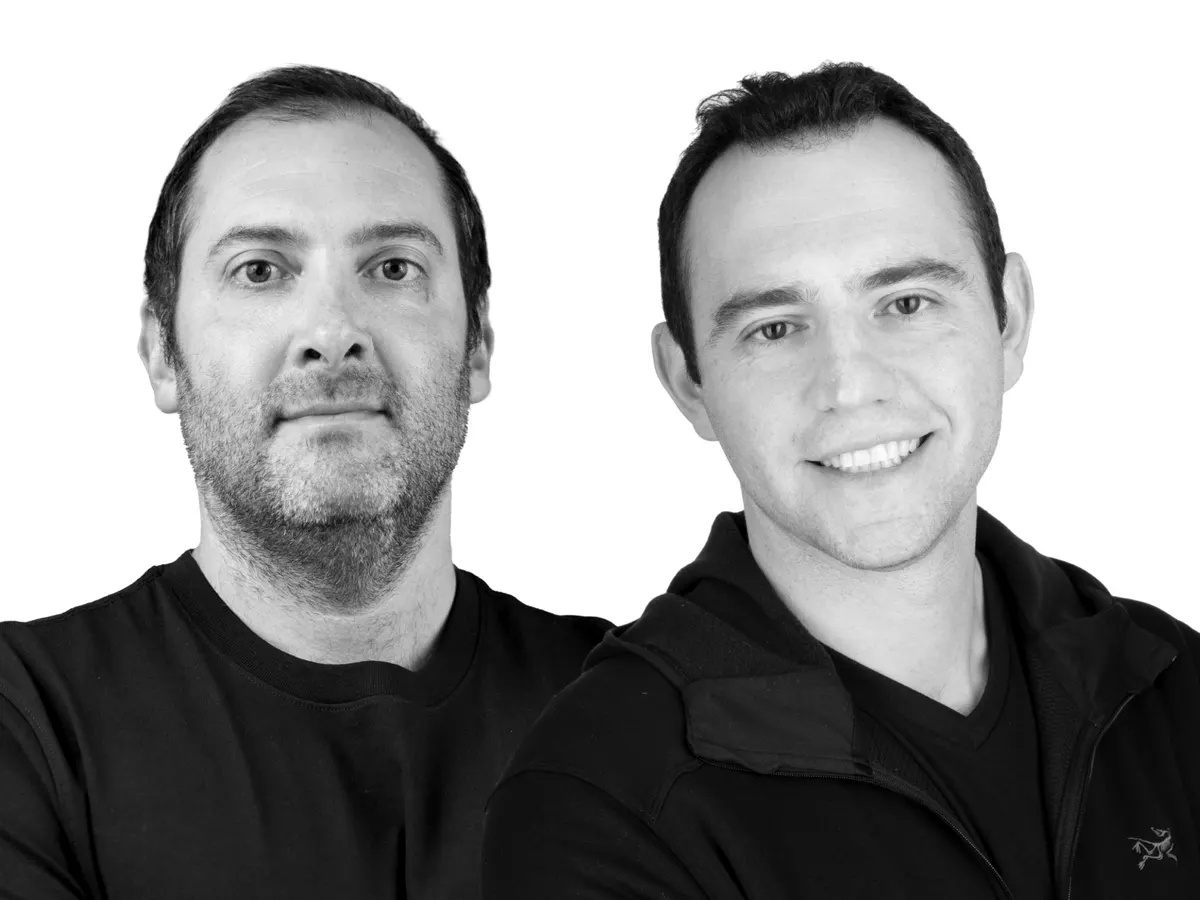
TBC cofounders Jon Pomeraniec and Alex Ksendzovsky
TBC
Artificial intelligence is power-hungry.
That’s not sci-fi doomsaying, just literal reality. Training models requires enormous amounts of computational power and electricity. But the founders of The Biological Computing Company (TBC) have a solution–parsing visual data through dishes of neurons, which process them in a way that AI models can understand.
Here’s the gist: TBC has tiny dishes about the size of a grain of coarse salt, each with around 100,000 neurons. The dish has 4,096 electrodes, and they enable TBC to stimulate the cells and record their activity. The company then takes visual training data and converts it into electrical signals that can be read by the cells. It then records the electrical signals that result from the neurons processing that data and turns the signals into a mathematical model, which are much more sophisticated than videos and images that AI models are typically trained on.
“It’s like if a picture is worth a thousand words, a neural representation of an image is worth a million words,” cofounder Alex Ksendzovsky, a neuroscientist, told me. “It captures complex spatial and temporal dynamics.”
Those mathematical models are used to train what TBC calls a software “adapter” that plugs into AI models as an additional processing layer. The company claims its adapters can double the length of video an AI model generates before it starts breaking down. That’s despite the fact that its software adapters are less than 1% the size of the models they boost, and that they don’t require any costly retraining.
TBC is relatively unique in its use of actual neurons to reduce the high costs of AI compute, but it’s not alone in this market segment. IBM has long been developing a new category of AI hardware inspired by the brain’s architecture. And chip startup Groq, which is developing low-power, AI-specific chips, was recently effectively acquired by AI hardware leader Nvidia in a $20 billion deal. TBC cofounder Jon Pomeraniec, also a neuroscientist, is unperturbed by the competition, both confident in his technology and seeing hardware rivals as potential collaborators. “We’re communicating with the best computer ever built,” he said. “It’s been architected and evolved and perfected through nature and evolution.”
Today, TBC announced that it raised a $25 million seed round, led by Primary Ventures. The capital is being deployed to open the company’s flagship lab and accelerate commercialization of its technology. “We’re excited to bring this technology to the world and show everyone that it’s possible,” said Pomeraniec. “It’s not a research project. It’s commercializable.”
P.S. Nominations are open for the Forbes AI 50—help us and our sponsoring partner Mayfield find the most promising startups deploying artificial intelligence in finance, scientific discovery, construction and more.
Discovery of the Week: Hydrogen From Light And Liquid Metal
A research team from the University of Sydney has developed a way to make hydrogen using only sunlight and liquid metals.
Hydrogen is a promising green energy source because it can be used cleanly in fuel cells, producing water as its primary byproduct. The trick is that getting hydrogen often isn’t green. Its primary source is natural gas, which has to be heated up to incredibly high temperatures for the chemical reaction needed. This requires a lot of energy–often from burning fossil fuels.
The secret sauce in the researchers’ method is gallium, which is a liquid at temperatures above 85 degrees Fahrenheit. The metal is suspended in water (fresh or seawater didn’t matter) and exposed to light. This triggers a reaction with the water, which releases hydrogen in the process. The resulting product, gallium oxyhydroxide, can be converted back to regular gallium for re-use.
Next, the researchers will be focused on improving the efficiency of the reaction and building a larger reactor for it. If the process can be industrialized, it could be a big boost to the $200 billion global hydrogen market.
“There is a global need to commercialise a highly efficient method for producing green hydrogen,” lead researcher Kourosh Kalantar-Zadeh said in a statement. “Our process is efficient and easy to scale up.”
SpaceX Pivots To The Moon
SpaceX has shifted its focus away from Mars and toward “building a self-growing city on the Moon,” CEO Elon Musk said in a post on X this week, explaining that his company “can potentially achieve that in less than 10 years, whereas Mars would take 20+ years.”
Ten years for a lunar city is still an aggressive schedule, especially given concerns the company’s lunar lander system could be delayed by years, according to findings from a NASA panel last September. Development of its Starship rocket is also behind schedule after a series of failed tests last year, though the most recent tests have been successful.
This strategic shift aligns with NASA’s priorities, especially as competitors like Blue Origin are also winning contracts tied to the space agency’s Moon plans and SpaceX prepares for a high-profile IPO.
Although Musk said that “SpaceX will also strive to build a Mars city,” this still feels like a significant pullback of the company’s ambitions. When Forbes first profiled Musk in 2003, before SpaceX had successfully launched a rocket, Mars was at the top of his mind. He has often joked that he’d like to die on the red planet, “just not on impact.” And when I asked him about the Moon the first time I ever interviewed him in 2012, he told me that while a permanent base there would be good, Mars mattered more. “I’m okay with going to the Moon,” he said. “But we’ve seen that movie before and remakes are never as good.”
The Hot Take: AI For Drug Discovery Is Overhyped
Each week, I ask investors for their take on tech trends within their industries. Today I’m featuring thoughts from Jenni Le, a principal at Venture Investors Health Fund, which invests in startups across healthcare sectors.
Jenni Le
Venture Investors Health Fund
What tech is being overhyped right now?
AI Drug Discovery. The bottleneck is not creating great chemistry, it’s testing the safety and efficacy in real humans. While AI will eventually help winnow candidates, the money being piled into companies claiming their platform is “the one” seems like overkill. We won’t know for decades which ones will consistently produce good results. We can’t algorithm our way out of biology yet to be understood.
What tech should more people be talking about today?
Electricity as medicine. We are still in the first innings in understanding how the brain and the immune system interact. The recent approval of a vagal nerve stim device to treat [rheumatoid arthritis] is super exciting because it is a great demonstrator of how we might be able to modify a very complex disease/system using electricity.
What are we all going to be talking about in five years?
China. The US government is asking firms today how we can accelerate innovation through policy changes. I think in 5 years the FDA is going to look very different because we are competing with China on speed and it’s up to us to provide feedback so we can help our companies get to patients as fast and safely as possible.
On My Radar
Innovation: To celebrate America’s 250th anniversary, Forbes unveiled its Innovator 250 list, ranking the most innovative Americans, both living and historic, through the lens of our celebration of entrepreneurial capitalism.
Earth’s orbit is getting crowded: AST SpaceMobile unfolded its BlueBird 6 satellite in orbit, which will deliver high-speed internet directly to people’s phones. Meanwhile, the FAA approved Logos Space’s application for a 4,178 satellite constellation for enterprise connectivity, and startup Tomorrow raised $175 million to expand its constellation of weather satellites. Ten years ago, low Earth orbit was dominated by imaging satellites. Today, whole layers of infrastructure are being built.
AI money keeps flowing: Anthropic raised a $30 billion funding round. Legal AI startup Harvey is closing in on $200 million. Trener Robotics (which I covered in December 2024) raised a $32 million round. Alphabet plans to spend more money on AI this year than in the last three combined. This is not an exhaustive list of reports from the past few days–just a few tell-tale signs that the appetite for AI doesn’t seem to be slowing down (at least, on the capital side).
Cool technology: Northwestern is growing spinal cords in dishes to test regenerative treatments. Startup Project Omega aims to turn nuclear waste into batteries. A Chinese research team is trying to use quantum physics to make the internet hack-proof.
Pro Science Tip: AI Might Burn Out Your Employees
If your company is encouraging employees to utilize AI tools, keep an eye on them–it may be making them productive to a fault. An ongoing study of a technology company found that employees with access to AI tools, “worked at a faster pace, took on a broader scope of tasks, and extended work into more hours of the day, often without being asked to do so.” However, once the honeymoon phase is over, the resulting expansion of duties leads to burnout. “What looks like higher productivity in the short run can mask silent workload creep and growing cognitive strain as employees juggle multiple AI-enabled workflows,” the UC Berkeley-based researchers said. To avoid this, they recommend that businesses “structure how AI is used, when it is appropriate to stop, and how work should and should not expand.”
What’s Entertaining Me This Week
In the realm of AI tools that don’t cause burnout, Spotify launched a new service in beta, Prompted Playlists, which is pretty much exactly what it says on the tin–you give it a prompt, and it returns a curated playlist of songs to you. I’ve been using it to resurface some old favorites by prompting it to make a playlist of songs I used to listen to all the time but haven’t in years. (I’ve been on Spotify for 15 years so there’s a lot of data there.) I’ve also been using it to discover new music by explicitly pairing it to moods, genre or even just similar vibes to another song. I’ll be interested to see how it evolves.













Leave a comment