


Is the UK ready for the massive AI shake-up coming to our country? (Image: Getty)
Britain is facing a massive artificial intelligence (AI) explosion that will change our lives forever – and the results will be truly mind-blowing. Experts are now warning that the rise of the robots is set to collide head-on with our shops, our offices and our very way of life.
From how we spend our cash to how the NHS treats our sick, AI will transform the UK landscape forever. To prepare ourselves, the Express has looked into the crystal ball to see how this tech explosion will change our daily routines in just over a decade. It is time to brace yourselves for a brand-new Britain where nothing will ever be the same again.
READ MORE: Driverless car makes emergency stop after mistaking bus advert for real people
READ MORE: ‘Disturbing’ alert as people ‘cloned’ after phone call

By 2035, the NHS could be using AI to handle administrative burdens, including automated scheduling (Image: Getty)
Economic and institutional changes
1. The “Productivity Leap” in Public Services
By 2035, the NHS and the Civil Service will likely have integrated AI to handle massive administrative burdens. For the NHS, this means predictive diagnostics and automated scheduling, potentially solving the chronic waiting list issues. For citizens, this could lead to a more hyper-personalised state where taxes, benefits and local services are handled instantly by AI agents.
2. Hollowed-out Middle Management
The UK’s economy is heavily reliant on professional services, including law, finance and accounting. By 2035, entry-level and mid-tier roles in these sectors may be significantly reduced. While the top partners remain, the ladder for young British graduates to climb could disappear, leading to a crisis in professional career progression.
3. Resurgence of High-Value British Manufacturing
AI-driven robotics and digital twins could allow the UK to re-shore manufacturing. With AI optimising small-batch, high-tech production, including aerospace or biotech, Britain could reduce its reliance on long global supply chains and revive industrial hubs in the North and Midlands.
4. The Sovereign AI Infrastructure Gap
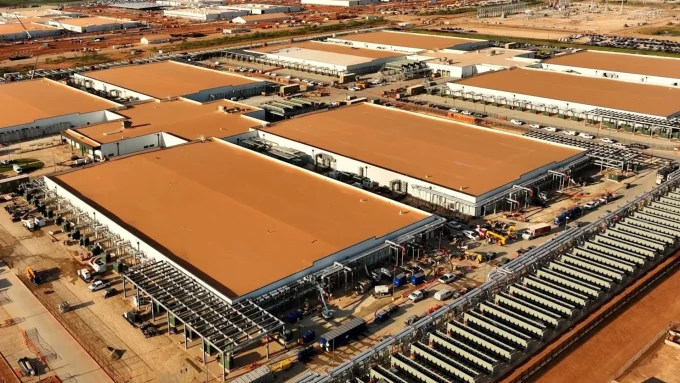
If the UK fails to develop its own massive compute clusters and “Sovereign AI” – the idea that a country should own and control its own digital brain, rather than renting it from someone else – it may find its economy entirely dependent on American or Chinese infrastructure. By 2035, “Digital Sovereignty” will be a major political flashpoint, with the UK paying high intelligence rents to foreign tech giants to keep its economy running.

Undistinguishable deepfakes and AI-generated content could erode trust in British institutions (Image: Getty)
Social and personal changes
5. Hyper-Personalised Education and Retraining
The British education system could shift away from one-size-fits-all testing. Every student might have a lifelong AI tutor tailored to their learning style. This will be essential for the workforce, as the job-for-life model is replaced by a constant retraining model facilitated by AI.
6. The ‘Reality Crisis’ and Trust
By 2035, deepfakes and AI-generated content will be indistinguishable from reality. In a UK context, this could erode trust in British institutions, the BBC and the political process. Verifying what a politician actually said or what happened in a local community will become a constant, exhausting struggle for the average person.
7. Loneliness and the ‘Agentic’ Social Fabric
For the UK’s ageing population, AI companions and care-bots will provide essential support and monitoring. However, there is a risk of a “loneliness paradox,” in which human-to-human social care is replaced by efficient but soulless AI interaction, potentially weakening traditional British community spirit.

The UK’s ‘Net Zero’ targets will be heavily reliant on AI, balancing wind, solar and nuclear power (Image: Getty)
8. Precision Environmental Management
The UK’s “Net Zero” targets will be heavily reliant on AI. By 2035, Britain’s energy grid will be managed by AI that balances wind, solar and nuclear power in real time with millisecond precision, significantly lowering household energy costs while meeting climate targets.
9. Widening Wealth Inequality
Capital – those who own the AI – will likely outpace labour at an accelerated rate. Without significant tax reform, such as an “AI Tax” or a variation of Universal Basic Income, the gap between the tech-wealthy in cities like London, Oxford or Cambridge and the rest of the country could widen to a breaking point.
10. A New “Leisure Class” or “Underemployed Class”
The four-day workweek could become the standard in the UK by 2035, as AI handles the “drudgery.” For some, this will lead to a renaissance in British arts, gardening and local volunteering. For others, the lack of traditional work could lead to a crisis of identity and purpose, as the “work ethic” that has defined British life since the Industrial Revolution is fundamentally challenged.












Leave a comment