
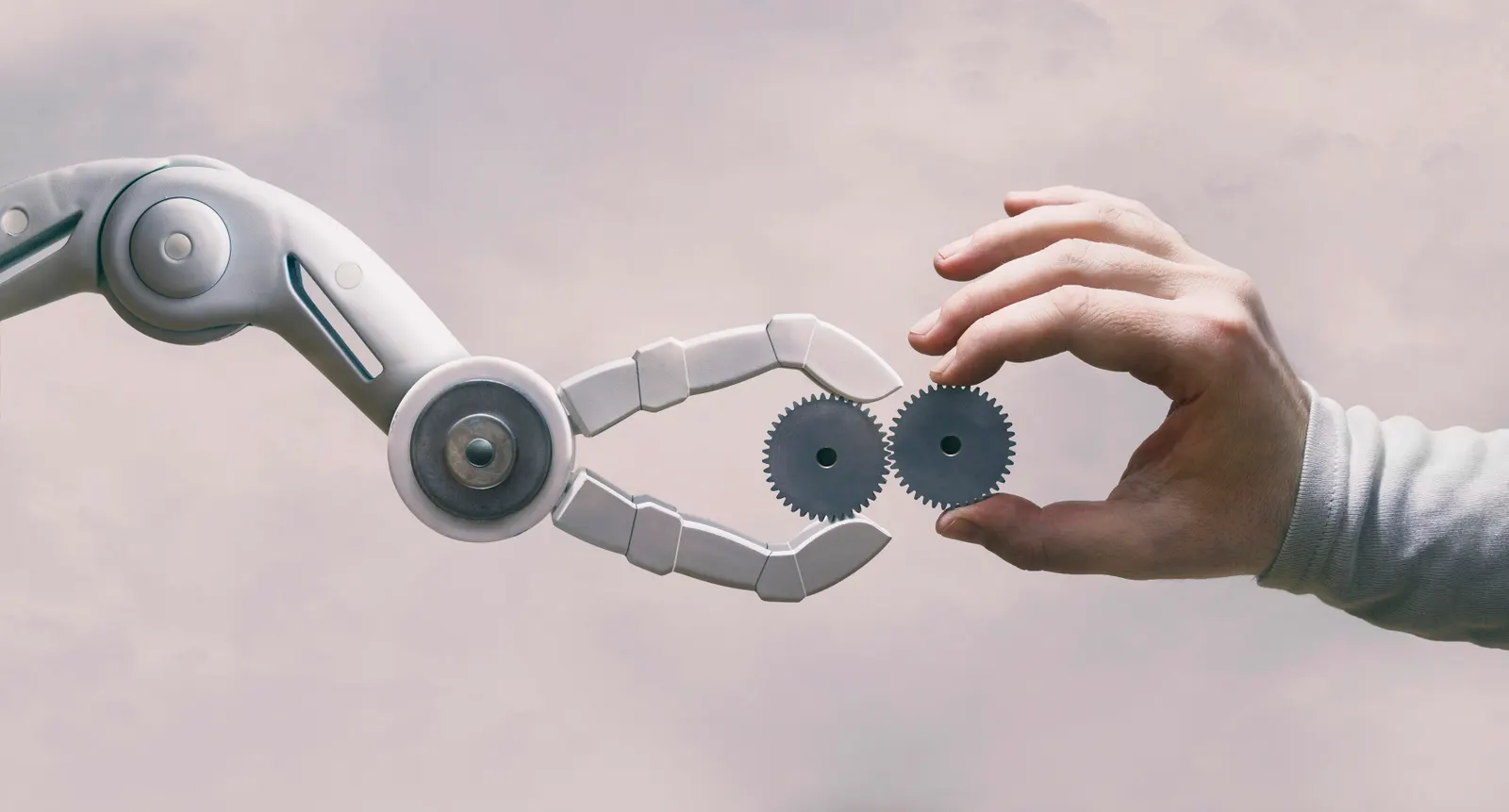

Experts are already predicting a dramatic shift in how we work in 2026 as AI becomes your new “favorite coworker.”
getty
In 2023, I wrote a story for Forbes.com about American workers gripped by anxiety over artificial intelligence—fearing it would replace jobs, erode trust and ultimately unravel the human fabric of work. Three years later, that fear is noticeably shifting. As more employees use AI in their daily work, apprehension is giving way to cautious optimism. The turning point has been a subtle reframing: AI is no longer something that works for us, but something that works with us. Experts now predict AI: becomes your “favorite coworker” this year. Employees who treat AI like a junior colleague—one to train, supervise and leverage—will gain a decisive advantage over those who resist it. But what does that really mean?
AI: How It Can Be Your Favorite Coworker
Nearly every expert I spoke with predicts that by 2026, AI will be a constant presence in the workday. That doesn’t mean a humanoid robot pulling up a chair beside you. Instead, “AI as coworker” is a metaphor meant to reassure workers that while AI may redefine roles, it doesn’t erase the need for people.
In July 2025, Sam Taylor, business expert at LLC.org, told me that generative AI is becoming a silent partner in organizations—one that amplifies human intuition instead of replacing it. He compared it to hiring a research assistant, strategist and editor rolled into one. The real success stories, Taylor argued, come from teams that treat AI as a collaborator, not a competitor.
That theme surfaced repeatedly in my conversations with a handful of experts. As employees increasingly turn to digital tools for guidance, feedback and reassurance once provided by colleagues, AI is shifting from a background tool to an active collaborator. Still, most business experts insist its value lies in strengthening human connection, not displacing it.
Ryan Starks, head of growth at Rising Team, says the fear that “if AI can do more, people matter less” misses the point. His organization uses AI to support—not replace—the human side of work.
“What I’m seeing is the opposite,” Starks explains. “As technology takes over tasks, what actually moves teams forward is trust, communication and the ability to connect as humans. Those things were often undervalued because they’re hard to measure, but they’ve always been the foundation of innovation.”
David Maffei, senior vice president and general manager at Staffbase, agrees. He believes the real risk of AI isn’t job loss—it’s speed without connection. “The magic of AI is how it keeps teams aligned and informed as they grow,” he says. “When people get the right information before they ask, that’s not just productivity—it becomes the organizational spine.”
Maffei predicts that by 2026, AI-powered internal communications will be critical to building clarity, trust and consistency across the employee experience. Efficiency matters, he says, but the true win is a company that operates with shared understanding every day.
Dave Bottoms, SVP and GM of Marketplace at Upwork, sees the next productivity era being driven by people, businesses and AI agents working together. As AI becomes more capable, human talent becomes more—not less—important.
“The next wave of opportunity will belong to people who can guide, refine and elevate AI outputs,” Bottoms says. “Authenticity, creativity and critical thinking can’t be automated. These professionals will bridge automation and true innovation.”
Jacqui Canney, chief people and AI enablement officer at ServiceNow, believes 2026 should mark the end of talking about the “future of work” and the beginning of living it. AI agents, she predicts, will be embedded across functions, freeing employees—especially early-career talent—to focus on strategic and creative contributions.
But Canney stresses that novelty has worn off. “People want to know how AI will affect their well-being, their teams and their mental health,” she says. In an always-on world already strained by workflow fatigue, responsible AI adoption must prioritize trust, ethics and mental health from the start.
She argues that the most competitive organizations will shift to adaptive, human-centered systems that unlock creativity while safeguarding well-being. This transformation also redefines the CHRO role—positioning it as a guide through the most significant workforce shift in a generation.
AI: Your ‘Favorite Coworker’ From Assistants to Agents
Andrew Rabinovich, CTO and head of AI at Upwork, says AI agents are about to get much better at real work. Today’s systems often struggle outside controlled environments. The next leap will come from reinforcement learning driven by real-world experience and human feedback.
Future AI agents, he predicts, will be fine-tuned, task-specific and trained on proprietary data. They’ll retain context, remember prior interactions, break work into subtasks and coordinate across tools to deliver end-to-end solutions aligned with human intent. Still, Rabinovich cautions that speed without oversight is dangerous.
“The winners will pair AI’s velocity with human judgment,” he says, turning fast drafts into dependable, high-value outcomes.
Brandon Roberts, group vice president at ServiceNow, believes organizations will move beyond measuring AI by efficiency alone. Instead, success will be defined by how saved time is reinvested to build adaptable, high-performing workforces.
“Leaders will orchestrate collaboration between humans and AI agents,” Roberts explains. Talent strength will be measured by adaptability, skill capacity and human–AI fluency, directly linking workforce agility to growth and ROI.
A Final Word On AI: Your ‘Favorite Coworker’
Looking ahead, Andie Dovgan, chief growth officer at Creatio, predicts that in 2026 AI will move beyond copilots into fully autonomous agents capable of planning, acting and learning to achieve business outcomes end to end. These agents won’t just suggest actions—they’ll execute workflows with minimal human intervention.
This evolution will emerge first in data- and document-intensive industries such as banking and manufacturing. Rather than buying software licenses, enterprises will invest in “agentic automation”—paying for outcomes instead of seats. New roles will emerge: AI operations leaders, agent supervisors and workflow architects tasked with orchestrating hybrid human–digital teams.
Mark Abbott, founder and CEO of Ninety.io, offers a grounding reminder amid the enthusiasm. AI may eliminate repetitive tasks, he says, but it won’t eliminate the human need to contribute.
The most valuable people won’t be task-completers, Abbott explains. “They’ll be the ones who bring judgment, emotional intelligence and strategic thinking. Those skills aren’t just hard to automate—they’re fundamentally human.”
For organizations that understand this shift and build systems to support meaningful contribution, the future of work is not disappearing. It’s evolving. And for many workers, that evolution may come with an unexpected realization: AI isn’t your enemy. Consider AI: your “favorite coworker,” and it can help you do your best work yet.













Leave a comment