
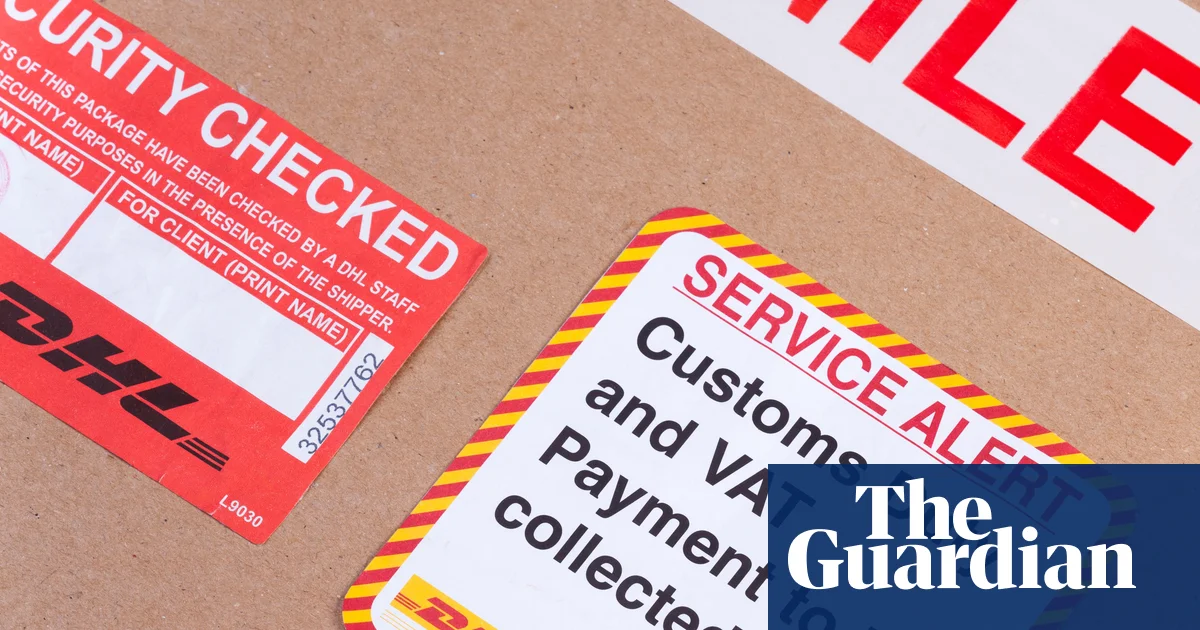
Removing the UK’s tariff exemption for low-value imports could push up prices and harm small companies and trade, a leading business group has said, as it called for a phased-in approach to ending the “de minimis” rules.
The UK government plans to end the tax break on imports of goods worth less than £135, making them subject to customs duty, with the changes to take effect in March 2029 at the latest. The US removed its longstanding de minimis exemption on 29 August. Before that packages valued at less than $800 (£597) were allowed to be shipped into the US tariff-free.
The European Union has said it will do the same, and introduce new handling charges for cheaper packages as well.
British retailers including Primark, Currys and Boohoo have backed the move but have criticised the government for waiting until 2029 to end the tax break they say has allowed Chinese rivals Shein and Temu to undercut them.
The UK government’s technical consultation on the design of the new customs arrangements closed on Friday. The British Chambers of Commerce said while Britain should respond to action by the US and EU, “any reforms must be proportionate” to avoid unfair competition from cheaper goods flooding the UK market.
The BCC said businesses were particularly concerned about proposals to introduce charges per item or consignment. The fear is these fees would be inflationary, distort business behaviour and disproportionately affect small- and medium-sized fircompanies and customers who use e-commerce for single‑item deliveries.
According to a BCC survey, if import costs on small shipments were to increase by 5% to 10%, more than half of UK goods importers would pass this on to consumers, with only a fifth able to absorb them.
As well as raising prices or absorbing the costs, 21% of businesses said they would switch suppliers and 20% would consolidate shipments to reduce the impact of duties. A further 12% would scale down activity, which would reduce overall trade volumes.
Almost two-thirds of companies did not know about the planned change to the UK de minimis exemption, or were unsure whether they would be affected, the survey of 608 businesses found. About 30% of those surveyed were importers.
Just under a quarter of UK goods exporters said an increase in costs of 10-15%, due to the removal of other countries’ de minimis exemption, would put more than half of their overseas sales at risk.
William Bain, the head of trade policy at the BCC, said: “E‑commerce matters greatly to the UK economy and global trade. We know the trend globally is to abolish de minimis thresholds and levy duties on low value imports given their huge growth in recent years.
“But we would urge ministers not to introduce charges per item or consignment by import. Our research shows the increased costs will feed through into higher prices.”
Bain said the government should also retain VAT being charged at point of sale on transactions for these purchases, a practice followed by many countries in global trade.
He added that any removal of the de minimis exemption should be carefully phased in, avoid any new flat-rate fees and be focused on targeted enforcement.
An HM Treasury spokesperson said: “The rapid growth in low value imports is hurting our high streets and retailers. This is a significant reform which backs our businesses to compete and grow, controls safety and flow of goods at our border, and keeps the UK in line with our international partners.”
The changes will not kick in until 2029 because a new system for duty collection will need to be built from the ground up to handle the volume of low-value shipments, and businesses also need time to prepare.













Leave a comment