
Unlock the Editor’s Digest for free
Roula Khalaf, Editor of the FT, selects her favourite stories in this weekly newsletter.
“Government should be run like a business” is the sort of suggestion that sounds fine in principle but isn’t so simple in practice. Just look at the volatility that has come with having a real estate mogul in the White House. Still, there are a few simple lessons from the corporate world that might have made the UK’s Budget process less painful.
The first: “kitchen sinking” is useful, but has to be done right. A change in CEO, like a change in government, often follows problems under the previous management. Shareholders will give the new broom a bit of time to turn things around, but not that long, so it is good practice to move hard and fast with any difficult restructuring.
Throwing out everything but the kitchen sink — and its close cousin in financial reporting, the big bath — has costs, however. Staff and investors may be demoralised. So the worst thing to do is serve up a shocker, then come back 12 months later to do it again. That brings all the downsides without the upside of getting the worst out of the way.
In 2011, for example, new Lloyds Bank chief António Horta-Osório tried to draw a line under the scandal of mis-sold payment protection insurance with a large provision to compensate customers. Its shares tumbled. But far from moving on, Lloyds spent the rest of the decade taking further hits.
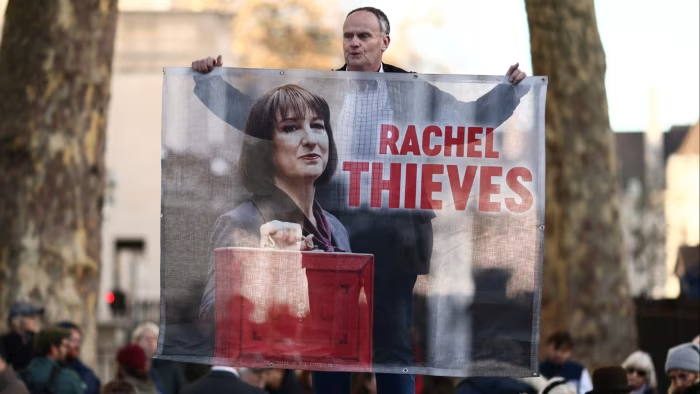
Last year’s “one and done” Budget had a similar impact: chancellor Rachel Reeves infuriated businesses with £40bn of new taxes, but didn’t go far enough to actually address the UK’s issues, leading to another extended period of uncertainty and a further £26bn in tax announcements.

Second lesson: those who are hostage to numbers they can’t control ought to be ready for multiple scenarios. The Treasury’s plans were thrown into disarray last month when it emerged that the Office for Budget Responsibility’s productivity forecasts would be worse than expected, even though it was a known risk. Reeves’ final programme — a “smorgasbord” of smaller measures instead of an increase in the headline rate of income tax — was decided upon only after a different set of forecasts improved a few weeks later.
Business leaders couldn’t get away with this sort of on-the-hoof policymaking. Energy companies don’t panic each time oil prices swing, even though they determine how much they can afford to invest or return to shareholders. Companies such as BP provide sensitivity analyses so investors can work out what would happen if prices tanked. Banks, likewise, report how any move in interest rates, house prices or unemployment could impact results.
Thirdly, and perhaps most importantly from a face-saving perspective: control the message. Wall Street banks have paid billions of dollars in fines over their employees’ use of unapproved communications channels. The government used to be similarly sensitive: in 1947, Labour chancellor Hugh Dalton resigned after Budget details were published 20 minutes early. Reeves’ plans, in contrast, have been leaking for months, adding to the uncertainty and frustration for businesses.
Corporate executives know there’s always something that slips through the net. They may therefore sympathise with Reeves for the unfortunate last-minute snafu on Wednesday, when the OBR accidentally front-ran her announcement. But even if the government can’t plan for everything, it could at least avoid letting every twist and turn play out in public.















Leave a comment