
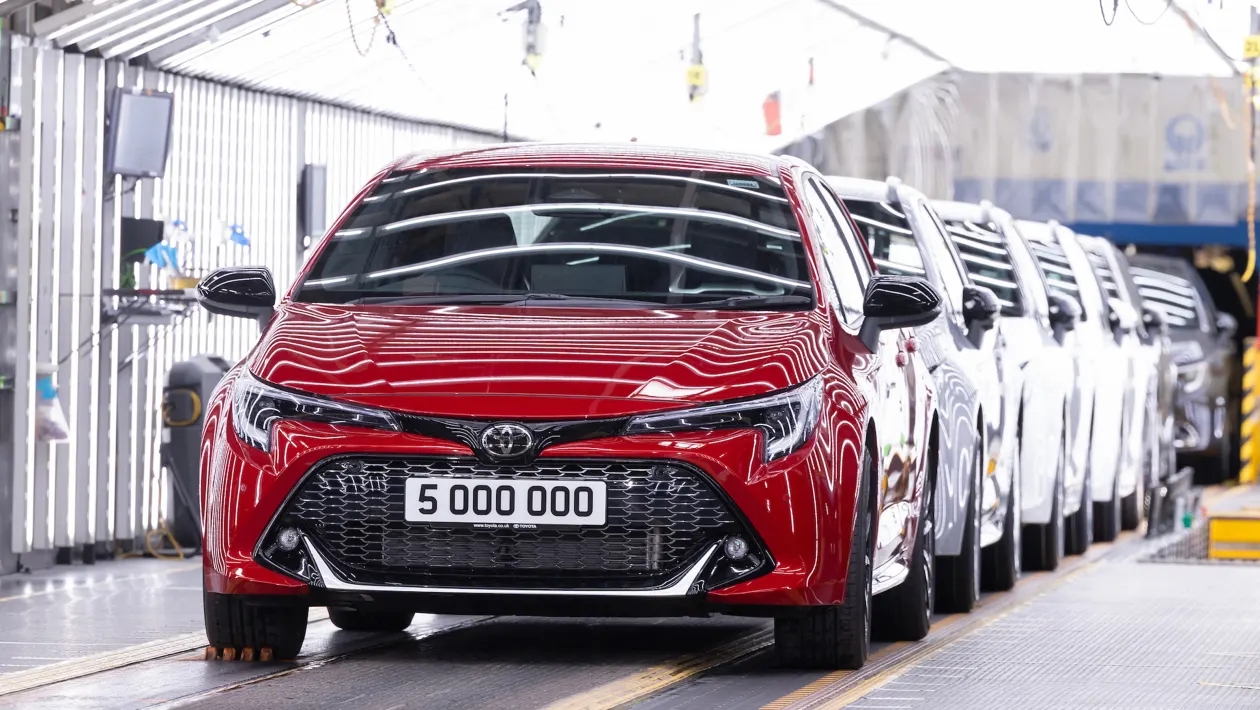
Following disagreements over the controversial ZEV Mandate, Vauxhall made the move to close its historic factory in Luton, which will likely have contributed to a dip in commercial vehicle production.
However, unquestionably the hardest-hit firm last year was Jaguar Land Rover (JLR). The British automotive conglomerate not only had to cope with the hibernation of the Jaguar brand prior to its ultra-luxury reinvention, but also heavy tariffs imposed by US President Donald Trump, which pushed up the prices of the maker’s already-premium products.
That’s not to mention the cyber attack in August, which saw the Coventry-based firm’s production grind to a halt for over five weeks before a phased restart. Experts believe the whole debacle cost JLR almost £500 million, making it the most costly cyber attack in UK history.
There is some hope, though – for both JLR, as well as the wider UK car industry. Joining Prime Minister Keir Starmer on a trip to Beijing, executives at JLR are hoping to secure a deal with Chinese giant Chery, which would see it produce cars in the UK utilising spare production capacity. Such a move would boost factory efficiency at JLR, securing jobs and providing a flow of additional revenue.
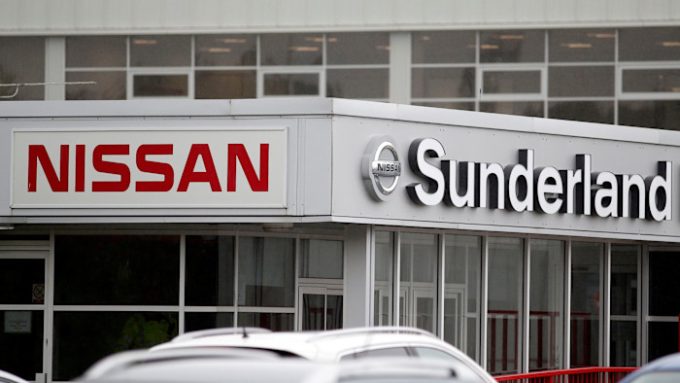
In addition, the start of production of the revived Nissan Leaf should provide the Japanese maker’s Sunderland plant with yet another best-seller besides the aforementioned Qashqai. All of this and more is expected to see manufacturing rise by 10 per cent over the course of 2026 to 790,000 units, and potentially to over a million the year after.
“The launch of a raft of new, increasingly electric, models and an improving economic outlook in key markets augur well,” said Hawes. “The key to long-term growth, however, is the creation of the right competitive conditions for investment: reduced energy costs, the avoidance of new trade barriers, and a healthy, sustainable domestic market.”
Come and join our WhatsApp channel for the latest car news and reviews…








Leave a comment