
Stay informed with free updates
Simply sign up to the Accountancy myFT Digest — delivered directly to your inbox.
Global securities regulators are set to probe the risks of private equity investments in audit firms, intensifying scrutiny of the rising number of buyouts in the financially sensitive sector.
In recent years, private equity groups — attracted by their strong cash flows and the perception of a fragmented market ripe for consolidation — have snapped up stakes in auditors and increased their valuations.
But the flurry of mid-tier deals has triggered concerns about a deterioration of audit quality and the potential for conflicts of interest at accountants.
Iosco, the global association of 130 securities regulators and financial market authorities including the US Securities and Exchange Commission and the UK Financial Conduct Authority, will announce on Monday that it is planning “an exploration of the growing interconnectedness between private equity activities and the audit sector”.
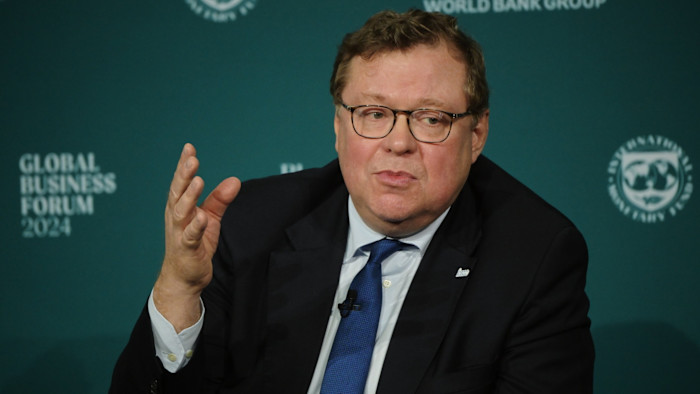
Jean-Paul Servais, chair of Iosco, told the Financial Times: “We want to start looking into this because private equity is doing more deals with audit firms and that can have benefits but could also entail risks, such as for audit quality.”

The move marks a ratcheting up of scrutiny from regulators into the growing trend for accountancy firms to be taken over by private equity firms.
Grant Thornton, the sixth-biggest UK audit firm by revenue, sold a majority stake to private equity investor Cinven in 2024, accelerating a wave of mid-tier deals in the UK.
In the US, the trend is more advanced: a third of the largest US accounting groups have entered the portfolios of private equity funds, while in January last year Blackstone bought Citrin Cooperman, the first firm to change hands twice.
But regulators are particularly sensitive about the ownership of audit firms due to the key role they play in maintaining the confidence of investors, creditors and broader society in the financial statements of major businesses.
Iosco plans to examine a number of potential risks for audit firms, including conflicts of interest, independence, the quality of their work and culture.
However, officials said its review would also consider potential benefits from private equity investment in audit firms, including enhanced operational efficiency, accelerated growth and extra funding to invest in new technologies such as artificial intelligence.

Supporters of the buyout trend maintain that private equity will help mid-tier firms gain the financial backing and expertise to compete with the Big Four accounting firms — Deloitte, EY, KPMG and PwC — and that buyout shops have a clear incentive to invest in audit quality.
Regulators have been responding to the rising number of private equity deals in the audit sector by clarifying the special rules that apply to such companies. The SEC sounded a note of caution on the trend in 2022, warning it “could create incentives that conflict with the auditor independence rules”.
The Institute of Chartered Accountants of Scotland last year called for an urgent review of the rules governing who can own audit firms, saying: “Difficult ethical decisions might face undue influence as a result of commercial pressures.”
The Financial Reporting Council, the UK’s accountancy regulator, has maintained a more neutral tone, but warned last year of the “risks” of changes in ownership. It asked firms to tell the FRC if they were considering private capital so it could monitor “threats to . . . independence as a result of conflicts”.
Prem Sikka, a Labour peer and accounting professor, urged “an independent investigation in the UK, because obviously accounting firms have different strengths in different countries. It is very difficult for Iosco to look at each country’s different problems”.
“There are real dangers here,” he said, pointing to concerns about the robustness of accountancy firms doing the audits of companies that are owned by the same buyout shop — something that is banned in the UK — and about the quality of audits produced under private equity ownership, whose “business model includes profiteering [and] cutting down the hours and labour spend”.
“Just imagine [if] the auditors find something wrong and they want to blow the whistle,” said Sikka. “Would they be under pressure to provide inside information to their ultimate owner? Or would someone say I’d better be quiet to hang on to my job. [Private equity ownership can put] all kinds of psychological pressures on people.”














Leave a comment