
Energy-intensive AI data centres could push UK houses out of the virtual queue for electricity
By
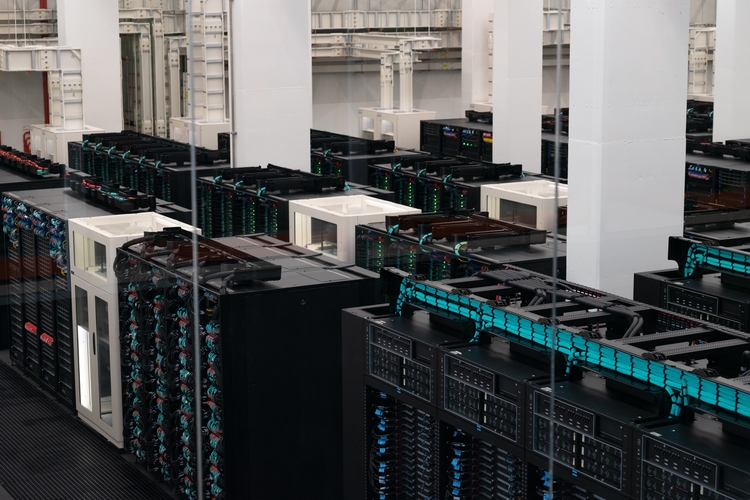
AI data centres could get priority access to the electricity grid under new government proposals to combat rising energy demands.
At the moment, all new infrastructure – from hospitals to industrial sites – must join a virtual queue to get an electricity connection. In the first six months of 2025, the queue grew by 460 per cent – an uptick driven largely by AI data centres.
Enjoying this article? Check out our related reads…
Under proposals announced today, projects which promise the most economic growth and job opportunities – dubbed as ‘strategically important’ – could jump the queue. This would include projects such as AI infrastructure, EV charging hubs and industrial sites switching from fossil fuels to electricity.
As well as this, Ofgem – the regulator for the energy sector – is looking at consulting on tightening rules to join the queue in the first place.
However, the Home Builders Federation has warned that failing to prioritise electricity for housing developments would lead to an effective ‘moratorium’ on new homes.
‘As we continue to face into a housing crisis, it is frustrating that regulatory, planning and policy arrangements effectively prioritise energy-intensive data centres over energy-efficient homes for families,’ said executive director at HBF Steve Turner.
Already, data centres receive preferential treatment in planning as they have been designated as ‘critical national infrastructure’. This means they cannot be blocked by local objections.
Currently, there are nearly 500 data centres in the UK, accounting for two per cent of the country’s electricity demand. Yet the growth of AI will mean this figure will likely increase in future years – up to six-fold – between now and 2050.
AI’s environmental woes
As well as being energy-intensive, AI can also have a serious impact on the environment. Google, Meta and Microsoft have reported increased greenhouse gas emissions since 2020, with constantly operating AI data systems found in data centres largely to blame. Microsoft alone reported a 40 per cent uptick in its emissions between 2020 and 2023, from the equivalent of 12.2 million tonnes of CO2 to 17.1 million tonnes.
Google’s emissions have rocketed by 50 per cent from 2019 to 2023, with its latest environmental report stating the difficulty of planned emission reductions ‘due to increasing energy demands from the greater intensity of AI compute.’

By 2030, it is projected that data centre emissions will globally accumulate to 2.5 billion metric tonnes of CO2 equivalent. To put that into perspective, this is equivalent to the emissions from 642,613 coal power plants in an entire year. Insidious as it is, these emissions will continue to pollute the planet whether we realise it or not.
Data centres also use unfathomable quantities of water in two key ways. The first is by drawing electricity from power plants that use vast amounts of water to cool themselves. The second is within the data centres themselves, which get so hot from the electricity they consume that they utilise cooling systems.
In 2021 – and this was before ChatGPT and the larger commercial AI boom took off – Google’s US data centres consumed an estimated 12.7 billion litres of fresh water. Training Microsoft’s GPT-3 AI program for just two weeks in US data centres consumed the same amount of water – 700,000 litres – as in the manufacturing process of 370 BMW cars or 320 Tesla electric vehicles. If the programme was trained in Microsoft’s less efficient Asian data centres, this figure would be tripled.















Leave a comment