
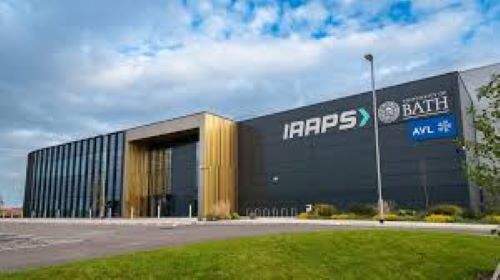

The University of Bath is to play a key role in helping net-zero aviation to get off the ground through an academic-led link-up with a measurement technology developer.
The university has entered the Knowledge Transfer Partnership (KTP) with specialist UK firm Druck – part of US advanced engineering giant Crane – to develop the world’s first flight-certified cryogenic hydrogen pressure sensor.
With aviation accounting for more than 8% of the UK’s greenhouse gas emissions, Hydrogen is increasingly being viewed one of the most promising solutions to decarbonising air travel.
The flight-certified sensors being developed through the KTP will be accurately measure pressures in liquid hydrogen (LH₂) storage and conveyance systems for hydrogen-powered aircraft at extreme cryogenic temperatures, far beyond current aerospace sensor limits.
These measurements will be crucial for detecting leaks, ensuring safe operation and enhancing system efficiency.
Existing cryogenic hydrogen sensors are designed for industrial markets but lack flight certification.
The KTP will give Druck, the global leader in developing high-accuracy, high-quality pressure measurement technology for harsh environments, access to the university’s IAAPS institute – a unique facility based on the Bristol & Bath Science Park equipped with propulsion, net-zero and cryogenic infrastructure.
This will enable advanced materials testing, prototype development and full compliance with aerospace certification standards.
Carl Sangan, Professor of Sustainable Propulsion and Power in the university’s Department of Mechanical Engineering, said: “This is an extremely exciting KTP, giving us the opportunity to support the aerospace industry in delivering net-zero travel.
“We look forward to collaborating with Druck to develop flight-qualified cryogenic hydrogen pressure sensors.”
With some 500,000 sensors already in operation across the aerospace sector, Druck has a proven track record helping control aircraft flight direction, fuel systems, hydraulics, cabin air pressure, engine oiling systems and many other applications.
The business is also participating in the FETCH collaboration to develop future aircraft hydrogen fuel control systems.
Druck president Gordon Docherty said: “If successful, this innovation will represent one of the most significant breakthroughs in harsh environment pressure measurement technology this century.
“We’re excited to work with the University of Bath and help make hydrogen-powered flight a reality.”
The South West is a leading region for research into hydrogen aviation fuel – which many in the industry view as the fuel of the future capable of decarbonising flight.
Its development in the region is also seen as a way of simultaneously driving economic growth, creating jobs, attracting investment and meeting the UK’s net zero targets.
However, substantial engineering challenges remain — including aircraft design, hydrogen production, and storage — before hydrogen-powered flight becomes a reality.
IAAPS is already a leader in hydrogen research and development. Its green hydrogen production plant – the first of its kind in the South West – can produce up to 10kg of hydrogen gas per hour, powering the centre’s research and innovation needs.
KTPs are funded by Innovate UK aim to help businesses improve their competitiveness and productivity through the better use of knowledge, technology and skills within the UK knowledge base.














Leave a comment