
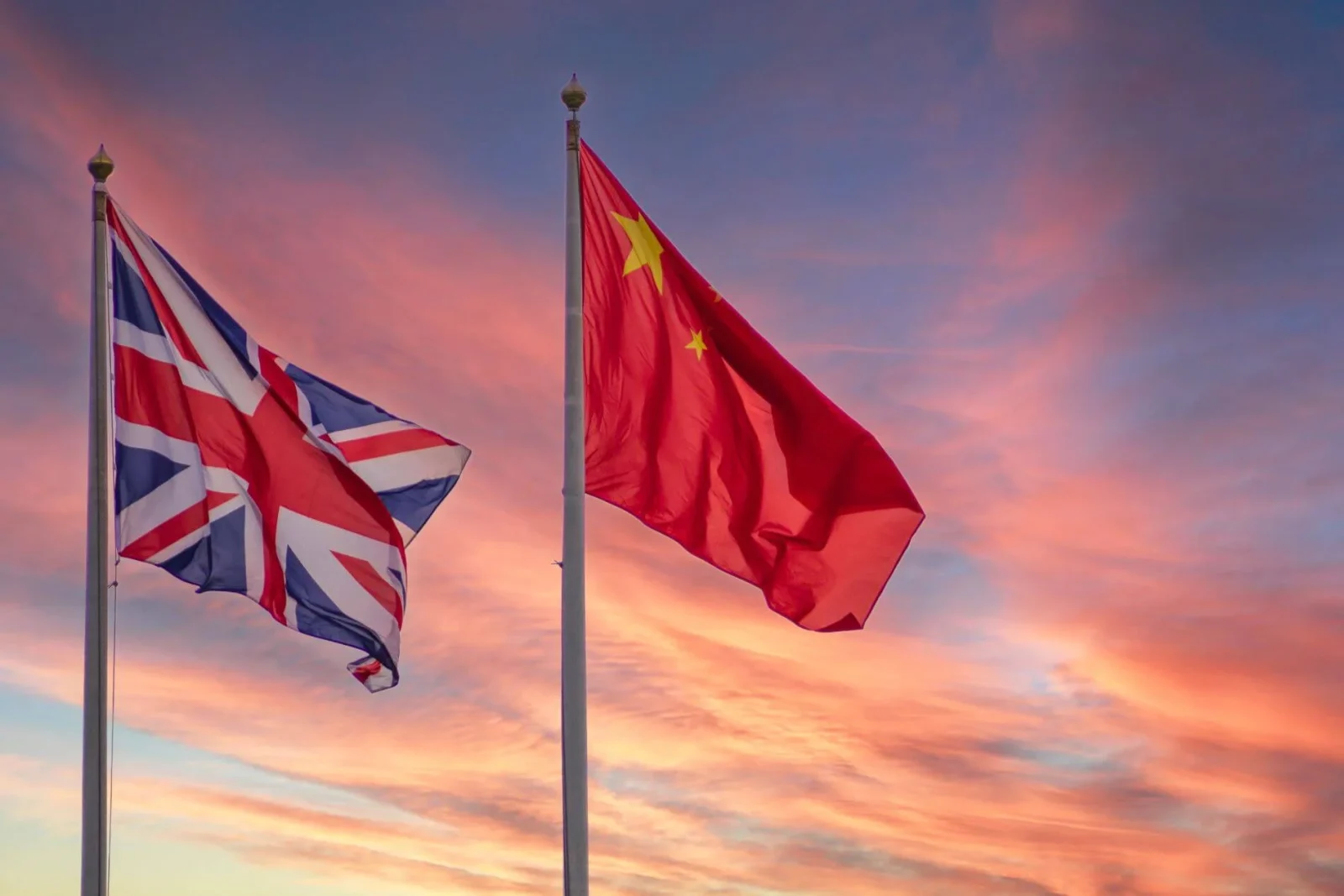
Last week, the government announced a newly-established partnership with China that will make it easier for British companies to sell services there. This follows repeated calls from UK business groups for clearer rules and better access to setting up links with China.
China holds a significant role in the international business landscape. It’s long been viewed as a high-growth—but equally high-friction—market for UK businesses. This friction is felt particularly by smaller firms without the budgets or local networks needed to succeed overseas.
The agreement also includes relaxed visa requirements for short-term trips, which will open doors and allow for more flexibility for UK citizens travelling to China on business.
What’s actually been agreed?
The main headline of the announcement is the new partnership agreed last week following the Prime Minister’s Beijing visit.
The agreement will support partnerships across sectors where the UK already has global prominence, such as professional services, financial services, legal, education, healthcare, and digital services. Both governments will collaborate on a feasibility study into a formal UK-China trade-in-services agreement, which could eventually introduce clearer, legally binding rules for British firms operating in China.
All of these negotiations are still in process. So for smaller businesses, the most immediately practical change will be the newly introduced visa-free travel for British citizens staying in China for less than 30 days. This alleviates a long-standing administrative burden for founders on business trips, making it easier to attend meetings and explore partnerships, which is an important stepping stone to full international expansion.
Business and Trade Secretary Peter Kyle said the partnership responds directly to ongoing requests from UK firms for “clearer rules, better market access, and practical support” to sell services into China.
Why this matters for UK small businesses
The UK is already the second-largest exporter of services to China, with £13bn worth of services sold by UK firms to China each year. Chinese demand is set to rise sharply over the next decade, particularly in expertise-based sectors such as business, financial, and digital services, in which many UK startups already have a strong presence.
For SMEs, the agreement also suggests the government is adopting a more pragmatic approach to helping businesses achieve international growth and supporting market access and finding local partners, areas where smaller firms can struggle most.
Since negotiations are still underway, this won’t be felt as an overnight change. Regulatory complexities and geopolitical risks, such as Trump’s tariffs, remain important considerations, meaning breaking into Chinese markets may still only be a realistic aim for particularly well-prepared SMEs rather than the average early-stage startup.
What should founders take from this?
For UK small businesses hoping to expand internationally, the announcement is a positive sign of the beginning of less friction with China, but it’s not a green light to rush in.
The relaxed visa rules will offer some immediate ease for those already exploring opportunities on the ground in China. And the potential for clearer regulation will hopefully lower some early-stage barriers, particularly for founders in business, financial, and digital services.
As HSBC Chair Brendan Nelson put it, a “strong and balanced economic and commercial relationship” can support growth and jobs, but only if access genuinely improves on the ground.
So for now, the deal signals unlocked opportunities, especially for more mature SMEs looking to expand beyond Europe and the US. It also reinforces the need for careful planning, local expertise, and a realistic risk assessment before exploring the Chinese market.
















Leave a comment