
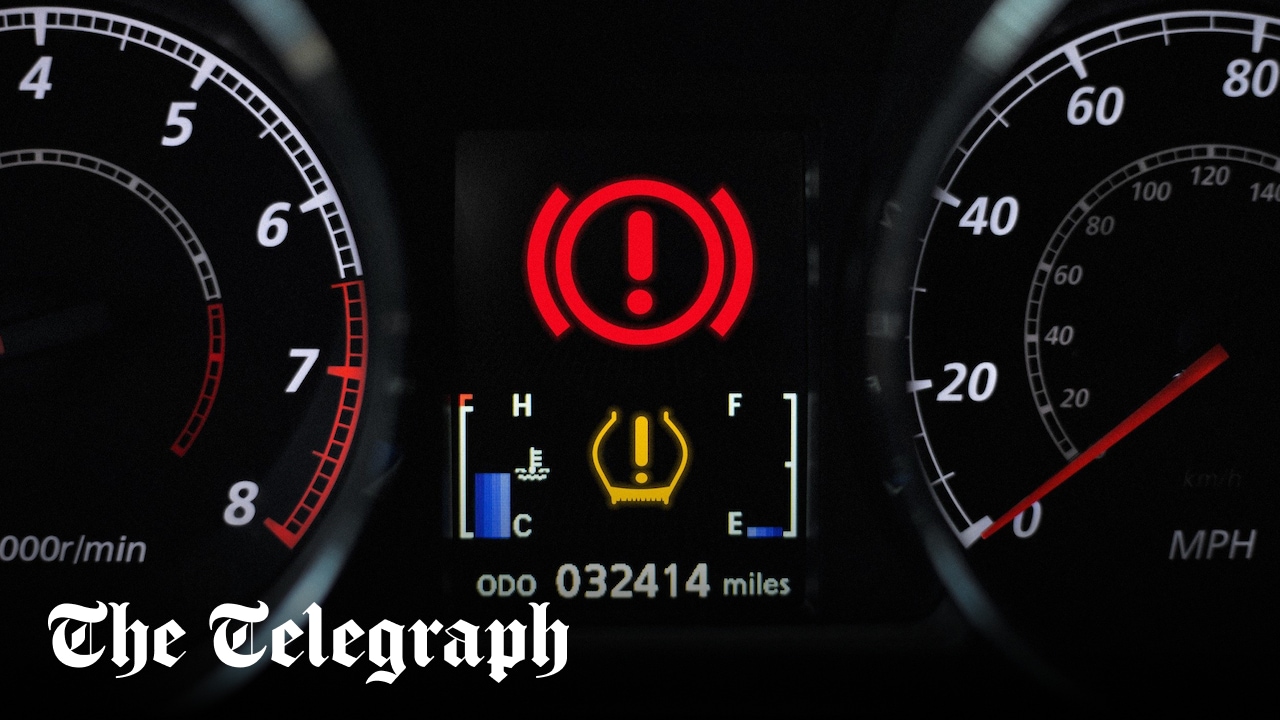
While Rich agrees that older vehicles are more likely to suffer from wear and tear-related issues – particularly tyres, brakes and suspension components – he points out that even newer cars aren’t exempt from defects: “We increasingly see defects on relatively modern vehicles, often linked to lack of regular maintenance or over-reliance on dashboard warning systems. Cars that cover high mileage, are used for short urban journeys or are poorly maintained between services tend to be at greater risk regardless of age.”
He agrees with the RAC that cost of living pressures have led some drivers to delay maintenance and the replacement of worn parts. In addition, he cites driver complacency, as vehicles have become more reliable and technologically advanced.
Modern cars are equipped with advanced technology such as tyre pressure monitoring systems (TPMS), electronic stability control and sophisticated braking sensors designed to alert drivers to faults. However, experts stress these systems are not a substitute for basic maintenance.
Visual checks essential
“TPMS, for example, does not check tyre tread, sidewall condition or tyre age,” Rich explains. “Warning lights are sometimes ignored or misunderstood. Technology can assist, but it cannot prevent defects if routine checks are neglected.”
It is also important to recognise the limitations of the annual MOT test. A vehicle may pass its MOT test but still develop faults shortly afterwards, particularly if components are already worn. Advisory notices flag potential issues, but many drivers fail to address them promptly.
So what simple and quick checks should you routinely undertake? The AA encourages drivers to follow the “Flower” check, which takes only a few minutes, at least once a month and before long journeys:
F – Fuel: Ensure you have enough fuel for your journey.
L – Lights: Check that all lights (headlights, indicators, brakes) are working correctly.
O – Oil: Check the oil level to keep the engine lubricated.
W – Water: Check coolant and screenwash levels.
E – Electrics: Check the battery, wipers and horn.
R – Rubber: Inspect tyres for correct pressure, tread depth and signs of wear or damage.
There are also clear signs that brake pads may need replacing, aside from the warning light illuminating in newer cars. These include vibration or shaking when braking; screeching or grinding noises; the car pulling to one side; and longer stopping distances.
James Harding, a tyre specialist at Blackcircle, explains how to stay on the right side of the law regarding your tyres: “UK law states that the minimum tread depth is 1.6mm across 75 per cent of the central section of the tyre. The entire circumference of the tyre must adhere to this rule for it to be road-legal.”
He recommends a quick test: “A good way to check your tread is to take a 20p coin and place it between the main grooves of the tyre. If you can see the outer band of the coin, the tyre may have insufficient tread. It is always advisable to check several spots in the circumference of each tyre.”
It’s certainly worth doing since each defective tyre is treated as a separate offence and a driver can receive a fine of up to £2,500 and 3 penalty points per tyre.
As the saying goes: better safe than sorry.
















Leave a comment