
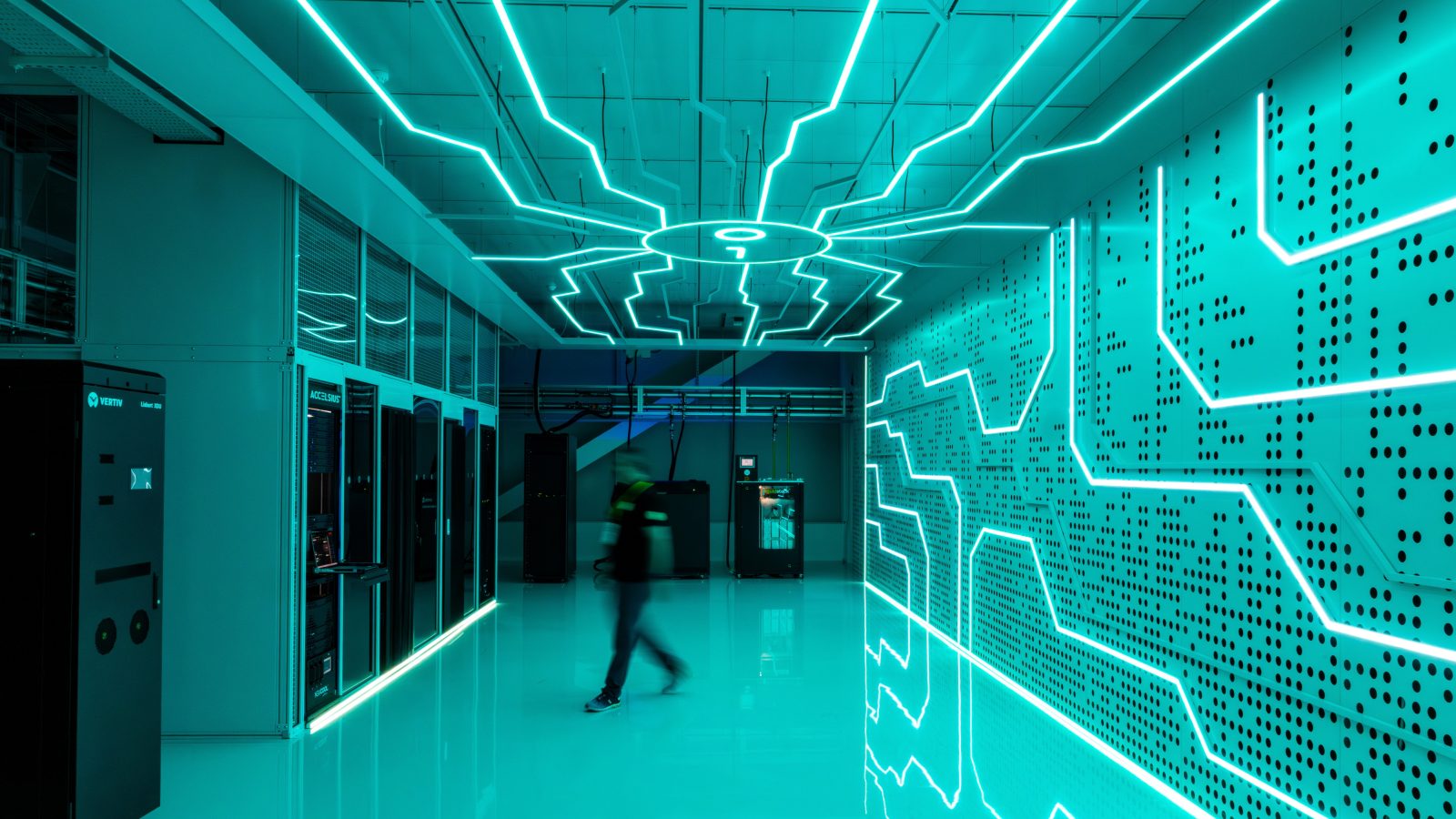
Two infrastructure trusts have announced investments in data centres right when investors are questioning the value on offer in the AI rush.
Last week, 3i Infrastructure (3IN) said it plans to invest €300mn (£260mn) to acquire a majority stake in Lefdal Mine Datacenter, a “high-quality Norwegian data centre campus”.
Meanwhile, Greencoat Renewables (GRP) launched a “new platform to capitalise on the opportunity of renewably-powered data centres” via a joint venture with Schroders Greencoat’s Schroders Capital Semi-Liquid Global Energy Infrastructure fund. This is part of a plan to move towards more growth-focused assets and includes the fund’s first investment in a data centre development in Ireland.
The two investments are actually quite different – but both have raised eyebrows among experts.
Read more from Investors’ Chronicle
Winterflood’s Ashley Thomas said that the size of 3i’s investment, as well as the timing of its entry into the data centre market, may raise some questions.
The £4.3bn trust recently sold its stake in TCR, a company that leases airport ground support equipment, for €1.1bn. After paying off its debt, it will have about €500mn left to invest, meaning that the majority of its ‘dry powder’ will go into the data centre investment.
Thomas expressed “concerns regarding market valuations” for data centres, noting that Equinix (US:EQIX), a US-listed real estate investment trust (Reit) focusing on the sector, is trading near a record high after a 29 per cent rise so far this year.
He said: “While 3IN’s realisation history has been excellent, its recent new investment history is more mixed.”
The trust has recently warned that another major holding in the portfolio, German fibre company DNS:NET, may have to be written down to zero from £212mn.
Panmure Liberum analysts were also unenthusiastic. On the one hand, this Lefdal investment offers diversification and could help narrow the trust’s discount to net asset value (15.3 per cent as at 16 March), thanks to exposure “to a much-loved growth sector”, they said.
“But we have long been sceptical about the current AI and data centre boom and see clear signs of corporate over-investment both in the US and across Europe.”
Commodity research firm BloombergNEF estimated that capital expenditure projections at the biggest listed data centre operators increased by more than 50 per cent in the past six months, reaching $806bn (£604bn).
Charles Murphy, senior research analyst at Singer Capital Markets, agreed that there is generally a risk of overpaying for data centre investments right now.
He said: “It’s a question of investors taking a view as to the management team’s skillset and how in line with their skills the investment is.”
Murphy argued that 3i’s data centre acquisition is entirely within the trust’s strategy – “an investment into an operational data centre that has capacity to triple in size” – and that the management team has a lot of relevant experience, meaning he’s “very comfortable” with the investment.
Going for growth
Greencoat Renewable’s plan is different. The trust normally invests in renewable power generation, so moving to data centre development is a significant strategic shift.
Murphy said he was “less comfortable” with the move, arguing that as a development project it was outside the trust’s strategy, with a lack of clarity over the long-term plan.
James Carthew, head of investment company research at QuotedData, also noted that 3i’s project actually appears greener than Greencoat’s, because it partly relies on hydropower.
He explained: “[Greencoat’s] project will also source energy from renewables, but almost all of that will be from wind, which is intermittent. When the turbines aren’t turning, the project will need to draw on energy from Ireland’s gas-fired power stations.”
Panmure Liberum analysts were more optimistic and argued that Greencoat Renewables’ growth plan was “the most detailed and credible we have seen from the sector” and that “the digital infrastructure platform will be a key point of differentiation to peers”.
In a period of lukewarm performance for the sector, there has been much talk of renewable infrastructure trusts turning to more growth-focused assets. But it’s easier said than done.
Towards the end of last year, Bluefield Solar Income (BSIF) wanted to merge with its asset manager and cut its dividend to try to stimulate portfolio growth.
But shareholders did not support the plan and the trust’s assets are now up for sale. NextEnergy Solar (NESF) also announced a strategic growth shift, involving a focus on total returns rather than just income, higher exposure to the energy storage sector and a dividend cut.
Before 3i’s and Greencoat’s announcements, few trusts invested in data centres. Investors can get exposure to the sector via digital infrastructure specialist Cordiant Digital Infrastructure (CORD), which has about 13 per cent of its portfolio in data centres and cloud assets, or via the more generalist Pantheon Infrastructure (PINT), which has a circa 12 per cent exposure to data centres – as well as via Reits, as discussed here.
Carthew said: “For now, the demand for data centre capacity still feels insatiable.”
But the long-term is harder to foresee – there could be a backlash over how much energy data centres consume and their climate impact, for example, or there could be another technology shift.
Carthew added: “Perhaps someone will come up with a better, more energy-efficient way of processing data and all this development becomes redundant, but the timescale for that is likely way beyond the payback period for 3IN and GRP’s investments.”














Leave a comment