
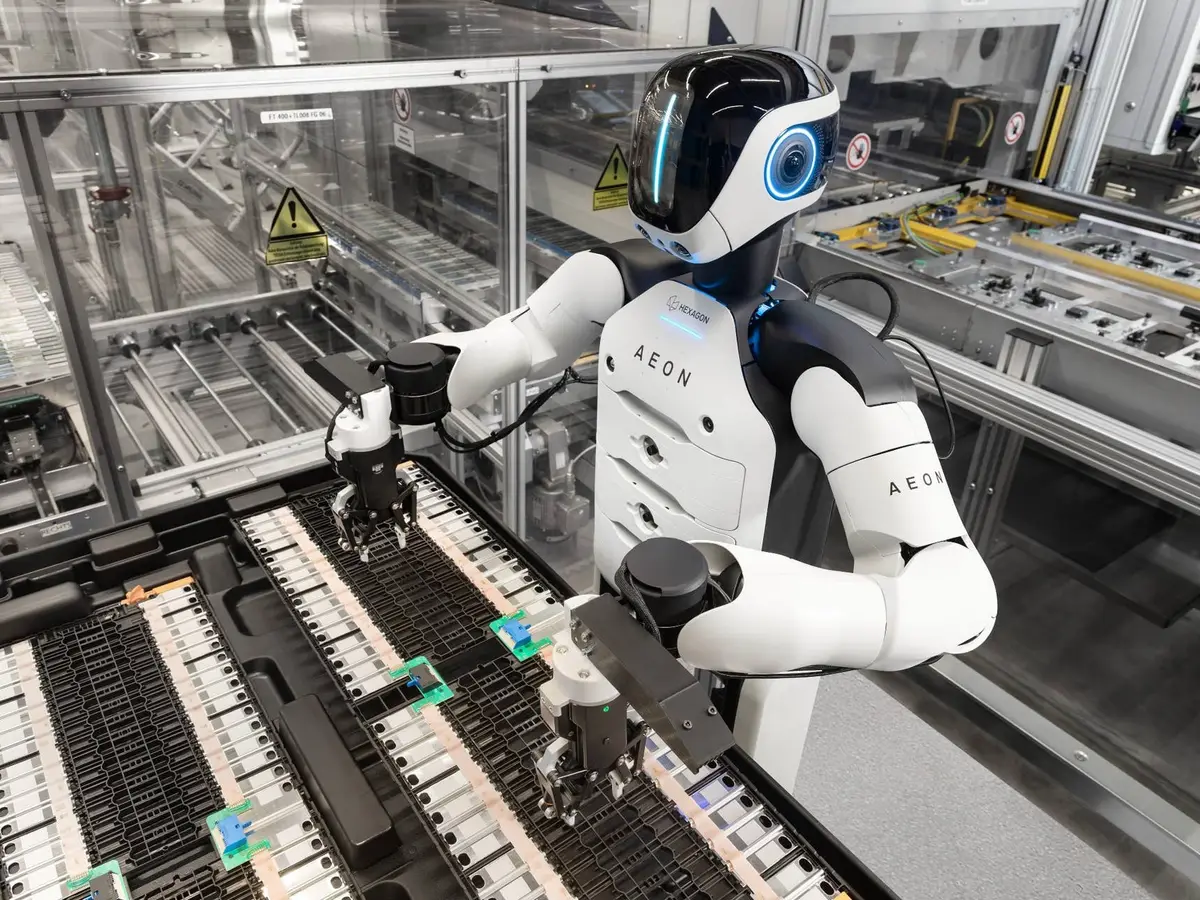
The debate over robots and jobs is no longer a future problem. It is happening now. General Motors has deployed 50 collaborative robots, often called cobots, at its Factory Zero assembly plant in Michigan. At the same time, more than 1,000 jobs have been affected at the facility, according to reports, prompting criticism from labour unions that fear automation is reducing opportunities for human workers. The development has attracted attention because it reflects a growing trend across manufacturing and technology industries, where companies are investing heavily in automation while reducing parts of their workforce.
Why GM is bringing more robots into factories
According to GM, the robots are designed to work alongside employees rather than replace them. The company says the cobots are helping with tasks such as attaching vehicle body panels and assisting workers with physically demanding activities on the production line. GM spokesperson Kevin Kelly said the technology is being introduced as part of a broader effort to improve safety, ergonomics and manufacturing efficiency. The company also argues that advanced automation helps factories remain competitive as the automotive industry undergoes significant changes. GM has faced challenges in recent years, including slower-than-expected demand for electric vehicles and pressure to reduce costs while maintaining profitability.

Unions say workers are paying the price
Labour organisations see the situation differently. The United Auto Workers (UAW) has strongly criticised the deployment of robots at Factory Zero. James Cotton, president of UAW Local 22, said workers believe opportunities are being reduced as automation expands inside the plant. The union has filed grievances over the installation of the robots and questioned claims that the technology primarily improves workplace safety.
The issue has become part of a much larger debate taking place across industries as artificial intelligence and automation become more capable. UAW president Shawn Fain recently argued that workers should benefit when technology increases productivity. He warned that automation should not come at the expense of employees whose work helped create that value.
A broader shift is happening across industries
The changes at Factory Zero are not taking place in isolation. Earlier this year, GM laid off more than 600 employees from its information technology division. The company also reduced engineering roles and CAD-related positions during previous workforce restructurings. Industry analysts increasingly describe these changes as a “skills swap”. In many cases, companies are reducing traditional roles while increasing investment in automation, AI systems and specialised technical talent. The trend is visible across sectors ranging from manufacturing and logistics to software and customer service.
Why Factory Zero matters
Factory Zero is one of GM’s most closely watched facilities because it plays an important role in the company’s electric vehicle strategy. The plant has experienced production pauses and adjustments as GM responds to changing EV demand. Yet despite those challenges, the company reported first-quarter 2026 profits of $4.25 billion, up 22 per cent compared with the same period a year earlier. That contrast is likely to intensify questions about how the benefits of automation should be shared between companies, shareholders and workers.
The next battle over automation
The dispute may be only the beginning. Automation is expected to become a major issue during future labour negotiations, including the UAW’s 2028 contract discussions with automakers. For companies, robots offer a way to improve efficiency and reduce costs. For workers, they raise concerns about job security and long-term career opportunities. As more manufacturers introduce advanced robotics and AI systems, the questions raised at Factory Zero are likely to spread far beyond a single GM plant. The technology may be changing rapidly, but the debate over who benefits from that change is only getting started.















Leave a comment