
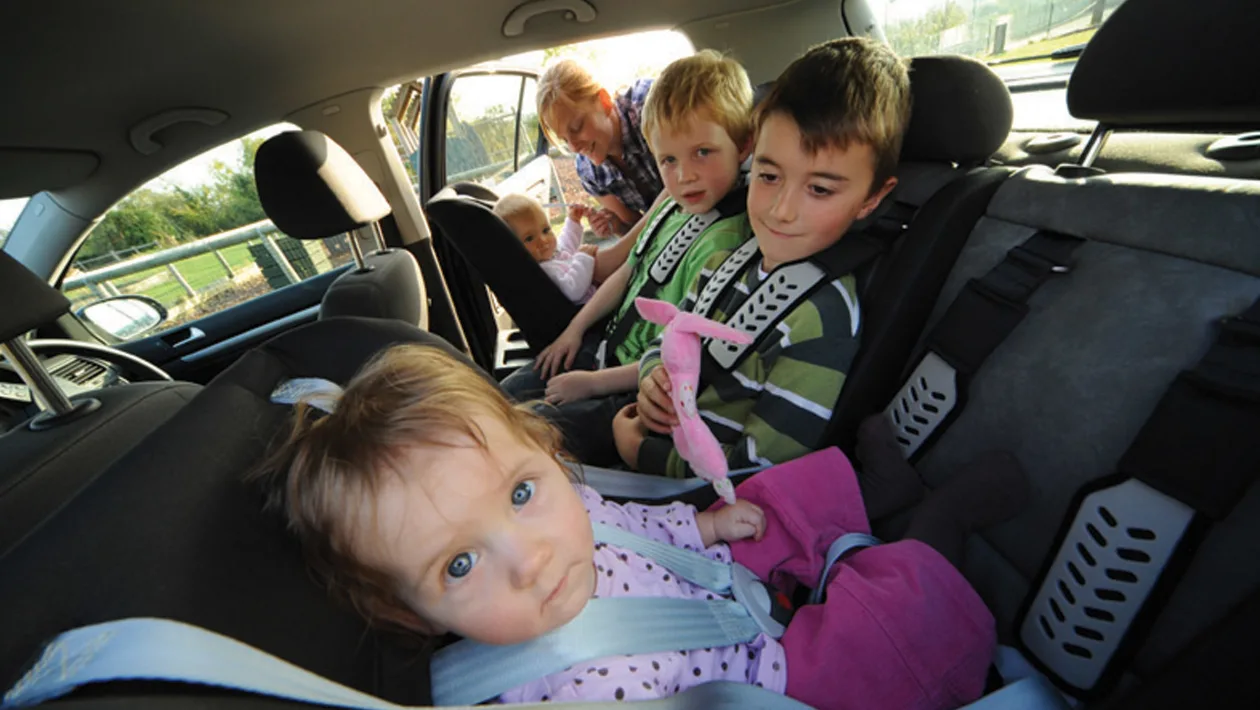
So what are the current rules for child car seats, boosters and baby carriers? Read on to find out…
UK child seat rules
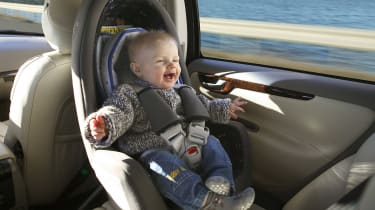
The introduction of the i-Size seat standard is designed to improve child seat safety, because this standard is designed to work in conjunction with the latest safety equipment that is now available on current production cars. The i-Size system was first introduced in 2013, but fully superseded the old regs in 2018. The major difference between the two sets of regulations is that i-Size provides rear-facing travel for babies and toddlers up to 15 months of age, rather than the 9-12 month maximum for the older rules.
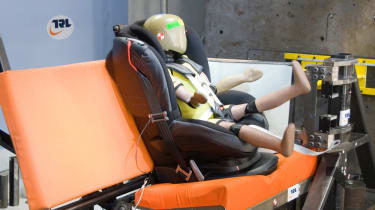
The reason for the extended period in a rear-facing seat is that research shows that it’s the safest position for a baby or toddler in the event of an accident. Tests have shown that a rear-facing position is better for small children, because their necks have yet to fully develop, and in the event of an accident, facing backwards helps to spread the forces of a collision over the child, rather than focusing them on the head and neck area where serious injury could occur.
The recommendation is that a child should be sitting facing backwards when riding in the car for as long as possible, and some i-Size specification seats will allow them to do this up to the age of four – and indeed, in Sweden, whose car brands have historically known a bit about car safety, the government recommends the use of rear-facing child seats to this age as part of its Vision Zero initiative. However, while a child’s age is an obvious guideline as to how long a child fits into a seat, every child grows at a different rate, so UK car seat laws are based on the size of your child, as well as their age.
What are the UK child car seat laws?
If you are carrying a child in a car, then they must be seated in an appropriate child seat or baby carrier, or sitting on a booster seat. These rules apply to children under 12 or less than 135cm tall, and children can ditch the seat as soon as they reach one of these milestones. The only exceptions are when it’s an emergency, and also in taxis, although again children should be belted and sitting.















Leave a comment