
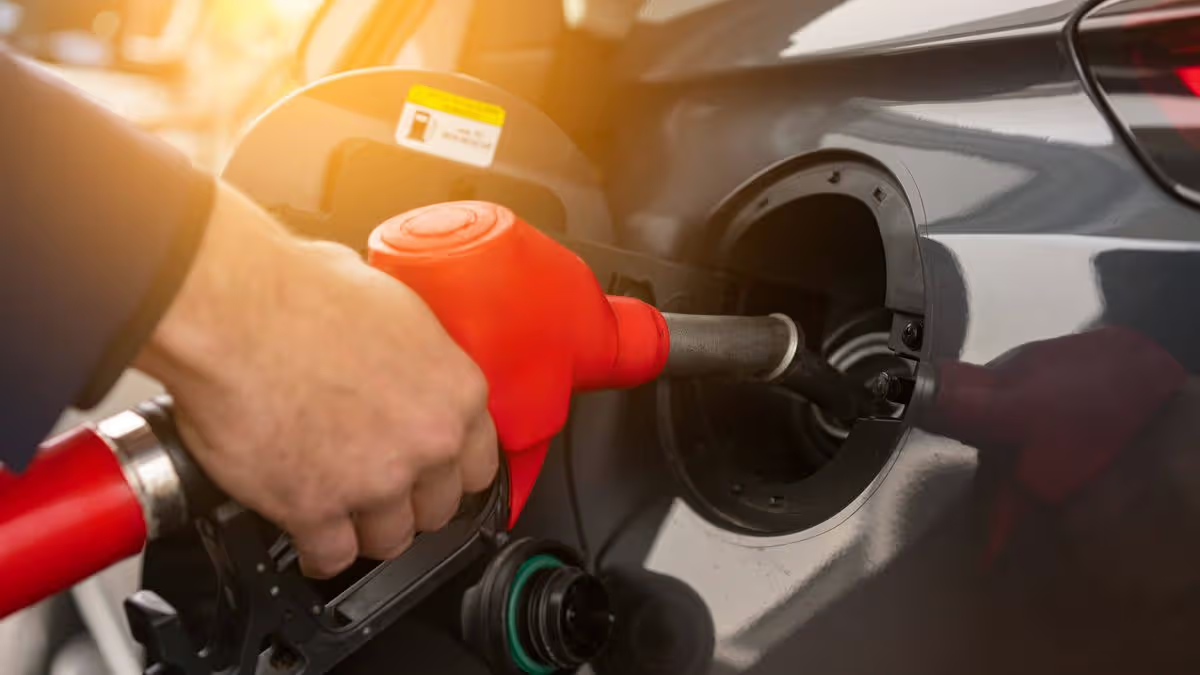
People should be aware of some simple mistakes that can cause their car to use more fuel

Drivers have been issued with some helpful advice(Image: Tatsiana502 via Getty Images)
With the UK set to swelter in temperatures of up to 38°C this week, drivers are being urged to avoid a common air-con mistake that could see them burning through fuel unnecessarily. A few straightforward changes to your driving habits could help stretch your fuel further on those summer road trips.
Tim Rodie, Motorpoint’s resident driving expert, said: “While you might be planning on setting your air conditioning to full blast when driving in warm weather, it can really be a drain on your fuel. Motorists looking to go longer between filling up might think just opening the windows is an obvious alternative but, at higher speeds, this can make your car less aerodynamic – meaning you’ll be using more fuel.
“As a rule, opening your windows is best when driving around at lower speeds around town and air conditioning is more efficient if you’re on the motorway. So, keep this in mind and be sure to mix it up on long car rides.”
While climbing into a scorching hot car is far from pleasant, Tim warns against leaving the air conditioning running to pre-cool your vehicle before you get in, reports the Express. He said: “Idling is terrible for fuel efficiency, but there’s an even more important reason why you shouldn’t be leaving your car unattended with the engine running when cooling down – the risk of it being stolen.
“Modern air-conditioning will cool your vehicle down quickly, so there isn’t really a need to let your car cool down before starting your journey. Not to mention that most car insurance policies have ‘keys in car’ or ‘vehicle left unattended’ clauses that mean motorists aren’t able to make a claim if their vehicle was stolen while unattended with the keys inside.”
Drivers who notice their air-conditioning feels “less powerful than normal” should have it inspected, as the car continues to consume fuel to run the system – even when it isn’t functioning correctly.
How to make cars more fuel-efficient this summer
Pack light:
Avoid stuffing your boot to the brim, as the lighter your vehicle is, the less fuel it requires. Tim noted this principle extends to accessories such as bike racks and roof boxes as well.
He said: “Unless you need the extra storage space, it’s worth travelling without them. They might be a pain to remove, but the increased drag and extra weight mean your car needs to work harder to get you where you need to go.”
Plan your routes carefully:
Vehicles can guzzle fuel when stuck in congestion, so it’s advisable to plan your journey before heading out. Should you find yourself at a standstill, and it’s safe to do so, consider turning your engine off or activating your car’s stop-start function to avoid wasting fuel while stationary.
Know where to fill up: One of the simplest ways to avoid overpaying for fuel is to seek out petrol stations with competitive prices. Motorway services will always charge a premium, so it’s worth planning your journey in advance to get a rough idea of where you’re likely to need to fill up.
Stick to the speed limit and avoid flooring it:
Speeding doesn’t just put you at risk of a fine and points on your licence — it’s also dreadful for fuel consumption. Speed has a direct impact on how much fuel your car uses, meaning the faster you drive, the fewer miles you’ll get per tank.
No matter how eager you are to reach your destination, putting your foot down as though you’re on a drag strip will do nothing but guzzle fuel. Harsh acceleration burns significantly more fuel than steady, measured driving.
Check your tyres:
Keeping an eye on your tyres isn’t just about safety — it also helps keep your vehicle running as efficiently as possible. Underinflated tyres create greater friction, forcing your engine to work harder and burn more fuel.
At a minimum, check your tyre pressure at least once a month. The simplest way to do this is to use a pressure gauge to ensure your tyre pressure falls within the recommended range specified in your owner’s manual.













Leave a comment