
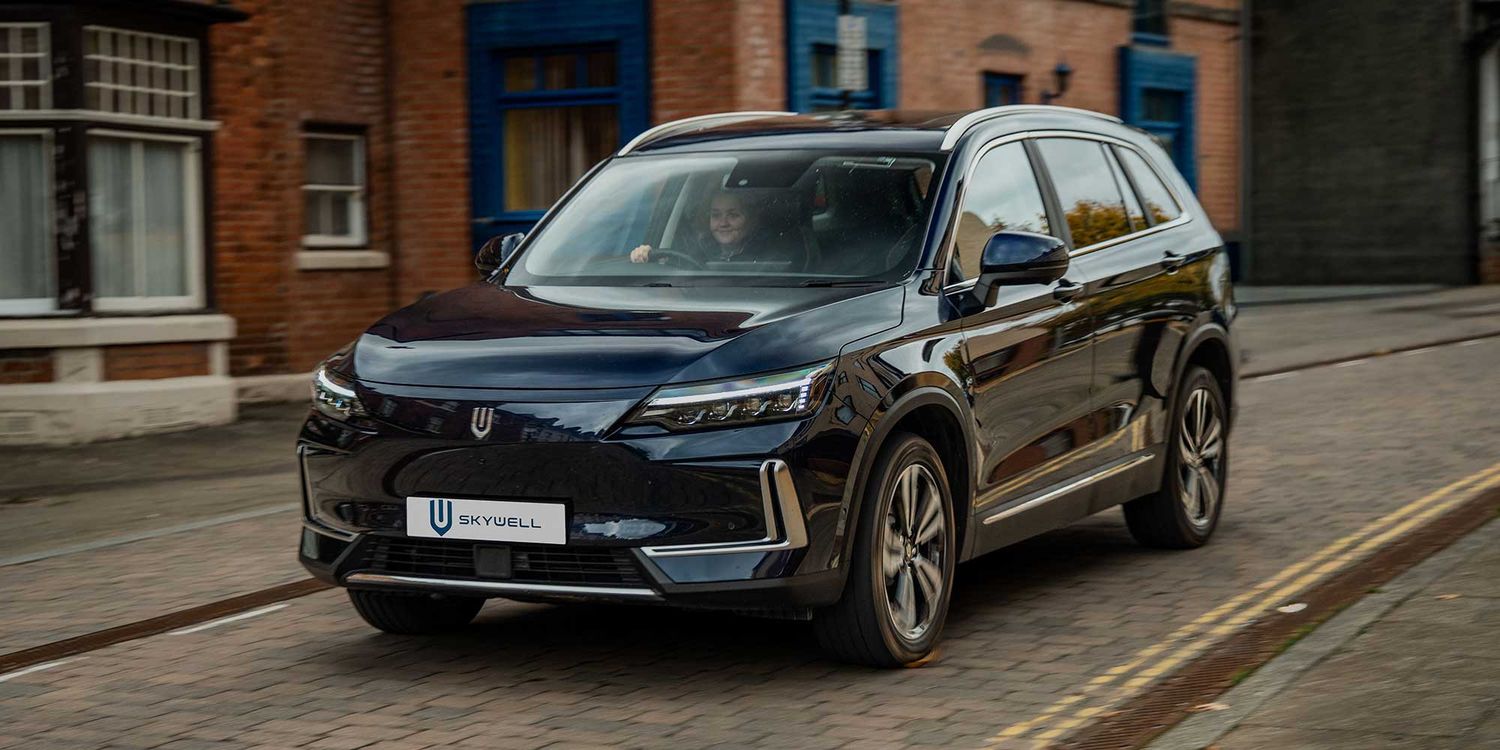
It’s fair to say Skywell hasn’t been particularly successful in the UK. The Chinese brand’s only car model, the BE11 electric SUV, has been a sales flop with fewer than 150 registered during the two-year period it’s been available to buy in the UK (in the same period, Tesla sold 63,925 Model Y cars).
As if that weren’t bad enough, in June this year the only company that imports Skywell cars to the UK announced that it was no longer active, leaving owners facing uncertainty over their warranty and after-sales support.
We explain what happened to Skywell, what it means for owners of the BE11, and why everyone should care about the brand’s demise in the UK.
Should you buy an electric car? Discover the questions you need to ask yourself before making the switch
Who is Skywell?
Skywell is a Chinese car company that also trades as Skyworth Auto in other countries.
It’s owned by Skyworth (a company that manufactures TVs and other appliances) and the Nanjing Golden Dragon Bus Company (which makes buses and other commercial vehicles).
The car-manufacturing division of Skyworth launched in 2017, and it launched in the UK in 2024 under the Skywell name.
Its only car model in the UK is the BE11 electric SUV, although it had planned to launch other models here. The car was offered with a 7-year/100,000-mile warranty (8 years and 155,000 miles for the battery).

What happened to Skywell?
Skywell didn’t have a UK base. Instead, its cars were imported to the UK by a company called Innovation Automotive, which operated in a similar way to International Motors (a more established company that imports Mitsubishi and Subaru cars, among other brands). Innovation Automotive also imported DFSK vans to the UK.
Despite the low sales of the Skywell BE11 (and, to a lesser extent, the DFSK van range), the collapse of Innovation Automotive was still unexpected, especially as sales of the updated Skywell BE11 only started in early 2026.
Because Skywell doesn’t have any presence itself in the UK, the brand effectively exited the UK when Innovation Automotive entered administration. It sold all remaining new and used BE11 cars to a single used car dealer company, which then advertised them with discounts of as much as £20,000 when compared to list price.
Skywell’s core markets are located in the Middle East (in countries including Israel and Lebanon), and the brand is still active there. It also appears to be inactive in all Poland and Romania, where it has previously sold cars itself and not via an importer. The company’s import partner in Germany entered administration in 2025.

Should you buy a Chinese car? Read our expert guide to all the Chinese brands and what to look for
What it means for Skywell customers
If you are one of the few people to own a Skywell BE11, there’s plenty you’ll need to consider now Innovation Automotive has entered administration.
As it stands, Skywell is looking for a new distributor to sell its cars in the UK. It hopes to transfer its stock of parts and the responsibility of warranty administration to this company, but currently there isn’t any way to claim through the warranty offered by Skywell. It’s also very likely to be harder to get repairs for the BE11.
Despite the company’s UK website still being active, there’s no way to phone the company directly and, as we discovered, the company’s online contact form doesn’t work.
While the BE11’s insurance group is unlikely to change, it’s already in a very high group (43 out of 50). This means it’s always been comparatively expensive to insure a BE11 when compared to rival SUVs (the current Skoda Enyaq range, for example, is in insurance groups 25-37).
A spokesperson from automotive insurance risk company Thatcham Research told us that even though parts from China for the BE11 would still be available, it may take longer for them to reach the UK. They added that the uncertainty the development creates for insurers could lead to underwriters taking a more negative view in terms of perceived insurance risk, which may cause them to raise premiums.
We ran various insurance quotes for a male, married 47-year-old consultant with one child, who lives near Birmingham, and found that, compared to existing insurance quotes, insuring the BE11 was quite expensive (£976.03 compared to £495.22 for a Skoda Enyaq 85 Edition). Relatively few insurers offered to cover us, too (we got 11 quotes for the BE11 and 72 for the Enyaq).
Dean Sobers, Which? car insurance expert, told us that specialist support required during any repairs would make claim costs more expensive and could also drive up premiums. He added that because it’s a very unusual car, insurers may have limited claims experience with it.
A spokesperson at MoneySuperMarket told us: ‘It’s too early to say whether there will be any longer-term impact on insurance costs. However, if parts become harder to source or repairs take longer and become more expensive, insurers may take this into account when assessing future premiums and claims costs.
‘For anyone considering one of the discounted Skywell vehicles currently on sale, it’s important to remember that a car’s value is only one of many factors insurers use to calculate premiums. Repair costs, parts availability, the driver’s circumstances and the vehicle’s claims history can all play a role in determining the price of cover.’
Best car insurance: discover how to find the best deal and lower your premium
Expert opinion: Why Skywell’s demise matters to everyone

Dino Buratti, Senior researcher & writer, Which?
Many people have concerns when buying products (not just cars) from brands that are new to the UK, and the demise of Skywell vindicates these concerns.
Even though the brand that’s behind the product may still be trading, if it used an importer to get its products to the UK, and – as in this case – that importer goes bust, it leaves customers in a tricky situation.
This isn’t the first time a car brand has abruptly exited the UK. In 2024, the Fisker car company entered administration for the second time since it was founded in 2010, and the few sales centres it had sold cars through in the UK quickly closed down.
Once Fisker collapsed, all warranty, parts and technical support provided also ended, and owners had to work together to receive software updates, often updating other owners through social media groups. Used values collapsed, too, making it harder to predict finance costs and resale values. A two-year-old top-spec Extreme model that once cost £57,900 when new, and has now travelled 32,500 miles, is currently being advertised online for £16,500.
It also became harder (but not impossible) for owners to insure their cars.
Another less recent example was when MG Rover collapsed in 2005. Back then, all car warranties were immediately cancelled, although dealers decided at their own discretion whether to fix cars for free.
If you’re thinking of buying from a new brand, check to see how big the brand is internationally and whether it has reported financial problems in recent times.
You should also check how strong the brand’s dealer network is, whether there’s one near to you, and how they manage part orders and warranty claims.
Additionally, see if the brand works with a separate import company or imports to the UK itself – something you can find out by asking the dealership before purchasing. If it uses an importer, do some checks on that company, too.
It’s also a good idea to research how many cars have been sold by the brand over the last year using data from the Society of Motor Manufacturers and Traders (SMMT). You can do this by visiting the car registration section of the SMMT website, selecting the ‘2026 by brand’ subcategory and searching for the brand name.
If you find that a brand that sells mainstream (not high-end) cars is not shifting many models, there’s a chance that the brand may not be in a good financial position.
Best electric cars: discover the models that aced our tough and independent lab tests















Leave a comment