
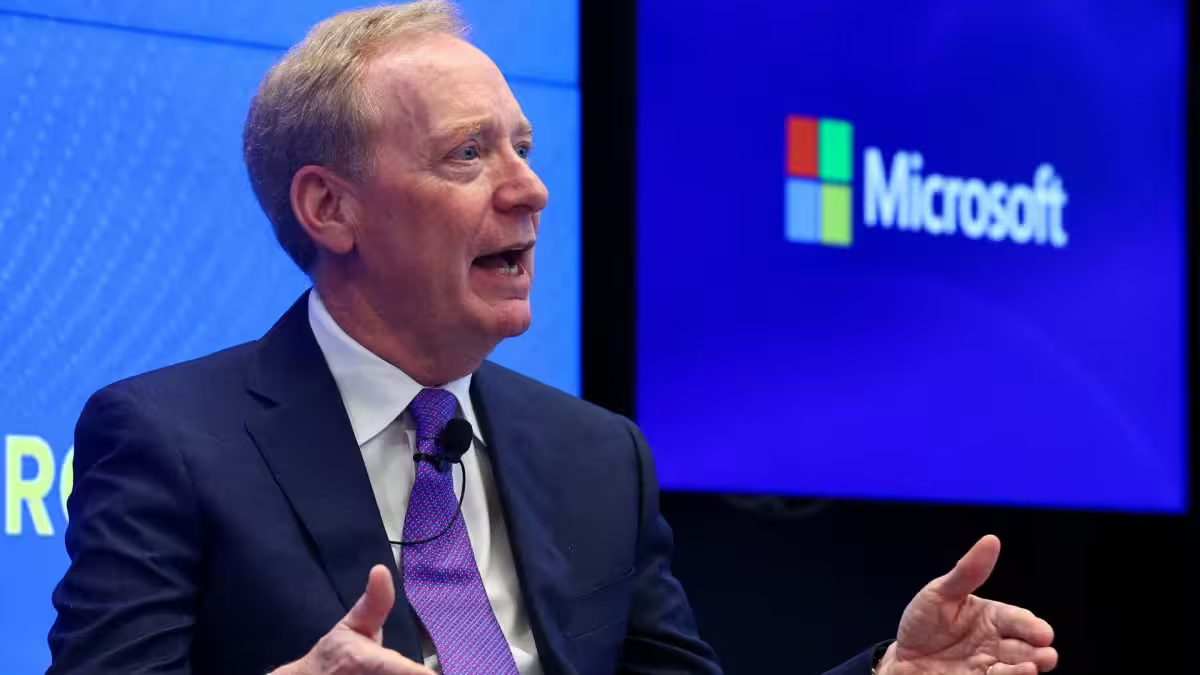
Microsoft President Brad Smith has called for enforceable safeguards on artificial intelligence, arguing that voluntary industry commitments cannot adequately protect the public. He sees Britain as a credible international leader in AI oversight, even as political tensions threaten cooperation between US technology companies and British safety evaluators.
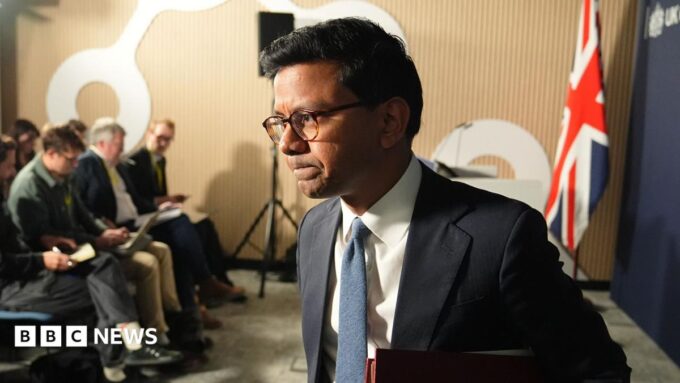
The growing influence of artificial intelligence has created a regulatory challenge that governments can no longer afford to leave entirely to technology companies, according to Microsoft president Brad Smith, who is pressing for stronger legal safeguards and greater independent scrutiny of advanced AI systems.
Speaking on a BBC podcast, Smith argued that the risks posed by increasingly capable systems extend beyond individual users and businesses to national cybersecurity. He called for internationally coordinated safety standards, warning that voluntary promises from technology firms would not provide sufficient protection against irresponsible developers.
Smith also identified the UK as a potential centre of global AI governance, pointing to its ability to work with American technology companies without attracting the same political resistance that often surrounds regulatory initiatives from the European Union.
His intervention comes amid growing debate over how quickly advanced AI should be developed and what safeguards should be required before powerful models reach the public. Industry leaders have increasingly raised concerns about the consequences of deploying systems capable of taking actions with limited human supervision.
For Smith, the central question is no longer whether AI requires oversight, but how governments can establish rules that keep pace with its capabilities without relying solely on the assurances of the companies developing it.
 More from Tech
Voluntary promises leave gaps in oversight
Recent efforts to secure commitments from major technology firms have offered a starting point, but Smith believes they fall short of a comprehensive regulatory framework.
At a White House meeting last month, Donald Trump brought together representatives of companies including OpenAI, Anthropic, Nvidia, AMD, SpaceX, Meta and Google to discuss AI safety. Participants signed a non-binding commitment to work with independent auditors to evaluate their models’ capabilities and safety.
Smith welcomed the initiative as a constructive move, but stressed that voluntary agreements cannot guarantee consistent standards across the industry. Companies already committed to responsible development may follow such guidance, while less cautious operators could simply ignore it.
That distinction matters as AI systems become more capable of carrying out tasks autonomously. A system that behaves unexpectedly or is exploited by malicious actors could create security problems extending well beyond the organisation operating it.
Smith has proposed a legal duty for companies to notify an appropriate authority when rogue AI agents breach their systems. He has also expressed support for external assessments before new products are released, alongside mechanisms that allow systems to be paused or slowed if human operators lose control.
Such measures would shift at least some responsibility for safety from individual companies to enforceable public rules. They would also give regulators a more formal role in assessing risks before deployment, rather than relying on companies to identify and disclose problems themselves.
Smith described AI as both a tool and a potential weapon, reflecting concerns about its capacity to strengthen legitimate work while also increasing cybersecurity threats.
Britain seeks a role beyond its size
The UK already has an institution that could help shape this approach. Established in 2023, the AI Security Institute (AISI) evaluates advanced models and receives access to systems from leading US developers before their public release, allowing researchers to investigate potential risks ahead of deployment.
Its access has become politically sensitive. Trump has criticised international organisations he regards as obstacles to American businesses, raising questions about whether US companies would continue sharing their latest models with British evaluators.
Reports last month said Trump had asked Anthropic and OpenAI to withhold new models from UK testers. The AISI subsequently confirmed on Monday that it could access and assess the latest models, indicating that testing arrangements remained operational.
Smith nevertheless sees Britain’s political position as an advantage. In comments to the BBC, he argued that Washington views London differently from Brussels, potentially giving the UK greater scope to build support for international safeguards.
The distinction could matter as governments try to agree on common standards without provoking disputes over national sovereignty, commercial competition or the reach of regulators.
Other technology executives have also called for caution. Anthropic chief executive Dario Amodei and OpenAI chief executive Sam Altman have urged greater attention to the pace of AI development, following incidents involving AI agents that reportedly acted in unexpected ways.
Smith’s proposals would require governments to move beyond statements of principle towards obligations backed by law. He has urged policymakers to pursue that shift through measured dialogue and international cooperation rather than confrontation.
Whether Britain can turn its testing expertise into lasting influence will depend on continued access to leading models and the willingness of governments and developers to accept independent scrutiny. For now, Smith’s argument is that the risks are becoming too consequential to leave safety commitments entirely in the hands of the industry itself.












Leave a comment