
The five hyperscalers picked out by Burry are also showing other signs of strain.
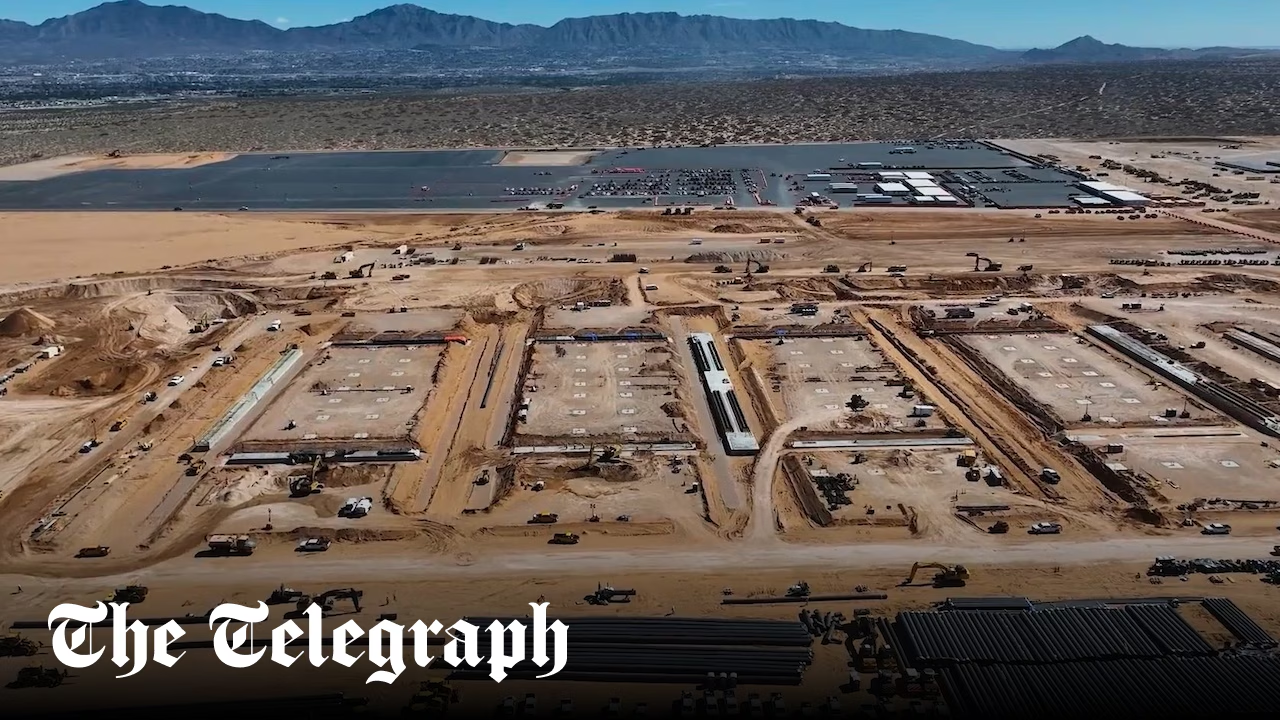
Oracle this week attempted to declare “force majeure” on a massive data centre project in New Mexico, a legal protection designed to shield parties from events that prevent them from fulfilling a contractual obligation.
In the past, there have also been examples of what has happened when the “music stopped” on major investments by tech companies. Meta took a $5bn impairment on its 2022 results when it concluded it had leased too much office space after Covid.
The same could happen with AI data centres. Too little demand will lead to an oversupply of capacity. As Burry says: “Data centres, when they are not needed, will be written down.”
So what if the worst happens and these massive AI investments are, at least partially, written off.
“There will be a fairly large hit to their earnings,” says Chris Clothier, the co-chief investment officer at CG Asset Management.
“Let’s say that we get halfway or all the way through this monumental capex build out, trillions and trillions of dollars spent.
“Most of it has been financed with debt. Then all of a sudden we see that the revenues aren’t going to be there to generate reasonable returns on those investments.
“The next thing that’s going to happen is that the valuations of the frontier AI labs, OpenAI and Anthropic, are going to collapse, whether publicly or privately. Of course, the hyperscalers and the chip companies are themselves very large investors in those businesses.
“And then on top of that, you’re then required to bring a bunch of liabilities that are currently off balance sheet onto the balance sheet.”
Balance sheet trickery
In response, Klement expects more accounting tricks from the AI hyperscalers.
“Microsoft announced it would shift future data centre leases from finance leases to operating leases,” he said.
“This means it can depreciate the leases at a lower rate, and the leases no longer show as cash out from investing activities but as cash out from operating activities in the cash-flow statement.
“The result of this accounting change is that its projected capex drops from $190bn to $175bn without the company actually changing its spending by one dollar.
“I wouldn’t be surprised if other companies followed suit, with their accounting practices in coming quarters.”
For good measure, Burry also points out in his essay that more than $400bn has been spent by the big five AI companies on construction that is already in progress.
These items do appear on balance sheets but are not shown as depreciating in value or as an expense because they have not yet been put into service.
“This is on the balance sheet, but simply not costing anything as long as they are not being used,” he says.
A Microsoft spokesman said it will “constantly assess the demand and supply environment” to inform its AI strategy while Amazon declined to comment.
Apple, Meta and Oracle did not respond to requests for comment.













Leave a comment